

Daily Dose Of Jazz…
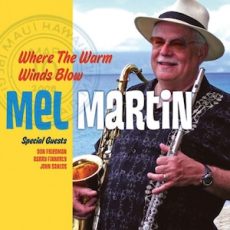
Mel Martin was born on June 7, 1942 in Sacramento, California. Both parents were singers and early piano and clarinet lessons led him to Benny Goodman and Glen Church’s Jazz Rhythm & Blues radio program. The big bands of Benny Goodman, Duke Ellington, Woody Herman, Shelly Manne and His Men, and Cannonball Adderley, passing through town kept his interest high. Forming a small combo of clarinet, accordion and drums, his father got him his first gig, afterwards they played at Mel’s Drive-In for tips.
While still a teenager, Martin was good enough to sit in with Wes Montgomery and his brothers. Already jamming with Black musicians in the community, he’d hit the clubs to hear the Montgomery Brothers when they played, sometimes sitting in on flute.
At San Francisco State in 1962 while majoring in music he met fellow undergraduate John Handy and played with him in his Freedom Band. At the same time, Mel was learning how to play bop with the musicians who hung out at Bop City, Soulville, the Jazz Workshop, Shelton’s Blue Mirror, Jack’s on Sutter and later the Both/And.
In the late 1960s and early Seventies Martin played with progressive rock and Latin bands including The Loading Zone, Cold Blood, Azteca and Boz Scaggs, Doug Sahm’s Honky Blues Band, Wayne Talberty, Chuck Berry, Dr. John and others. Creating Listen in 1977 which became part of the early West Coast jazz fusion scene, he recorded three albums before the end of the decade.
He was the artistic director of Bebop and Beyond, a group he founded in 1983 and released four albums. Martin has received five National Endowment for the Arts grants, and was honored by the San Francisco Jewish Museum. As performer, composer, arranger and multi-instrumentalist he contributed music to television and film. He was a bandleader, contractor and sideman, he played in) big bands for McCoy Tyner and Dizzy Gillespie and played with the Freddie Hubbard Quintet and Charlie Haden’s Liberation Orchestra.
As an educator he taught the Stanford Jazz Workshop at Stanford University from 1984 to 1995, produced a series of Jazz Workshops for the Marin Jewish Community Center and regularly conducts workshops at his studio in Novato and in the Marin public schools.
Saxophonist, composer, arranger, and bandleader Mel Martin, who also played flute, clarinet and piccolo, died of a heart attack on November 17, 2017 at age 75.

More Posts: bandleader,history,instrumental,jazz,music,saxophone
Daily Dose Of Jazz…
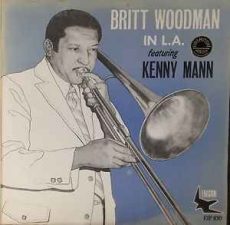
Britt Woodman was born on June 4, 1920 in Los Angeles, California. A childhood friend of Charles Mingus, he first worked with Phil Moore and Les Hite. After serving in World War II he played with Boyd Raeburn before joining with Lionel Hampton in 1946.
During the 1950s he worked with Duke Ellington. As a member of Ellington’s band he can be heard on twenty-five recorings such as 1957’s Such Sweet Thunder, Ella Fitzgerald Sings the Duke Ellington Song Book, and 1958’s Black, Brown, and Beige and Ellington Indigos.
1960 saw Britt departing from Ellington to work in a pit orchestra. He went on to later work with Mingus and can be heard on the album Mingus Mingus Mingus Mingus Mingus released in 1963. In the 1970s he led his own octet and recorded with pianist Toshiko Akiyoshi. In 1989, he was part of the personnel for the album Epitaph dedicated to the previously unrecorded music of Charles Mingus.
He recorded Playing For Keeps and In L.A. as a leader, and leaves a sideman recording catalogue of ninety-three albums with Toshiko Akiyoshi – Lew Tabackin Big Band, Bill Berry, Ella Fitzgerald, Lionel Hampton, Johnny Hodges, Jimmy Smith, Gene Ammons, Ray Brown, Ruth Brown, Frank Capp, Nat Pierce, Benny Carter, Rosemary Clooney, John Coltrane, Randy Crawford, Tadd Dameron, Miles Davis, Booker Ervin, John Fahey, Dizzy Gillespie, Benny Golson, Chico Hamilton, Jimmy Hamilton, Hank Jones, Oliver Nelson, Philly Joe Jones, Jon Lucien, Galt MacDermot, Teo Macero, Junior Mance, The Manhattan Transfer, Wade Marcus, Blue Mitchell, Grover Mitchell, James Moody, Maria Muldaur, Oliver Nelson, Oscar Peterson, Zoot Sims, Billy Taylor, Clark Terry, Teri Thornton, Jimmy Woode
Trombonisit Britt Woodman died in Hawthorne, California at the age of 80, having suffered severe respiratory problems on October 13, 2000.
More Posts: bandleader,history,instrumental,jazz,music,trombone
Daily Dose Of Jaz…
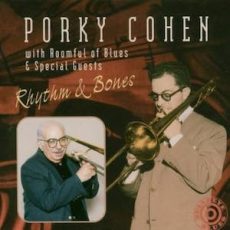
Zalman “Porky” Cohen was born on June 2, 1924 in Springfield, Massachusetts and began performing publicly in his mid-teens, and studied with trombonist Miff Mole. By 19 he was playing with the Charlie Barnet Orchestra, often featured as a soloist. Stints with Tony Pastor and Glen Gray’s Casa Loma Orchestra followed, and in 1948 during the segregation era in the jazz and blues worlds, he was one of a few white musicians to perform with the Lucky Millinder Orchestra.
Porky married, settled down and limited his performing career to local gigs in Rhode Island and southeastern New England. He did, however, join the Grammy winning jump-blues band Roomful Of Blues from 1981 to 1987, touring all over the U.S. and Europe. During this phase of his career, he recorded with jump-blues greats Big Joe Turner, Eddie “Cleanhead” Vinson, Jimmy Witherspoon and Earl King.
Having had enough of the rigors of constant touring, in 1987 he returned to Providence, Rhode Island and again played with various area bands. He continued performing until increasitg ill-health sidelined him Trombonist Porky Cohen died of complications resulting from a stroke on April 14, 2004 at age 79 in Providence.
More Posts: bandleader,history,instrumental,jazz,music,trombone
Daily Dose Of Jazz…
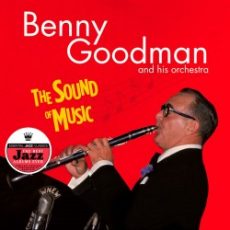
Benjamin David Goodman was born on May 30, 1909 in Chicago, Illinois and was the ninth of twelve children born to poor Jewish emigrants from the Russian Empire. Growing up in the slums of the Maxwell Street neighborhood, his father would take him to free band concerts in a nearby park. When he was ten his father enrolled him and two of brothers in free music lessons at the synagogue, in addition he received lessons from clarinetist Franz Schoepp of the Chicago Symphony Orchestra. He went on to join a boy’s club band and by the time he turned thirteen he got his first union card,
He made his professional debut in 1921 at the Central Park Theater on the West Side of Chicago. He entered Harrison Technical High School in Chicago in 1922 and with card in tow Benny worked in a band featuring Bix Beiderbecke. Two years later, in 1926, he joined the Ben Pollack Orchestra and made his first recordings. Moving to New York City he became a session musician for radio, Broadway musicals, and in studios. In addition to clarinet, he sometimes played alto and baritone saxophones.
The Thirties saw him charting for the first time with He’s Not Worth Your Tears. He would go on to have top ten hits and from 1936 until the mid-1940s, with arrangements written during the Depression by Fletcher Henderson. Goodman hired Henderson’s musicians to teach his musicians how to play the music. He went on to lead one of the most popular swing big bands in the United States. His bands started the careers of many jazz musicians. During an era of racial segregation, he led one of the first integrated jazz groups, his trio and quartet.
Clarinetist Benny Goodman, while pursuing an interest in classical music, continued performing until the end of his life on June 13, 1986 in New York City.

More Posts: bandleader,clarinet,history,instrumental,jazz,music,saxophone
Daily Dose Of Jazz…
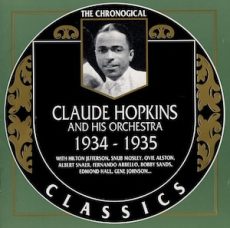
Pete Edward Jacobs was born on May 7, 1899 in Asbury Park, New Jersey. His first professional job was playing with the Musical Aces. He then joined the band of Claude Hopkins from 1926 to 1928.
Leaving Hopkins he joined Charlie Skeete for a short stint but returned to play with Hopkins from 1928 until 1938. During this ten-year tenure in Hopkins’s orchestra, Jacobs recorded extensively with the group on Brunswick Records, during 1932 to 1937.
Additionally, he appeared with the band in the short films Barbershop Blues in 1933) and By Request in 1936.
Falling ill in 1938 he hung up his drummsticks and quit the group, never returning to active performance. Drummer Pete Jacobs, who was prominent during the swing era for about a decade, died in 1952, month and day unknown.
More Posts: drums,history,instrumental,jazz,music