


Daily Dose Of Jazz…
Fred Norman was born on October 5, 1910 in Leesburg, Florida. After attending Howard University, in Washington, DC he joined the Claude Hopkins band in 1932. Touring with the group as both a trombonist and singer for much of the 1930s, he notably recorded his own composition, Church Street Sobbin’ Blues, as the trombone soloist with the band in 1937 for Decca Records. He also appeared in short films with the Hopkins band during the 1930s.
Moving away from performance in 1938 he went on to work as a full-time music arranger. The late Thirties and 1940s saw him writing arrangements for Bunny Berigan, Tommy Dorsey, Benny Goodman, Lionel Hampton, Gene Krupa, Teddy Powell, Artie Shaw, Charlie Spivak, and Jack Teagarden.
In the 1950s he was the music director and arranger for multiple records made by the singers Sarah Vaughan and Dinah Washington. He continued to work as an arranger until his retirement in the 1970s.
Composer, arranger, trombonist, and vocalist Fred Norman died on February 19, 1993 in New York City.

More Posts: arranger,bandleader,composer,history,instrumental,jazz,music,trombone,vocal
Daily Dose Of Jazz…
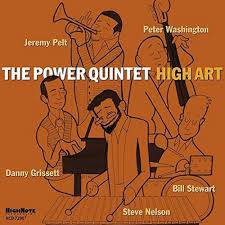
William Stewart was born on October 1, 1957 in Glasgow, Scotland and started playing classical violin at the age of 10. After winning first prize in the Scottish Central Counties Music Festival in 1970, 1971, 1972 and first prize in the Glasgow Music Festival in 1973, he won the McFarlane scholarship to attend the Royal Scottish Academy of Music in Glasgow at the age of fourteen.
While at the Academy he won the first prize in the Robert Highgate Scholarship for violin in 1975, and went on to play with the Scottish Chamber Orchestra, BBC Scotland, Scottish Opera, Scottish Baroque Ensemble, Virtuosi Scotland. At 19 Stewart toured Britain as leader of the Scottish Ballet Orchestra.
When he turned 21 William left Scotland to take a position as leader of the Passau State Opera Orchestra in Germany before joining the world famous Stuttgart Chamber Orchestra under the direction of Herr. Prof. Karl Munchinger. By twenty-six, as a member of the Stuttgart Chamber Orchestra Quartet, he had played in some of the most famous concert halls in the world, including Carnegie Hall and Lincoln Center in New York City.
For a few years now Stewart has been working on his own compositions and music, blending influences from his traditional Scottish up-bringing, classical music, and love of Eastern-European fiddle music. After many solo concerts, and support for, among others, Nikki Sudden, and Hazel O’Conner at the “Left Bank”, he began playing with local groups like the Jazz Lads and Ellamental. He formed the Klazz with whom he played at the Derry Jazz Festival.
He has recorded with his own quintet “The Bill Stewart Quintet”, and with the gypsy-jazz trio “Gitane Swing”. Violinist William Stewart is now playing jazz, swing jazz, and composing his own works, blending influences from classical and Eastern-European violin music to create a sound that is truly unique.
More Posts: bandleader,history,instrumental,jazz,music,violin
Daily Dose Of Jazz…
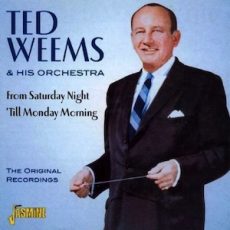
Wilfred Theodore Wemyes, known to the world as Ted Weems, was born on September 26, 1901 in Pitcairn, Pennsylvania. He learned to play the violin and trombone, and his start in music came when he entered a contest, hoping to win a pony. He won a violin instead and his parents arranged for music lessons, and was a graduate of Lincoln School in Pittsburgh. While still at Lincoln, he organized a band there, initially providing some instruments himself.
As an enterprising young man he reinvested money given him by his teacher and that collected from band members to buy better instruments for the band. His family moved to Philadelphia, Pennsylvania where he enrolled at West Philadelphia High School, joined the school’s band and became its director. Ted went on to the University of Pennsylvania, where he and his brother Art organized a small dance band that became the All American Band. They soon started receiving offers to perform in well-known hotels throughout the United States. They were one of the bands that played at the inaugural ball of President Warren G Harding in 1921.
Going professional in 1923, Weems toured for the MCA Corporation and began recording for the Victor Talking Machine Company. His first #1 hit was Somebody Stole My Gal in early 1924 and recorded for Victor/RCA Victor and their Bluebird Records arm. He then signed with Columbia, and on to Decca. He also co-wrote several popular songs: The Martins and the McCoys, Jig Time, The One-Man Band, Three Shif’less Skonks, and Oh, Monah!, which he co-wrote with band member Country Washburn.
Moving to Chicago, Illinois with his band around 1928, his orchestra charted more success in 1929 and the band gained popularity in the 1930s, making regular radio broadcasts. He would go on to enlist with his entire band into the United States Merchant Marine in 1942, directing the Merchant Marine Band. After the war, with his new-found popularity of the 1938 Heartaches, Decca continued to re-release several of his hits, however, he reaped no benefit as his contract expired while he was in the military.
Weems made front-page news in 1947 when he publicly repaid his debt to disc jockey Kurt Webster, who had revived Heartaches and thus his career. He staged a benefit performance by his band and gave all proceeds going to war veteran Webster. Decca cashed in once again on his new popularity by reissuing another oldie, I Wonder Who’s Kissing Her Now with vocals by Perry Como, which became another major chart hit.
The hits dried up after 1947 but Ted continued touring until 1953 then accepted a disc jockey position in Memphis, Tennessee, later moving on to a management position with the Holiday Inn hotel chain.
Violinist, trombonist and bandleader Ted Weems, who operated a talent agency in Dallas, Texas with his son, and has a star on the Hollywood Walk of Fame, died of emphysema in Tulsa, Oklahoma, on May 6, 1963.
 </p
</p
More Posts: bandleader,history,instrumental,jazz,music,trombone,violin
Daily Dose Of Jazz…
Dave Wilkins was born on September 25, 1914 in Barbados. He first played in Salvation Army bands in his native country. In 1937, he moved to London, England, where he worked with Ken Snakehips Johnson’s West Indian Swing Band among others.
He recorded with Una Mae Carlisle and Fats Waller in 1938, and continued to work with Johnson until 1941. Following this, he played with English jazz musicians such as Ted Heath, Harry Parry, Joe Daniels and Cab Kaye.
Trumpeter Dave Wilkins, who stopped playing in the 1970s, died on November 26, 1990 in London, England.
</p
More Posts: history,instrumental,jazz,music,trumpet
Daily Dose Of Jazz…
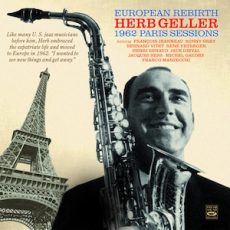
Michel Gaudry was born on September 23, 1928 in Eu, France on 23 September 1928. He learned clarinet and piano as a child before switching to bass. Following studies at the Geneva Conservatory, he played with Michel Hausser, beginning his professional career in 1955. In the latter half of the 1950s he worked with Billie Holiday, Quentin Jackson, Carmen McRae, and Art Simmons.
In the early 1960s he was very active playing with Elek Bacsik, Kenny Clarke, Sonny Criss, Stephane Grappelli, Bud Powell, Stuff Smith, and Billy Strayhorn, as well as continuing a long time slot as a member of Jack Diéval’s group.
The Seventies he played with Gérard Badini’s group, Swing Machine, and was a regular performer at the Grande Parade du Jazz in Nice, France. In the 1980s he played with Jimmy Owens and Irvin Stokes.
In his later life, he dedicated himself to the history of World War II occupation of Normandy, France. Double bassist Michel Gaudry died on May 29, 2019 in Saint-Lô, France at the age of 90.
</p
More Posts: bass,history,instrumental,jazz,music