

Daily Dose Of Jazz…
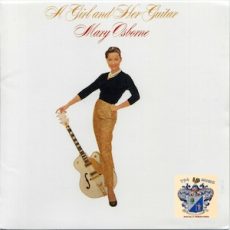
Mary Osborne was born in Minot, North Dakota on July 17, 1921 into a musical family. As early as age three she showed an interest in music with her earliest instruments including piano, ukulele, violin, and banjo. At nine, she picked up the guitar. At ten, she started playing banjo in her father’s ragtime band. She was featured on her own radio program, performing twice weekly until she was fifteen. At twelve she started her own trio of girls to perform country music in Bismarck, North Dakota.
By the time she turned fifteen, Osborne joined a trio led by pianist Winifred McDonnell, for which she played guitar, double bass, and sang. After hearing Charlie Christian play electric guitar she immediately bought her own electric guitar and had a friend build an amplifier. She sat in with Christian to learn his style of guitar. Her husband and trumpeter Ralph Scaffidi encouraged her musical career.
The early 1940s saw Mary sitting in on jam sessions on 52nd Street, on the road with jazz violinist Joe Venuti and working freelance in Chicago, Illinois when she made a recording with Stuff Smith. In 1945, Osborne headlined a performance with Dizzy Gillespie, Art Tatum, Coleman Hawkins, and Thelonious Monk in Philadelphia, Pennsylvania to reviews and audiences that praised her specifically. She, Tatum, and Hawkins went on to record a concert in New Orleans.
Returning to New York City she recorded with Mary Lou Williams in 1945, Coleman Hawkins, Mercer Ellington, and Beryl Booker in 1946, and led her own swing trio. For three years her trio played 52nd street clubs, had a year-long engagement at Kelly’s Stables, and made several recordings. Throughout the 1950s, she played with Elliot Lawrence’s Quartet on The Jack Sterling Show, and appeared on the television show Arthur Godfrey’s Talent Scouts.
By the Sixties her focus changed to learning Spanish classical guitar under Alberto Valdez-Blaine and incorporated pick-less playing into her jazz playing. Osborne moved to Bakersfield, California, where she lived the rest of her life, and founded the Osborne Guitar Company with her husband. Mary taught music and continued to play jazz locally and in Los Angeles, California as well as several jazz festivals over the next two decades.
Guitarist Mary Osborne died on March 4, 1992 at the age of 70, the result of chronic leukemia.

More Posts: bandleader,guitar,history,instrumental,jazz,music
Daily Dose Of Jazz…
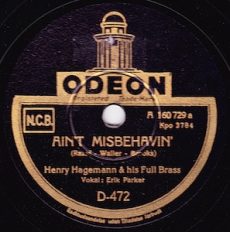
Erik Parker was born July 13, 1918 in Århus, Denmark. By 1938 he became a member of the Svend Asmussen Orchestra and from 1939 to 1945 was involved in Leo Mathisen’s Orchestra, where he performed both as an instrumentalist and a vocalist.
He worked as a club manager, and from 1945-1951 he was an actor. In 1953 he emigrated to the United States, where he settled in Los Angeles, California where he became a restaurateur and trumpet teacher.
Throughout his career he was a member of the All Danish Starband, Henry Hagemann & His Full Brass, Henry Hagemann’s Sextet, Kai Ewans And His Swinging 16, Leo Mathisens Band, Leo Mathisens Orkester, Leo Mathisens Ønskeorkester, and Roger Henrichsen Trio.
Trumpeter and vocalist Erik Parker, who is considered one of the most significant Danish jazz musicians and a distinguished representative of golden age jazz, died in 2003.

Daily Dose Of Jazz…
Lembit Saarsalu was born July 8, 1948 in Roosna-Alliku, Estonia. He started playing jazz at an early age. He debuted at the Tallinn International Jazz Festival at the age of 16. He worked for many years in the State Philharmonic of the Estonian SSR , where as a paid musician he gave numerous concerts both at home and abroad. In the 1980s, Saarsalu devoted himself completely to jazz.
For decades, he has led local and international ensembles. He worked in a duo with Leonid Vintskevich, started a new international jazz festival Rainbow Jazz with music producer Merle Kollom and a competition for young musicians in Tartu.
As an educator Saarsalu introduced jazz in schools and has performed together with Olav Ehala and other well-known Estonian musicians for more than 40,000 students. Since the fall of 2016, he has been working as a saxophone and ensemble teacher in the rhythm music department of the Tartu Music School.
In the 1980s Eesti Televisioon made two films about Lembit, he has performed on Finnish and Spanish television and has made numerous recordings, numbering 200 recordings for Estonian Radio. His style ranges from blues and swing to free forms of jazz.
He has been repeatedly chosen as the best tenor saxophonist, awarded the annual prize of the Sound Art Endowment Fund of the Estonian Cultural Capital.
Saxophonist , bandleader and composer Lembit Saarsalu, who has been called the saxophone king and the calling card of Estonian jazz, continues to perform, compose and teach.
More Posts: bandleader,composer,history,instrumental,jazz,music,saxophone
Daily Dose Of Jazz…
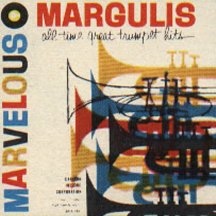
Charlie Margulis was born on July 24, 1903 in Minneapolis, Minnesota into a family of accomplished theater music performers in the 1920s. That was his introduction to the professional musician’s life which led to him working with territory bands led by Eddie Elkins and Paul Specht among others. Heading to Detroit, Michigan in 1924 he joined Jean Goldkette’s Book-Cadillac Hotel Orchestra under violinist Joe Venuti. His next move was to work with bandleader Ray Miller during a period when the trumpeter roamed back and forth between Detroit and Chicago, Illinois.
By 1927 Charlie began working with Paul Whiteman, the relationship lasting nearly three years and concluding in a traditional manner for progressive jazz bands, with various sidemen stranded on the West coast. He managed to straggle back to New York City, bad luck perched on his shoulder. He got so sick that he had to return to California in order to recover but by the middle of the ’30s was well enough to log in for a New York City recording session with the Dorsey Brothers.
Caught up in the excitement of the new swing style, Margulis tried out life as a bandleader as well as spending a year on tour with Glenn Miller. His role as a bandleader was offset with work in the recording studios embracing doo-wop and r&b styles. He would go on to freelance, sometimes under the name Charlie Marlowe in California, under his own name in New York City during the Forties and Fifties.
Trumpeter Charlie Margulis died on April 24, 1967 at the age of 63 in Little Falls, Minnesota.

More Posts: history,instrumental,jazz,music,trumpet
Daily Dose Of Jazz…
Ben Pollack was born on June 22, 1903 in Chicago, Illinois and learned to play drums in high school. He formed groups on the side, performing professionally in his teens. He joined the New Orleans Rhythm Kings in Chicago in 1923 and later went out to Los Angeles, California and joined Harry Bastin Band.
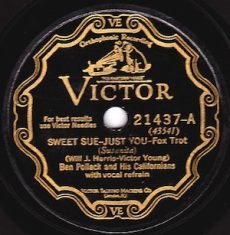
In 1924, returning to Chicago he played for several bands including Art Kessel. That association led to his forming Ben Pollack and His Californians, the 12-piece Venice Ballroom Orchestra in 1925. He had some performances broadcast on WLW radio in Cincinnati, Ohio. Over time the band included Benny Goodman, Glenn Miller, Jack Teagarden, Jimmy McPartland and Gil Rodin. From about 1928, with involvement from Irving Mills, members of Pollack’s band moonlighted at Plaza-ARC and recorded a vast quantity of hot dance and jazz for their dime store labels.
His band played in Chicago and moved to New York City in 1928, having obtained McPartland and Teagarden around that time. This outfit enjoyed immense success, playing for Broadway shows and winning an exclusive engagement at the Park Central Hotel. Pollack’s band was involved in extensive recording activity at that time, using a variety of pseudonyms in the studios. The orchestra also made a Vitaphone short subject sound film.
Fancying himelf more as a bandleader-singer type he signed Ray Bauduc to handle the drumming chores. They became known as Ben Pollack and his Park Central Orchestra. When Benny Goodman and Jimmy McPartland left the band in mid-1929. They were replaced by Matty Matlock on clarinet and Jack Teagarden’s brother, Charlie, on trumpet and tenor saxophonist Eddie Miller in 1930. Five years later the band broke up.
Pollack formed a new band with Harry James and Irving Fazola, the former with whom he wrote the hit “Peckin'”. In the early 1940s, he organized a band led by comedian Chico Marx, started Jewel Records, opened restaurants in Hollywood and Palm Springs, and appeared as himself in the movie The Benny Goodman Story, and made a cameo in The Glenn Miller Story.
Drummer Ben Pollack, who appeared in five films in the late Forties and Fifties, suffered a series of financial losses, grew despondent and hanged himself in his home in Palm Springs on June 7, 1971.
More Posts: bandleader,drums,history,instrumental,jazz,music,vocal