

Daily Dose Of Jazz…
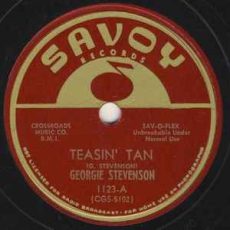
George Stevenson was born into a musical family on June 20, 1906 in Baltimore, Maryland. His brother Cyrus and his father both played piano. At 15 he studied saxophone and trombone with A. J. Thomas eventually joined his Baltimore Concert Band. His trombone style was greatly influenced by Tricky Sam Nanton.
By 19 he joined pianist Harold Stepteau and his Melody Boys, before organizing his own 11-piece Baltimore Melody Boys. They disbanded in 1928 and he moved to New York City. He would go on to play with Sammy Price and His Texas Blusicians and Hot Lips Page and His Band. Through the 1930s and 1940s he worked with various other bands including the Savoy Bearcats, Charlie Johnson, Fletcher Henderson, Claude Hopkins, Jack Carter’s Orchestra, Lucky Millinder, Cootie Williams and Roy Eldridge, and Cat Anderson.
From 1948 he went on to freelance with several leaders, continuing to perform through the 1960s. He briefly led his own band in 1959 and his last performances were with Max Kaminsky a year before his death.
Trombonist George Stevenson died on September 21, 1970.
More Posts: bandleader,history,instrumental,jazz,music,trombone
Daily Dose Of Jazz…
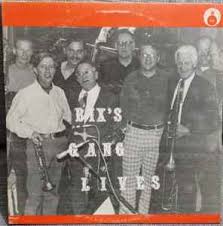
William C. Rank was born in Lafayette, Indiana, on June 8, 1904 and initially worked in Indiana and Florida. In 1922, He played trombone in Tade’s Singing Orchestra, which was led by violinist Tade Dolen. Between 1923 and 1927 he played with Jean Goldkette’s band in Detroit, Michigan and often recorded with Bix Beiderbecke.
After playing with Adrian Rollini in 1927 he had a period working freelance, then he joined Paul Whiteman’s band, and stayed until 1938. Rank became a studio musician in Hollywood into the early 1940s, when he moved to Cincinnati, Ohio It was while living here that he led a tenet for the rest of the 1940s.
After changing his musical lifestyle to performing part-time, he worked in the insurance industry. His one album as a leader, a tribute to Beiderbecke, was recorded in 1973.
Trombonist Bill Rank continued playing until a short time before his death, on May 20, 1979, in Cincinnati.
Daily Dose Of Jazz…
Eugene Porter was born in Pocahontas, Mississippi on June 7, 1910 and began on cornet, but when his instrument was stolen he picked up saxophone and clarinet, studying the latter under Omer Simeon. His family moved to Chicago while still in high school, but left school early to start a career in music
Moving to New Orleans, Louisiana in the Thirties he worked in and around town as well as on riverboats, with Papa Celestin, Joe Robichaux, and Sidney Desvigne. He was with the Jeter-Pillars Orchestra from 1935 to 1937, then played with Don Redman briefly before returning to Jeter-Pillars until 1942. Following this Gene worked with Jimmie Lunceford and then with Benny Carter until 1944, working as assistant bandleader under him. He appeared in several films, including with Fats Waller.
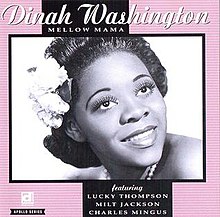
Porterer was in the Army in 1944-45 as a member of an Army band, then played with Carter again and recorded with Dinah Washington during this period. For the next two years he performed with Charles Mingus and Lloyd Glenn.
After moving to San Diego, California in 1948 he played with Walter Fuller until 1960. Gene led his own ensemble at the Bronze Room in La Mesa, California beginning in 1967.
Saxophonist and clarinetist Gene Porter, who was named a member of the St. Louis Jazz Hall of Fame in the 1980s, died in San Diego County, California, on February 24, 1993.
More Posts: bandleader,clarinet,history,instrumental,jazz,music,saxophone

Daily Dose Of Jazz…
Dick Garcia was born Richard Joseph Garcia on May 31, 1931 in New York City. He began to play the guitar aged nine.
In 1950, he was a member of Tony Scott’s quartet. From 1952, he worked with George Shearing, Charlie Parker, Joe Roland, Milt Buckner, Johnny Glasel, Lenny Hambro, Aaron Sachs, and Bobby Scott.
He recorded again with Shearing in the late 1950s and early 1960s, then with Kai Winding, Milt Buckner, Nat King Cole, Johnny Glasel, Lenny Hambro, Joe Roland, Bobby Scott, Tony Scott, and Nancy Wilson.
Guitarist Dick Garcia, who recorded as a leader and sideman, still plays occasionally at age 93.


Daily Dose Of Jazz…
Neil Richard Ardley was born in Wallington, Surrey, England on May 26, 1937. He attended Wallington County Grammar School and at the age of thirteen started learning the piano and later the saxophone. He studied chemistry at Bristol University, also playing both piano and saxophone in jazz groups, graduating in 1959 with a BSc.
Moving to London, England the next year he studied arranging and composing with Ray Premru and Bill Russo. He joined the John Williams Big Band as pianist, arranger and composer, and from 1964 to 1970 was the director of the New Jazz Orchestra. The band employed some of the best young musicians in London, including Ian Carr, Jon Hiseman, Barbara Thompson, Dave Gelly, Mike Gibbs, Don Rendell, and Trevor Tomkins.
The late 1960s saw Ardley begin composing, combining classical and jazz methods. The New Jazz Orchestra 1969 album Le Déjeuner sur l’Herbe is considered a classic of British jazz. It includes arrangements of Nardis by Miles Davis and Naima by John Coltrane, and compositions by young writers associated with the orchestra – including Ardley, Michael Garrick, Mike Gibbs, Howard Riley and Mike Taylor.
His rich orchestrations were augmented in the 1970s by the addition of synthesisers. He began work on an all-electronic album in 1980 which fell through when his recording contract was suddenly terminated, but continued to play and compose, especially with Zyklus, the electronic jazz group he formed with composer John L. Walters, Warren Greveson and Ian Carr.
Neil went on to sing in local choirs in the later 1990s led him to start composing choral music, and to gig and record again with a slimmed down Zyklus consisting of himself, Warren Greaveson, and Nick Robinson
Composer and pianist Neil Ardley, who was an author of popular books on music, died in Bakewell, Derbyshire, England on February 23, 2004.
More Posts: author,composer,history,instrumental,jazz,music,piano