

Daily Dose Of Jazz…
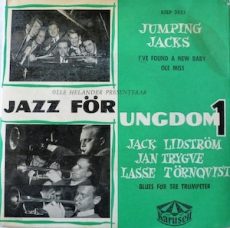
Lasse Törnqvist was born Lars Törnqvist on November 18, 1935 in Bromma, outside Stockholm, Sweden. Between 1952 and 1957 he played traditional jazz with the Midnight Stompers. He took a music hiatus but picked up playing again in 1973 in more swing and mainstream influenced sextest and septets, like the Olle Orrjes Jazz Band and Lasse Törnqvist’s Blue Stars.
He experimented with small bands in order to achieve a more acoustic sound. During the 1980s he often played with a cornet and piano duo. In 1992 he put a trio together with guitar and bass which became the Sweet Jazz Trio.
Cornetist Lasse Törnqvist, at 98 years old, no longer plays.
More Posts: bandleader,cornet,history,instrumental,jazz,music
Daily Dose Of Jazz…
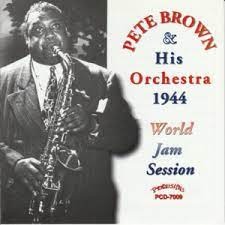
James Ostend Brown was born on November 9, 1906 in Baltimore, Maryland and learned to play piano, trumpet, and saxophone in his youth. Professionally known as Pete Brown, he played in New York City with Bernie Robinson’s orchestra in 1928, and played from 1928 to 1934 with Charlie Skeete.
1937 saw him working in the John Kirby band for several years and during the decade he worked with Frankie Newton, who was also a member of Kirby’s band. Brown and Newton recorded often. In addition to recording under his own name, he also recorded with Willie “The Lion” Smith, Jimmie Noone, Buster Bailey, Leonard Feather, Joe Marsala, and Maxine Sullivan.
Pete worked on 52nd Street in New York City in the 1940s, both as a sideman with Slim Gaillard, among others. As a bandleader, he was in Allen Eager’s 52nd Street All-Stars in 1946.
In the 1950s, Brown’s health began to fail, and he receded from full-time performance. He played with Joe Wilder, Big Joe Turner, Sammy Price, and Champion Jack Dupree. He appeared at the 1957 Newport Jazz Festival with Coleman Hawkins and Roy Eldridge. His last appearance was in 1960 with Dizzy Gillespie.
Alto saxophonist and bandleader Pete Brown, who was Cecil Payne and Flip Phillips teacher, transitioned on September 20, 1963 in New York City.
More Posts: bandleader,history,instrumental,jazz,music,saxophone
Daily Dose Of Jazz…
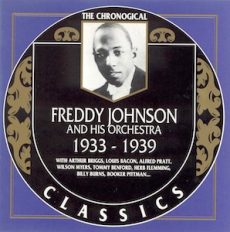
Louis Bacon was born on November 1, 1904 in Louisville, Kentucky. His family moved to Chicago, Illinois when he was a young child. After a short stint playing with Zinky Cohn in Michigan, he relocated to New York City in 1928. There he worked through 1938 with musicians Louis Armstrong, Benny Carter, Duke Ellington, Bingie Madison, Bessie Smith, and Chick Webb among others.
Contracting tuberculosis in 1938, resulting in a performance hiatus, but by early 1939 he was playing with Benny Carter once more. Later that same year, he embarked on a tour of Europe with Willie Lewis and remained there for two years. He recorded under his own name as well as with Lewis and Freddy Johnson.
After his return to the United States he worked with Garvin Bushell, Cootie Williams, and Jesse Stone. Shortly after the end of World War II, he stopped playing once again due to persistent health problems. He did play trumpet again briefly in 1959–60, working in New York, and late in his career taught voice and sang with Wilbur De Paris.
Trumpeter and vocalist Louis Bacon transitioned on December 8, 1967.
Daily Dose Of Jazz…
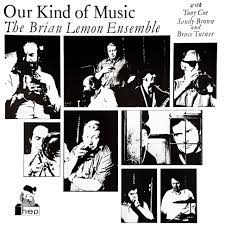
Raymond Crane was born on October 31, 1930, Skegness, Lincolnshire, England. Refusing to become discouraged with a music instructor who regarded his tooth unsuitable for his designed profession, he started playing trumpet around his city. After being employed in the East Midlands for several years, playing in groupings like the Mercia Jazz Music group, in 1963 he became a member of Bruce Turner’s Leap Music group. This brought him to the attention of the much wider market through concerts and information, such as Heading Places.
Afterwards he played in groups led by Brian Lemon, with whom he previously proved helpful while they had been still in the Midlands, and Stan Greig. Crane frequently accompanied American jazzmen, including Henry “Crimson” Allen, Ray Nance and Costs Coleman.
He occasionally performed as a pianist, which proved helpful to his being a musical pedagogue, teaching and leading a youth jazz band which graduated Martin Taylor and Guy Barker.
Trumpeter Ray Crane, who was a fiery, swing-era-rooted player, transitioned on June 29, 1994 at the age of 63.

More Posts: history,instrumental,jazz,music,trumpet
Daily Dose Of Jazz…
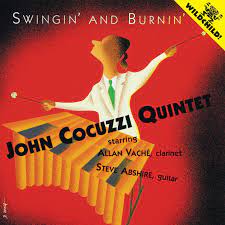
John Cocuzzi was born in Camp Springs, Maryland on Andrews Air Force Base on October 26, 1964. Taking a very early interest in playing drums, immediately after graduating from high school, in 1982 he attended Montgomery Junior College in Rockville, Maryland as an applied percussion major. While there he also studied arranging with Bill Potts, who wrote for Buddy Rich and others.
Towards the end of the decade he had established himself, performing in and around the nation’s capital. During these years, in addition to playing drums, Cocuzzi also played piano and vibraphone, gradually advancing his skills on the latter instrument until it became the dominant force in his impressive arsenal.
The early 90s saw John appearing at numerous festivals across the country, as well as Belgium and the Netherlands. Throughout his career he has mainly led his own small groups and has also played piano with the swing, blues and jump band, Big Joe And The Dynaflows, led by Big Joe Maher.
He has worked and/or recorded with Howard Alden, Joe Ascione, Louie Bellson, Bobby Gordon, Chuck Hedges, Nat King Cole, Milt Hinton, Dick Hyman, Russell Malone, Ken Peplowski, Bucky and John Pizzarelli, Houston Person, Eddie Locke, Barbara Morrison, Peter Appleyard, Russell Malone, Ed Polcer, Daryl Sherman, Warren and Allan Vaché, Johnny Varro, Bob Wilber and Snooky Young. A dynamic and swinging drummer, Cocuzzi is a fluently inventive improviser on piano. His vibraphone playing ably blends the urgent thrust he displays in his drumming with the fluid grace of his piano playing.
On radio, Cocuzzi recorded a session for NPR’s “Riverwalk: Live at The Landing” with the Jim Cullum Band. It was a tribute to Benny Goodman, The Swing Shift: Jazz on Late-Night Radio, and featured Allan Vaché on clarinet with Nicholas Payton on trumpet.
For 15 years, he was the music director for the 219 Restaurant’s Basin Street Lounge in Old Town, Alexandria, Virginia. He was also music director for the Crystal City Jazz Celebration from 2003 to 2006.
Jazz, blues and swing vibraphonist, pianist and drummer John Cocuzzi, whose influences are Lionel Hampton and Red Norvo, continues to perform
More Posts: bandleader,drums,history,instrumental,jazz,music,piano,vibraphone