

Daily Dose Of Jazz…
Al Klink was born on December 28, 1915 in Danbury, Connecticut. He began his professional career playing with Glenn Miller from 1939 to 1942 as a featured soloist, along with Tex Beneke, on the most well-known version of In the Mood. When Miller started playing in the U.S. military, he took a chair in Benny Goodman and Tommy Dorsey orchestras. He appeared in the 1941 film Sun Valley Serenade and 1942’s Orchestra Wives.
From 1952 to 1953 he played with the Sauter-Finegan Orchestra. Two years later he recorded his only session as a bandleader, performing six songs for a Bob Alexander album that won a Grammy Award. In the late 1960s to early Seventies, he was a tenor saxophone doubler on the staff of NBC’s Tonight Show Band under Doc Severinsen, where he was an occasional featured soloist.
He recorded with Mundell Lowe, Gerry Mulligan, Judy Holliday, Nelson Riddle, Phil Silvers, Cootie Williams and Rex Stewart. After a hiatus from recording and performing, he returned in 1974 when he began playing with the World’s Greatest Jazz Band. During the 1970s, he played with Glenn Zottola and George Masso, and continued playing until the mid-1980s, when he retired to Florida.
Swing tenor saxophonist Al Klink, who recorded ten albums as a sideman between 1956 and 1961, transitioned on March 7, 1991 at the age of 75 in Bradenton, Florida.

More Posts: history,instrumental,jazz,music,saxophone
Daily Dose Of Jazz…
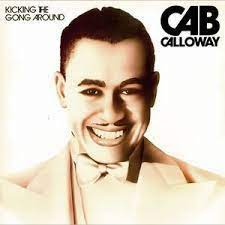
Cabell Calloway III was born on December 25, 1907 in Rochester, New York, on December 25, 1907 to two college graduates, his mother a teacher and church organist, and his father who worked as a lawyer and in real estate. The family moved to Baltimore, Maryland, in 1919 but soon after, his father died and his mother remarried.
Growing up in West Baltimore’s Druid Hill neighborhood Cab often skipped school to earn money by selling newspapers, shining shoes, and cooling down horses at the Pimlico racetrack where he developed an interest in racing and gambling on horse races. He ended up in Downingtown Industrial and Agricultural School, a Pennsylvania reform school run by his mother’s uncle.
Returning to Baltimore he resumed hustling, worked as a caterer while he improved his studies in school, and his mentors included drummer Chick Webb and pianist Johnny Jones. After graduating high school Calloway joined his older sister Blanche on tour for the popular black musical revue Plantation Days. He spent most of his nights in Chicago, Illinois clubs performing as a singer, drummer, master of ceremonies and as an understudy for singer Adelaide Hall. There he met and performed with Louis Armstrong, who taught him to sing in the scat style.
He established himself as a vocalist singing Ain’t Misbehavin’ by Fats Waller. The Thirties saw Cab’s orchestra permanently at the Cotton Club in Harlem, performed twice a week for radio broadcasts on NBC, and appeared on radio programs with Walter Winchell and Bing Crosby. He was the first Black American to have a nationally syndicated radio show and during the depths of the Great Depression he was earning $50,000 a year at 23 years old.
During the decade he recorded his most famous song, Minnie the Moocher, and became the first single record by a Black American to sell a million copies. He performed the song along with St. James Infirmary Blues and The Old Man of the Mountain, in Betty Boop cartoons of the same name.
His success with Minnie the Moocher and his relationship to the chorus earned him the nickname, The Hi De Ho Man. He performed a gliding backstep dance move called The Buzz, which some observers have described as the precursor to Michael Jackson’s moonwalk. He would go on to be featured in several films, and made his first Hollywood feature film appearance opposite Al Jolson in The Singing Kid in 1936.
His band included Ben Webster, Illinois Jacquet, Milt Hinton, Danny Barker, Doc Cheatham, Ed Swayze, Cozy Cole, Eddie Barefield, and Dizzy Gillespie. He entertained troops during World War II, hosted a weekly radio quiz show called The Cab Calloway Quizzicale and recorded songs full of social commentary. He appeared in the film Stormy Weather, one of the first mainstream Hollywood films with a black cast. Then he played the prominent role of Sportin’ Life in a stage production of Porgy and Bess. He continued to perform in movies and on stage throughout his career.
He published an autobiography and Cab Calloway’s Cat-ologue: A “Hepster’s” Dictionary, the first dictionary published by a Black American. It became the official jive language reference book of the New York Public Library.
Suffering a stroke at his home, vocalist, bandleader and actor Cab Calloway transitioned from pneumonia on November 18, 1994, at the age of 86, at a nursing home in Hockessin, Delaware.
More Posts: actor,bandleader,history,instrumental,jazz,music,vocal

Daily Dose Of Jazz…
David Louis Bartholomew was born Davis Bartholomew on December 24, 1918 in Edgard, Louisiana and initially learned to play the tuba, then took up the trumpet with lessons from Peter Davis, who also tutored Louis Armstrong. Around 1933 he moved with his parents to New Orleans, Louisiana where he played in local jazz and brass bands, including Papa Celestin’s. He played in Fats Pichon’s band on a Mississippi riverboat and took charge of his band in 1941. After a stint in Jimmie Lunceford’s band he joined the US Army during World War II and developed writing and arranging skills as a member of the 196th Army Ground Forces Band.
At the end of the war he returned to New Orleans and towards the end of 1945 he started leading his own dance band, Dave Bartholomew and the Dew Droppers, named after a now-defunct local hotel and nightclub, the Dew Drop Inn. Their popularity was a model for early rock ‘n’ roll bands the world over. In 1947, they were invited by club owner Don Robey to perform in Houston, Texas, where Bartholomew met Lew Chudd, the founder of Imperial Records.
His band made their first recordings for De Luxe Records in 1947 and their first hit was Country Boy, reached No. 14 in the national Billboard R&B chart in early 1950. Prominent members of the band, besides Bartholomew on trumpet and occasional vocals, were the saxophonists Alvin Tyler, Herb Hardesty, and Clarence Hall, the bass player Frank Fields, the guitarist Ernest McLean, the pianist Salvador Doucette, and the drummer Earl Palmer. They were later joined by the saxophonist Lee Allen.
Two years after their first meeting in Houston, Texas he was asked by Lew Chudd to become Imperial’s A&R man in New Orleans. Dave went on to produce singer Jewel King, and a young pianist Fats Domino, who went on to have great success with their collaboration. He went on to work at several labels including his own Broadmoor Records.
The 1970s and 1980s had Bartholomew leading a traditional Dixieland jazz band in New Orleans, releasing an album, Dave Bartholomew’s New Orleans Jazz Band in 1981. He produced numerous hit songs and was inducted into the Songwriters Hall of Fame, the Rock and Roll Hall of Fame, and the Louisiana Music Hall of Fame.
Trumpeter, bandleader, composer, arranger and record producer Dave Bartholomew, who was prominent in the New Orleans music scene and active in rhythm and blues, big band, swing music, rock and roll, New Orleans jazz, and Dixieland, transitioned from a heart attack in Metarie, Louisiana on June 23, 2019.
More Posts: aranger,bandleader,composer,history,instrumental,jazz,music,record producer,trumpet
Daily Dose Of Jazz…
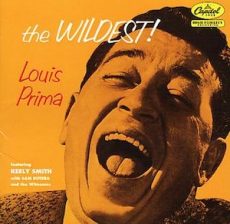
Louis Leo Prima was born December 7, 1910 in New Orleans, Louisiana into a musical Italian American family. His mother, a music lover, made sure that each child played an instrument, assigning him the violin and started out playing at St. Ann’s Parish. His interest in jazz came when he heard black musicians, including Louis Armstrong at a time Italians and Blacks in New Orleans frequently socialized together in the same clubs and bars.
He practiced continuously on his worn-down cornet and formed a band in 1924 with his childhood friends, bassist Candy Candido, Irving Fazola on clarinet and drummer Johnny Viviano. Prima attended Jesuit High School but transferred to Warren Easton High in 1926. There he played with the Eastonites, the school band. The next year he partnered with fellow musician Frank Federico and they played in the French Quarter.
By 1928 his decision was made to become a professional musician. After finishing high school he joined the Ellis Stratako Orchestra in 1929 then the Joseph Cherniavsky Orchestrafollowed by a temporary job playing on the steamship Capital that docked on Canal Street. His first break was when Lou Forbes hired him for daily afternoon and early evening shows at The Saenger.
1934 saw him begin recording for the Brunswick label. He recorded That’s Where the South Begins, Long About Midnight, Jamaica Shout, and StarDust. Prima and his New Orleans Gang featured Frank Pinero playing piano, Jack Ryan bass, Garrett McAdams guitar, and Pee Wee Russell clarinet. at the Famous Door. HIs recordings from 1935 were a combination of Dixieland and swing. He and Russell recorded The Lady in Red, a national jukebox hit. They also recorded Chinatown, Chasing Shadows and Gypsy Tea Room.
Martha Raye played a role in Prima’s professional and personal life and with her got his first national debut on The Fleischman Hour. He recorded Sing, Sing , Sing in 1936, which subsequently became a hit for Benny Goodman. Moving to California he expanded his music, joining the movement for big bands and orchestras. However for him the configuration was not successful.
He returned to New York City in 1937 with his quintet at the Famous Door. Then on to Billy Rose’s Casa Mañana club in 1938, earning nearly a quarter million dollars throughout seven weeks. This led to an East Coast to mid-West tour. During the war years, Louis was experiencing great success regardless of anti-Italian sentiment. He would go on to have several big hits but by the end of the war years, the popularity of big band music was diminishing. By 1947 he was playing more jazzy versions of his music for the next decade and a half.
Trumpeter, singer, entertainer and bandleader Louis Prima suffered a heart attack in 1973. Two years later he was diagnosed with a brain stem tumor, suffered a cerebral hemorrhage, went into a coma following surgery and never recovered. He moved back to New Orleans and transitioned three years later on August 24, 1978 at 67 in his hometown.
More Posts: bandleader,history,instrumental,jazz,music,trumpet

Daily Dose Of Jazz…
Robert Edward McCracken was born on November 23, 1904 in Dallas, Texas. Early in his career he played with local Dallas musicians like Jack Teagarden, Eddie Whitley, the Southern Trumpeters, and Doc Ross’s Jazz Bandits.
From 1926 to 1928 he lived in New York City where McCracken worked with Johnnie Johnston and Willard Robison’s Levee Loungers. After returning to Dallas, he worked with Ligon Smith, Joe Gill, and Ross again. He went on to tour with Joe Venuti and Frankie Trumbauer, before moving to Chicago, Illinois in 1939.
While in Chicago he played with Bud Freeman, and in the Forties he worked with Jimmy McPartland, Wingy Manone, Benny Goodman, Russ Morgan, and Wayne King. He substituted for Barney Bigard in the Louis Armstrong All-Stars international tour in 1952–53. Bob then toured internationally with Kid Ory and Red Allen throughout the 1950s.
During his later years in Los Angeles, California he played in several Dixieland revival groups, working with Ben Pollack, Pete Daily, Wild Bill Davison, and again with Teagarden, Ory, and Allen.
Clarinetist Bob McCracken, who is on many recordings including Kid Ory’s album, This Kid’s the Greatest, transitioned on July 4, 1972.

More Posts: clarinet,history,instrumental,jazz,music