

Daily Dose Of Jazz…
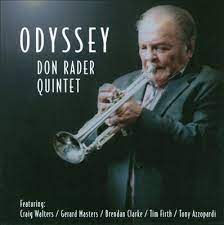
Donald Arthur Rader was born October 21, 1935 in Rochester, New York and began playing trumpet at age five, being taught by his father. He studied at Sam Houston State Teachers College before serving in the Navy in the 1950s as a member of the band.
At the end of the decade he played and arranged for Woody Herman into the Sixties, followed by Maynard Ferguson, Count Basie, Louie Bellson, Harry James, Terry Gibbs, Frank Foster, Henry Mancini, Les Brown from 1967 to 1972. Then he left Brown for the Stan Kenton Orchestra.
He toured with Della Reese, Sarah Vaughn, Andy Williams, Percy Faith, Diana Ross, Elvis Presley, Jerry Lewis and Bob Hope, both intermittently for 28 years with five tours of wartime Vietnam with the latter.
Assembling a quintet in Los Angeles, California in 1972 Don continued working with West Coast jazz musicians, including Lanny Morgan, Lew Tabackin, and Toshiko Akiyoshi. He recorded as a leader and worked in music education for many years, including in Australia in the 1980s.
He has recorded eight albums as a leader, and as a sideman three with Count Basie, and seven with Maynard Ferguson. Trumpeter Don Rader continues to perform at the age of 87.

More Posts: bandleader,history,instrumental,jazz,music,trumpet
Daily Dose Of Jazz…
Conrad Lanoue was born on October 18, 1908 in Cohoes, New York. He started on piano when he was ten years old and attended the Troy Conservatory.
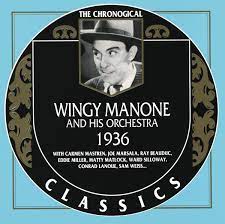
Beginning his career in his 20s, he played piano at hotels in his hometown. Conrad recorded with Red McKenzie in 1935, and under the combined leadership of trumpeter Eddie Farley and trombonist Mike Riley in 1935–36. During the 1930s he worked for Louis Prima, then Wingy Manone from 1936 to 1940 followed by playing with pianist Joe Haymes.
From the 1940s to the 1960s, he was a member of bands led by Lester Lanin, Charles Peterson, and Hal Landsberry. He also wrote big band arrangements. Pianist and arranger Conrad Lanoue, who never recorded as a leader, retired in 1968 due to illness and transitioned in Albany, New York on October 15, 1972.

Daily Dose Of Jazz…
David Bee was born on October 17, 1903 in Brussels, Belgium. He was a multi-instrumentalist adept on clarinet, harp, piano, and alto and tenor saxophone. For a year in 1924 he played with the group Bistrouille ADO before co-founding an ensemble with Peter Packay called Red Beans. The group toured widely throughout western Europe.
After returning to Belgium, David joined Robert De Kers’s band, and also played in Paris, France at Chez Florencewith Benny Carter and Willie Lewis. He recorded with Gus Deloof in the early Forties and after World War II he played with Robert Bosmans and Chas Dolne later in the decade. He led his own bands and groups at various times in the 1950s and continued recording late into the decade and the 60s.
As a composer, Bee pennedr the tunes High Tension recorded by Luis Russell) and Obsession recorded by Ted Heath and Reg Owen.
Clarinetist, harpist, pianist, alto and tenor saxophonist, arranger and composer David Bee, also known as Ernest Craps, Ernie Sparks, and Manuel Travo, transitioned in 1992.
More Posts: arranger,clarinet,composer,harp,history,instrumental,jazz,music,saxophone
Daily Dose Of Jazz…
Loys Choquart was born on October 11, 1920 in Geneva, Switzerland. Leading his own ensemble by age 17, and at 19 had a position at Radio Geneva, remaining a broadcaster with the station for decades.
He first recorded with his ensemble the New Rhythm Kings in 1942, then with a new ensemble, the Dixie Dandies, in 1943 which included Henri Chaix and Wallace Bishop as sidemen.
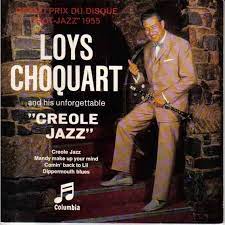
According to jazz historian Rainer E. Lotz, by the end of World War II “he was considered the best Swiss saxophone and clarinet soloist”, playing in both Dixieland and swing idioms. His Creole Jazz ensemble won the Prix Jazz Hot in 1955 on the basis of recordings made in 1952.
He also led a larger ensemble with an orchestra, which included pianist and vibraphonist André Zumbach. During his later life he toured extensively throughout western Europe and owned a club in Geneva called La Tour. Unfortunately there are no recordings of his playing online.
Reedist, bandleader and broadcaster Loys Choquart transitioned on December 10, 1989 in Puplinge, Switzerland.

More Posts: bandleader,broadcaster,history,instrumental,jazz,music,reeds
Daily Dose Of Jazz…
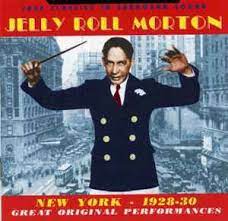
Lee L. Blair was born on October 10, 1903 in Savannah, Georgia and was a left-handed autodidact on banjo, aside from a few lessons taken from Mike Pingitore, the banjoist for Paul Whiteman. He played and recorded in New York City, New York with Thomas Morris’s Seven Hot Babies in 1926, then played with Charlie Skeete in 1926-28, before playing and recording with Jelly Roll Morton’s Red Hot Peppers in 1928-30.
In the Thirties he went on to play with Billy Kato, then played and recorded with Luis Russell and Louis Armstrong from 1935 to the end of the decade. He worked part-time in music through the 1940s, then joined Wilbur De Paris’s New New Orleans Jazz Band in the 1950s at Jimmy Ryan’s Club on West 52nd Street in New York City.
The summer of 1957 had him touring Africa with the DeParis band for the State Department. During the 1960s he played less, concentrating on raising chickens on his farm in Belmore, Long Island, but appeared at the 1964 World’s Fair in a trio with Danny Barker and Eddie Gibbs. He freelanced around New York with Hank Duncan and others until his death.
He never recorded as a leader, but appears on record with Morris, Morton, Russell, Armstrong, and De Paris, as well as with Dick Cary, Pee Wee Erwin, and Leonard Gaskin among others. He is honored in the jazz section of the Georgia Music Hall of Fame in Macon, GA.
Banjoist and guitarist Lee Blair, who never recorded as a leader, transitioned on October 15, 1966 in New York City.