

Daily Dose Of Jazz…
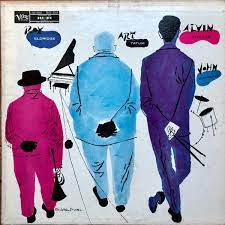
Alvin Stoller was born October 7, 1925 in New York City, New York and studied with drum teacher Henry Adler. He launched his career touring and recording with swing era big bands led by Benny Goodman, Tommy Dorsey, Harry James, and Charlie Barnet. He backed singers including Billie Holiday, Mel Tormé, and Frank Sinatra on some of their major recordings.
His drums may be heard on many of Ella Fitzgerald’s Songbook recordings; on Ella Fitzgerald Sings the Duke Ellington Songbook, having performed with the Duke Ellington orchestra itself, alongside Ellington’s own Sam Woodyard. From the moment Frank Sinatra started to record with Capitol Records in 1953, Stoller was the singer’s preferred percussionist and performed on nearly all Sinatra recordings until 1958.
He recorded with Art Tatum, Roy Eldridge, Oscar Peterson, Coleman Hawkins, Ben Webster, Benny Carter, Herb Ellis, and Erroll Garner among many other jazz musicians. The 1950s saw Stoller settlling in Los Angeles, California where he became respected for his work in the Hollywood studios which lasted for several decades.
Leonard Feather considered him a first-rate, swinging drummer. Buddy Rich, whom some consider to have been the greatest of all jazz drummers, chose Alvin to play drums on an album in which Rich sang suggests the esteem Stoller earned from his fellow musicians. He was the drummer on both Mitch Miller’s recording of The Yellow Rose of Texas and Stan Freberg’s parody of Miller’s recording.
Drummer Alvin Stoller, though an in-demand drummer during the Forties and Fifties and recorded more than five dozen albums, and eventually appeared to have been largely forgotten, transitioned on October 19, 1992.

More Posts: drums,history,instrumental,jazz,music
Daily Dose Of Jazz…
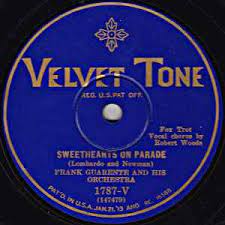
Frank Guarente was born Francisco Saverio Guarente on October 5, 1893 in Montemiletto, Italy and received formal training in music before emigrating to America in 1910. He settled in Allentown, Pennsylvania, where a brother of his lived.
Relocating to New Orleans, Louisiana in 1914, where he took a job in a bank and associated with ethnically Italian musicians such as Nick LaRocca and Tony Parenti. He met King Oliver and eventually started getting gigs with New Orleans brass bands. He played at Tom Anderson’s club and toured Texas under the name Ragtime Frank with his ensemble, the Alabama Five.
Serving in the United States Army during World War I in 1917, then played in Philadelphia, Pennsylvania with Charlie Kerr and Eddie Lang. Putting together his own group in 1921 in New York City, which included Arthur Schutt and Chauncey Morehouse. Soon after, Paul Specht picked his players up to join a larger orchestra, and Guarente played with Specht on European tours through 1924.
Leading a Specht side group called The Georgians, they recorded between 1922 and 1924 in the style of the Original Dixieland Jass Band. He left Specht in 1924, to form his own group, The New Georgians, that toured Europe and remained active until 1927. This he followed by working in England with the Savoy Orpheans and ensembles associated with Bert Firman.
Returning to the United States in 1928, he joined Specht’s orchestra again, playing until 1930. He joined Victor Young’s band in 1930, remaining there until 1936, and also played with Jimmy Dorsey, Tommy Dorsey, Jack Teagarden, Bing Crosby, and The Boswell Sisters on record and radio. In 1937 ill health forced him to stop performing and on July 21, 1942 in New York City, trumpeter, composer and bandleader Frank Guarente transitioned at the age of 48.
More Posts: history,instrumental,jazz,music,trumpet
Daily Dose Of Jazz…
Greely Walton was born in Mobile, Alabama on October 4, 1904. He played violin in his youth before settling on saxophone, and went on to study music at the University of Pittsburgh in the 1920s.
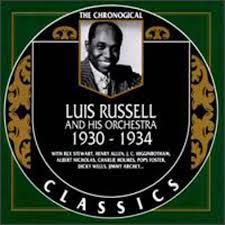
During the 1920s he first worked with Elmer Snowden, then with Benny Carter. For seven years beginning in 1930 he played with Luis Russell during which time they served as Louis Armstrong’s backing ensemble. After leaving Russell in 1938 he worked with Vernon Andrade, and in the Forties he worked with Horace Henderson, Cootie Williams, and Cab Calloway.
From 1945-47 he acted as musical director for The Ink Spots, and played with Noble Sissle and Sy Oliver towards the end of the decade. In the Fifties he worked in radio and television in the 1950s.
Retiring from music before the end of the decade, tenor saxophonist Greely Walton transitioned on October 9, 1993 in New York City.
More Posts: history,instrumental,jazz,music,saxophone
Daily Dose Of Jazz…
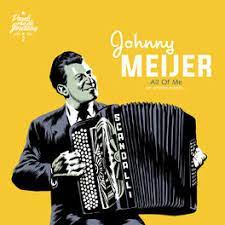
Johnny Meijer was born Jan Cornelis Meijer on October 1, 1912 in Amsterdam, Netherlands. Widely recognized as a virtuoso jazz accordionist not only did he play popular songs but also fast swing numbers. In 1974 he recorded the Dutch Swing College Band’s Johnny Goes Dixie LP, which went gold.
He will also be remembered for his proficiency with classical and folk music in his native city. was typically seen during performances with a cigar in his mouth. He was a major influence on French accordionist Richard Galliano.
Unfortunately, due to his short temper and drinking, during the last years of his life, Meijer was rarely invited to play large performances, mainly in connection with his short temper and his drinking, the King of the Accordion saw out his final days mostly in silence, occasionally playing weddings and parties.
The subject of a film, Amsterdam erected a statue to the musician. Accordionist Johnny Meijer, who celebrated his 75th birthday at the North Sea Jazz Festival, transitioned on January 8, 1992 in Amsterdam.
More Posts: accordion,history,instrumental,jazz,music
Daily Dose Of Jazz…
William Henry Graham was born on September 8, 1918 in Kansas City, Missouri and grew up in Denver, Colorado. During his years in Denver he led his own ensemble which included Paul Quinichette among its members. He went on to study at Tuskegee University and then Lincoln University of Missouri after a stint in the Army during World War II.
He worked with Count Basie, Lucky Millinder, Herbie Fields, and Erskine Hawkins early in his career. From 1946 to 1953, he worked with Dizzy Gillespie as a baritone saxophonist. As a composer under Gillespie, he penned the tune Oh-Sho-Be-Do-Be.
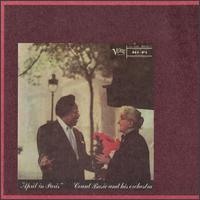
Following his Gillespie years he led his own band in New York City, in addition to touring Europe with Sarah Vaughan in 1953. From 1955 to 1957, Bill was back with Basie, including on the 1956 release April in Paris and the Newport Jazz Festival. In 1956-57 he teamed again with Quinichette, then in 1958 he found work with Duke Ellington and Mercer Ellington from 1958–59.
Outside of jazz, Graham also played on numerous R&B recordings, including those of Wynonie Harris, Joe Williams, and Little Willie John. In the 1960s he quit active touring and became a teacher in the New York City Public Schools system.
Saxophonist Bill Graham transitioned on December 29, 1975 in New York at the age of 57.

More Posts: history,instrumental,jazz,music,saxophone