

Daily Dose Of Jazz…
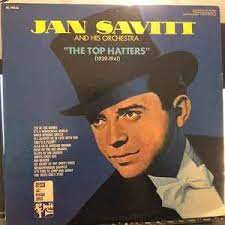
Jan Savitt was born Jacob Savetnick on September 4, 1907 in Shumsk, Russian Empire and reared in Philadelphia, Pennsylvania. He showed musical ability at an early age and began winning conservatory scholarships in the study of the violin. He was offered the position of concertmaster in Leopold Stokowski’s Philadelphia Symphony Orchestra, but turned it down, preferring to continue his studies at Curtis Institute. About a year later, believing himself ready, he joined Stokowski and the association continued for seven years, during which time he gained further laurels as a concert soloist and leader of a string quartet.
By 1938, Jan Savitt & His Top Hatters broadcasted as the KYW staff orchestra at KYW/NBC in Philadelphia coast-to-coast. The group also played at the Earl Theatre and performed with The Andrews Sisters and The Three Stooges.
Getting his start in popular music some time later as music director of KYW, he evolved the unique “shuffle rhythm” which remained his trademark. Numerous sustaining programs created such a demand for the “shuffle rhythm” that Jan left KYW to form his own dance crew.
His band was notable for including George “Bon Bon” Tunnell, one of the first Black singers to perform with a white band. Tunnell’s recording with Savitt included Vol Vistu Gaily Star co-composed by Slim Gaillard and Rose of the Rio Grande. Helen Englert Blaum, known at the time as Helen Warren, also sang with Savitt during the war years. His orchestra had a bit role in the 1946 film High School Hero.
Shortly before arriving in Sacramento, California with his orchestra in 1948 he was stricken with a cerebral hemorrhage and taken to Sacramento County Hospital. Bandleader, arranger, and violinist Jan Savitt, known as The Stokowski of Swing, transitioned on October 4, 1948 with his wife at his bedside.
More Posts: arranger,bandleader,history,instrumental,jazz,music,violin

Daily Dose Of Jazz…
Clyde Lanham Hurley, Jr. was born on September 3, 1916 in Fort Worth, Texas. Self-taught, he learned to play the trumpet by playing along with Louis Armstrong records. He studied music at the Texas Christian University in Fort Worth from 1932 to 1936 where he participated in the school’s jazz band. He began his career working with territory bands.
In 1937, while drummer/band-leader Ben Pollack was touring through Texas he heard Hurley and invited him to join his orchestra where he soloed on So Unexpectedly. While on a touring stop with the band in Los Angeles, California he left to become a studio musician. He played with Paul Whiteman then with Glenn Miller. While with Miller he was one of the key soloists appearing on the band’s studio recordings and live performances throughout America.
Hurley played the trumpet solo on Miller’s In The Mood, Slip Horn Jive and Tuxedo Junction. Leaving Miller in 1940 he went on to work with Tommy Dorsey before joining Artie Shaw in 1941.After his stint with Shaw, he freelanced for the movie studios. In 1941, he played the trumpet track for the classic Walter Lantz cartoon Boogie Woogie Bugle Boy of Company B.
He worked for MGM from the mid-Forties to the end of the decade and for NBC from 1950 to 1955. During the late 1950s, Hurley played in Dixieland groups, recording with Matty Matlock’s Rampart Street Paraders. In 1954, he recorded live with Ralph Sutton and Edmond Hall at the Club Hangover. His studio work in the 1950s included sessions with Paul Weston. He soloed on Memories of You on Weston’s Solo Flight album.
Trumpeter Clyde Hurley, who was prominent during the big band era, transitioned on August 14, 1963 from coronary occlusion in Fort Worth.
More Posts: history,instrumental,jazz,music,trumpet
Daily Dose Of Jazz…
Todd Washington Rhodes was born in Hopkinsville, Kentucky on August 31, 1899 and was raised in Springfield, Ohio. He attended the Springfield School of Music and the Erie Conservatory, studying as pianist and songwriter. After graduating in 1921, he began performing with drummer William McKinney in the jazz band McKinney’s Cotton Pickers, and played with Benny Carter, Coleman Hawkins, Fats Waller, Rex Stewart, Doc Cheatham, and Don Redman.
Leaving McKinney’s Cotton Pickers in 1934, he lived and played in Detroit, Michigan from then on. He formed his own small group in 1943, expanding it into the Todd Rhodes Orchestra by 1946. The orchestra made its first recordings for Sensation Records in 1947.
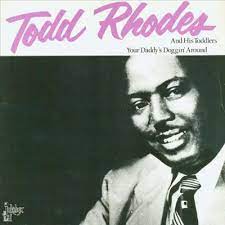
Turning more towards rhythm and blues music, the band became known as Todd Rhodes & His Toddlers, and their recordings were distributed by the Vitacoustic label. His instrumental Blues for the Red Boy reached number 4 on the R&B chart late in 1948, and the following year Pot Likker, made number 3 on the R&B chart. “Blues for the Red Boy” was later famously used by Alan Freed as the theme song for his Moondog radio show; Freed referring to the song as “Blues for the Moondog” instead of its actual title.
With his Toddlers, Rhodes also recorded Your Daddy’s Doggin’ Around and Your Mouth Got a Hole in It. After signing with King Records in 1951, he also worked with Hank Ballard, Dave Bartholomew, and Wynonie Harris. He featured singers such as Connie Allen, who recorded “Rocket 69” in 1952. After she left the band in early 1952, her position was taken by LaVern Baker. Rhodes made his last recordings in the late 1950s.
Developing diabetes, which was untreated for several years, pianist, arranger and bandleader Todd Rhodes transitioned following the amputation of a leg in Inkster, Michigan on June 4, 1965, at the age of 65.

More Posts: arranger,bandleader,history,instrumental,jazz,music,piano
Daily Dose Of Jazz…
William Stevens Bryant was born August 30, 1908 in Chicago, Illinois and while growing up took trumpet lessons to little success. His first job in entertainment was dancing in the Whitman Sisters Show in 1926. He worked in various vaudeville productions for the next several years, and in 1934 he appeared in the show Chocolate Revue with Bessie Smith.
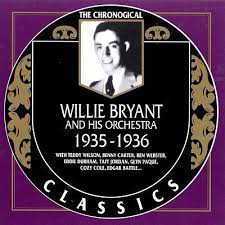
In 1934, he put together his first big band, which at times included Teddy Wilson, Cozy Cole, Johnny Russell, Benny Carter, Ben Webster, Eddie Durham, Ram Ramirez, and Taft Jordan. They recorded six times between 1935 and 1938 with Bryant sings on 18 of the 26 sides recorded.
Once his ensemble disbanded, Bryant worked as an actor and disc jockey. He recorded R&B in 1945 and led another big band between 1946 and 1948. During September and October 1949, he hosted Uptown Jubilee, a short-lived all-Black variety show on CBS-TV, airing on Tuesday nights. In the 1950s he was the emcee at the Apollo Theater in Harlem, New York.
Bandleader, vocalist, and disc jockey Willie Bryant, known as the Mayor of Harlem, transitioned from a heart attack in Los Angeles, California on February 9, 1964.
More Posts: bandleader,disc jockey,history,instrumental,jazz,music,vocal
Daily Dose Of Jazz…
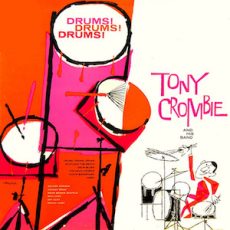
Tony Crombie was born Anthony John Kronenberg on August 27, 1925 in London, England’s East End Jewish community. A self-taught musician, he began playing the drums at the age of fourteen. He was one of a group of young men from the East End of London who ultimately formed the co-operative Club Eleven bringing modern jazz to Britain. He went to New York with his friend Ronnie Scott in 1947, witnessing the playing of Charlie Parker and Dizzy Gillespie, he and like-minded musicians such as Johnny Dankworth, and Scott and Denis Rose, brought be-bop to the UK. This group of musicians were the ones called upon if and when modern jazz gigs were available.
In 1948, Crombie toured Britain and Europe with Duke Ellington, who had been unable to bring his own musicians with him, except for Ray Nance and Kay Davis. Picking up a rhythm section in London, he chose Crombie on the recommendation of Lena Horne, with whom Crombie had worked when she appeared at the Palladium.
By 1956 Tony temporarily left jazz to set up a rock and roll band he called The Rockets, modeling themselves after Bill Haley’s Comets and Freddie Bell & the Bellboys. They released several singles for Decca and Columbia. He is credited with introducing rock and roll music to Iceland, performing there in 1957.
The next year the Rockets had become a jazz group with Scott and Tubby Hayes. During the following year, Crombie started Jazz Inc. with pianist Stan Tracey. During the Sixties he scored for television and film and established a residency at a hotel in Monte Carlo. He toured the UK with Conway Twitty, Freddy Cannon, Johnny Preston, and Wee Willie Harris.
In the early 1960s, Crombie’s friend, Victor Feldman, passed one of his compositions to Miles Davis, who recorded the piece on his album Seven Steps to Heaven. The song, “So Near, So Far”, has been recorded by players including Joe Henderson, who named a tribute album to Miles Davis using the title.
Over the next thirty years, Crombie worked with many American jazz musicians, including Ben Webster, Coleman Hawkins, Illinois Jacquet, Joe Pass, Mark Murphy and Eddie “Lockjaw” Davis.
After breaking his arm in a fall in the mid-1990s he stopped playing the drums, but continued composing until his death. Drummer, pianist, vibraphonist, bandleader and composer Tony Crombie, was regarded as one of the finest English jazz drummers and bandleaders, transitioned on October 18, 1999, aged 74.
More Posts: composer,drums,history,instrumental,jazz,music,piano,vibraphone