


Daily Dose Of Jazz…
Spencer Williams was born on October 14, 1889 in New Orleans, Louisiana and was educated at St. Charles University in his hometown. Performing in Chicago, Illinois by 1907, he moved to New York City about 1916 where he co-wrote several songs with Anton Lada of the Louisiana Five. Among those songs was Basin Street Blues, which became one of his most popular songs and is still recorded by musicians to this day.
Touring Europe with bands from 1925 to 1928, during this time he wrote for Josephine Baker at the Folies Bergère in Paris. Returning to New York City for a few years, at the end of the Roaring Twenties, Williams was tried but then acquitted on a charge of murder. In 1932, he was back in Europe where he spent many years in London, England before moving to Stockholm in 1951.
A prolific composer, some of Spencer’s compositions that became hit songs were Basin Street Blues, I Ain’t Got Nobody, Royal Garden Blues, Mahogany Hall Stomp, I’ve Found a New Baby, Tishomingo Blues and Everybody Loves My Baby, among numerous others.
Returning once again to New York City in 1957, pianist, composer, vocalist and bandleader Spencer Williams, was posthumously inducted into the Songwriters Hall of Fame. He passed away on July 14, 1965 in Flushing, New York.

More Posts: bandleader,composer,history,instrumental,jazz,music,piano,vocal
Daily Dose Of Jazz…
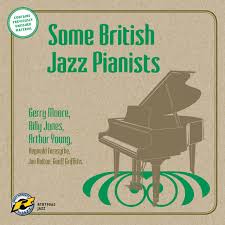
Gerald Asher Moore was born in London, England on October 8, 1903. He spent the years between 1922-1939 working freelance in London, playing at movie palaces and nightclubs.
Among the clubs he worked in the Twenties and Thirties were Sherry’s, the Empress Rooms, Chez Rex Evans, Bag o’ Nails, 43 Club, and Mema’s. His first live appearance on BBC radio in 1936 was heralded in The Radio Times with a listing as Britain’s King of Swing.At the end of the decade he worked with Buddy Featherstonhaugh, and inthe Forties with Adelaide Hall and with Vic Lewis.
Working in Europe late in the 1940s, he played in Germany with Max Geldray, at the Paris Jazz Fair with Carlo Krahmer, and at the Palm Beach Hotel in Cannes, France. Moore played with Harry Gold and Laurie Gold in 1954-57 and worked as a pianist on the Queen Mary and Caronia into the 1960s.
From the mid-1960s pianist Gerry Moore played in London clubs until he passed away on January 29, 1993 in Twickenham, southwest London.
More Posts: bandleader,history,instrumental,jazz,music,piano
Daily Dose Of Jazz…
Archie “Skip” Hall was born in Portsmouth, Virginia on September 27, 1909 and studied piano under his father. From the age of eight he lived in New York City and in the late 1920s he relocated to Cleveland, Ohio where he led his own band for most of the 1930s.
He worked as an arranger on contract and arranged for Jay McShann from 1940 to 1944 and during World War II played with Don Redman. In 1943 he entered military service and played in a band while stationed in England. Around 1945 Skip worked with Hot Lips Page and then joined the Sy Oliver band, who was his brother-in-law. Following this he worked with Wynonie Harris, Thelma Houston, and Jimmy Rushing before joining Buddy Tate’s group in 1948.
Hall went on to work with Tate for twenty years both as a performer and arranger. He also played in the 1950s and 1960s with Dicky Wells, Emmett Berry, and George James, as well as solo and with his own small groups. Arranger, pianist, and organist Skip Hall, who never recorded as a leader, passed away in November 1980 in Ottawa, Canada.

More Posts: arranger,bandleader,history,instrumental,jazz,music,piano
Daily Dose Of Jazz…
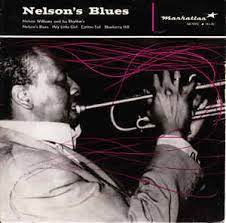
Nelson “Cadillac” Williams was born on September 26, 1917 in Montgomery, Alabama and began playing piano at age 13, however, he settled on the trumpet soon afterwards. It has been speculated that while still a teenager he may have played with blues pianist/singer Cow Cow Davenport.
In the 1930s, he played in the territory bands Trianon Crackerjacks and Brown Skin Models, and acted as musical director for the Dixie Rhythm Girls. Around 1940, he left Alabama for Philadelphia, Pennsylvania where he played with Tiny Bradshaw’s band before joining the U.S. Army during World War II.
After the war, Billy Eckstine hired Williams, before working with John Kirby and pianist Billy Kyle. In 1949, he began the first of several stints with Duke Ellington, who bestowed upon him the nickname “Cadillac”.
In 1951, he left Ellington’s employ and moving to Paris, France he led his own bands and recorded for French labels. He returned to Ellington in 1956, and played with him again in 1969 on a tour of Europe. Trumpeter Nelson “Cadillac” Williams settled in the Netherlands and passed away in 1973 in Voorburg.
More Posts: bandleader,history,instrumental,jazz,music,trumpet
Daily Dose Of Jazz…
Larry Binyon was born on September 16, 1908 in Urbana, Illinois and his mother shared some of her musical knowledge. By age eighteen he was at the University of Illinois at Urbana-Champaign,playing E flat soprano flute in the school’s concert band as well as flute and piccolo in its first regimental band during the 1926-27 school year.
After spending one year at college by 1927 he was already playing professionally in Chicago as part of Beasley Smith’s band, which also included drummer Ray McKinley and clarinetist Matty Matlock. Flute may have been his first instrument, or his primary one at school, but tenor saxophone became his main instrument for dance bands.
Later that year Binyon joined bandleader Ben Pollack when he returned to Victor’s Chicago studio after a five-month hiatus. History does not reveal him as a bandleader as there is little evidence of him having led his own bands, and no recordings were ever issued under his own name. He certainly has a load of credits as a band member, however, and was adept in both big band and small group settings.
Working a variety of radio jobs during the day, one eye glued open to help recover from the previous night’s late-ending gig.During the 1920s he worked with Irving Mills’ Hotsy-Totsy Gang, Roger Wolfe Kahn & His Orchestra, and Mildred Bailey with the Tommy Dorsey Orchestra to name a few.
His widest exposure on recording is his backup work on records by the Boswell Sisters, Bing Crosby, Billie Holiday, Fats Waller & His Buddies sessions, Henry “Red” Allen, Eddie Condon, Toby Hardwicke, Gene Krupa. Saxophonist, clarinetist, and flutist Larry Binyon passed away on February 10, 1974.
More Posts: clarinet,flute,history,instrumental,jazz,music,saxophone