

Daily Dose Of Jazz…
Rudy Powell was born in New York City on October 28, 1907 and learned piano and violin while young before taking on the clarinet and saxophone. In the late 1920s, he played with June Clark, Gene Rodgers’s Revellers, and Cliff Jackson’s Krazy Kats.
Rudy worked extensively as a sideman throughout his career. Among his credits in the 1930s are Elmer Snowden, Dave Nelson, Sam Wooding, Kaiser Marshall, Rex Stewart, Fats Waller, Edgar Hayes, and Claude Hopkins. The Forties saw him playing with Teddy Wilson, Andy Kirk, Fletcher Henderson, Eddie South, Don Redman, Chris Columbus, Cab Calloway, Lucky Millinder and Hopkins again.
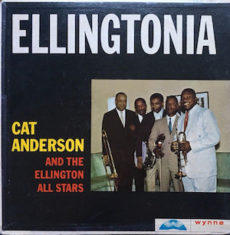
By the 1950s and through the Sixties Powell was with Jimmy Rushing, Buddy Tate, Benton Heath, Ray Charles, and Buddy Johnson. Never recording as a leader, he did record with Cat Anderson, Al Casey, Duke Ellington, Cliff Jackson, Jo Jones, Lucky Millinder, Jimmy Rushing, and Saints & Sinners. He continued playing intermittently into the 1970s and was a part of the photo A Great Day In Harlem.
Clarinetist and saxophonist Rudy Powell, who later changed his name to Musheed Karweem when he joined the Ahmadiyya Muslim Community, passed away at age 69 on October 30, 1976.
More Posts: clarinet,history,instrumental,jazz,music,saxophone
Daily Dose Of Jazz…
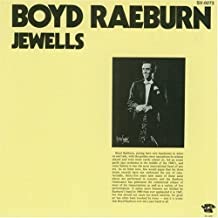
Boyd Albert Raeburn was born in Faith, South Dakota on October 27, 1913 and attended the University of Chicago, where he led a campus band. Gaining his earliest experience as a commercial bandleader at 1933~1934 Chicago’s World Fair, for the rest of the decade, he worked in and often led dance bands.
In the Forties the group passed through swing before becoming identified with the bop school. He went on to start a big band, which was active from 1944 to 1947, performing arrangements comprable to those used by Woody Herman and the progressive jazz of Stan Kenton during the same period. The compositions arranged by George Handy were the most contemporary, and after Handy’s departure Johnny Richards joined in 1947 and for the next year he wrote 50 compositions.
He composed Rip Van Winkle for his second wife, singer Ginny Powell, who sang with her husband’s group, as well as with Harry James and Gene Krupa. Boyd left music in the mid-1950s and they moved to Nassau, Bahamas where his wife transitioned.
Settling in New Orleans, Louisiana for a time, he ran a furniture store. Bass saxophonist and bandleader Boyd Raeburn passed away of a heart attack at age 52 on August 2, 1966 in Lafayette, Indiana.
More Posts: bandleader,history,instrumental,jazz,music,saxophone
Daily Dose Of Jazz…
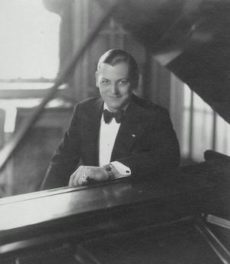
Joseph L. Sanders was born on October 26, 1896 in Thayer, Kansas. Best known for co-leading the Coon-Sanders’ Nighthawks along with Carleton Coon, the pair formed the group in 1920 in Kansas City under the name Coon-Sanders Novelty Orchestra.
Their broadcast for the first time on radio the following year, they became simply known as the Nighthawks because of their frequent appearances on late night radio. They recorded in Chicago, Illinois in 1924 and held a residency at the Blackhawk club in that city from 1926. The ensemble toured as a Midwestern territory band, and after Coon’s death, Joe continued to lead the band under his own name.
During the 1940s Sanders worked mostly in Hollywood studios, and occasionally led performances at the Blackhawk once again. He was a vocalist for the Kansas City Opera in the 1950s.
Pianist, singer, and bandleader Joe Sanders, associated with Kansas City jazz for most of his career, passed away in Kansas City, Missouri on May 14, 1965.
More Posts: bandleader,history,instrumental,jazz,music,piano,vocal
Daily Dose Of Jazz…
Leslie Anthony Joseph Thompson was born on October 17, 1901 in Kingston, Jamaica where as a child he studied music at the Roman Catholic Alpha Cottage School. When he was 16, he joined the West India Regiment and played in their band locally in Kingston movie palaces in the 1920s.
Moving to London, England in 1929 and studying at Kneller Hall. During this time he played euphonium and cornet. In 1930 he began playing with Spike Hughes, where he played trumpet, trombone, and double bass until 1932. Thompson toured Europe with Louis Armstrong, then formed his own band, intended to be all-black although initially with two white trombonists who blacked up. with the help of Ken “Snakehips” Johnson, who himself took over control of this band in 1936. Jiver Hutchinson was one of his sidemen.
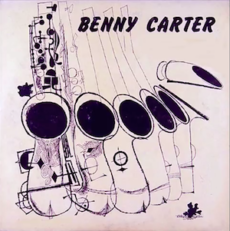
In 1936–37 Leslie played with Benny Carter, and later played double bass with Edmundo Ros. He served in the Royal Artillery on the south coast during World War II. He had been unable to become a bandmaster in the army because of rules preventing black soldiers becoming officers. He was active in dance halls and nightclubs after the war, but stopped playing music professionally after 1954 and later became a parole officer.
His autobiography was first published by Rabbit Press in 1985, and was reissued as Swing from a Small Island – The Story of Leslie Thompson by Northway Publications in 2009. Trumpeter Leslie Thompson passed away on December 26, 1987 in London, England.
More Posts: history,instrumental,jazz,music,trumpet
Daily Dose Of Jazz…
Lenny Hambro was born on October 16, 1923 in the Bronx, New York, the younger of two children. As a teenager, his brother-in-law introduced the 15 year old to woodwinds, giving him a soprano saxophone and introductory music lessons and taking every music class in which he could enroll. While in high school he took private lessons from Bill Sheiner, one of the leading music teachers and session musicians in New York City. During his later high-school years, Hambro played alto sax, tenor sax, clarinet, and flute in an assortment of teen dance bands, including a summer in the Catskills.
During the Second World War, at just 18, Hambro auditioned and got the empty seat in Gene Krupa’s band in 1942. However, he left the band in December of that year for the Army, there joining Ivan Mogul, Shorty Rogers and approximately 40 other musicians from the Bronx who had agreed to man the 379th Army Service Forces Band in Newport News, Virginia, where he stayed for three years. Post war he worked and recorded with Billy Butterfield and Bobby Byrne, before rejoining Gene Krupa as lead alto sax and featured jazz soloist through 1950.
He would go on to play and /or record with the Latin jazz ensembles of Vincent Lopez, Pupi Campo, Machito and his Afro-Cuban Orchestra, Ray McKinley Band. the Chico O’Farrill Orchestra, tour with The Gene Krupa Orchestra, Charlie Ventura’s Orchestra and Joe Loco’s band. He did studio work, worked as a music copyist, and taught private lessons.
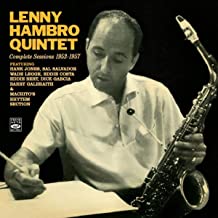
In 1954 he formed the Lenny Hambro Quintet, and in 1955 he again played in and managed the Ray McKinley Band, and toured the United States routinely during this period as well as England, Poland, Iron Curtain Europe, and North Africa in 1957 and 1958. He was a booking agent, opened up an advertising company, then returned to music. He recorded his final tracks at the Clinton Recording Studio at 653 10th Avenue in New York City in February, 1995 for Chico O’Farrill’s album, Pure Emotion for Milestone Records.
Lenny Hambro, who played alto, baritone and tenor saxophone, flute, and clarinet, passed away of a blood clot following open heart surgery on September 26, 1995, at Shore Memorial Hospital, Somers Point, New Jersey, a month shy of his 72nd birthday.
More Posts: bandleader,clarinet,flute,history,instrumental,jazz,music,saxophone