

Daily Dose Of Jazz…
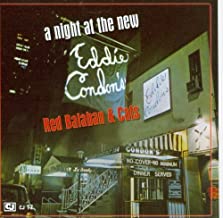
Red Balaban was born Leonard Balaban on December 22, 1929 in Chicago, Illinois. Moving the family to New York, he completed his early education at the Ethical Culture School. After graduating from Milford Academy in Connecticut, he graduated from Brown University.
Moving south to the panhandle, he raised breeding cattle on a farm in Bonifay, Florida and as a musician, he was a sideman, bandleader, and club owner. He played in regional ensembles from the 1950s, Red went on to hold a regular gig from 1966 at the Dixieland jazz club Your Father’s Mustache in New York City.
Balaban worked extensively as a sideman, for musicians such as Wild Bill Davison, Eddie Condon, Gene Krupa, Dick Wellstood, and Kenny Davern. He co-led Eddie Condon’s house band with Ed Polcer from 1975, and noted musicians in this outfit included Vic Dickenson, Warren Vache, and Connie Kay, before the club closed in the mid-1980s.
Tubist and sousaphonist Red Balaban, who also played banjo, stand-up bass, slide trombone, ukulele, and rhythm guitar, passed away after a brief illness seven days past his 84th birthday on December 29, 2013 in Milford, Connecticut.
More Posts: banjo,bass,guitar,history,instrumental,jazz,music,slide trombone,sousaphone,tuba,ukulele
Daily Dose Of Jazz…
Louis Raphael Mucci was born on December 13, 1909 in Syracuse, New York and began as a baritone horn player. By age ten, he was appearing in professional settings. As a teenager, he switched to trumpet and worked in the late 1930s with Mildred Bailey and Red Norvo before joining Glenn Miller’s ensemble in 1938-1939.
During World War II he played in the bands of Bob Chester, Hal McIntyre, Claude Thornhill, and Benny Goodman. In the first half of the 1950s, he worked as a house musician for CBS and also recorded with Buddy DeFranco and Artie Shaw.
The late 1950s saw him working with Miles Davis, Helen Merrill, and John LaPorta. His association with Davis lasted into the early 1960s and he played with Kenny Burrell in 1964. Trumpeter Lou Mucci passed away on January 4, 2000.
More Posts: history,instrumental,jazz,music,trumpet
Daily Dose Of Jazz…
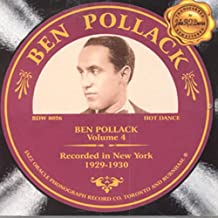
Gil Rodin was born in Russia on December 9, 1906 and studied saxophone, clarinet, flute, and trumpet in his youth. He played in Chicago, Illinois with Art Kahn in the middle of the 1920s. Moving to California and played with Harry Bastin before joining Ben Pollack in 1927, remaining in his band until 1934.
He simultaneously did studio work and played with Red Nichols’s radio band. Making his only recordings as a leader in 1930-31, amounting to four tracks which included Jack Teagarden on vocals, he also enlisted Eddie Miller and Benny Goodman as sidemen.
After Pollack’s band dissolved in 1934, Gil played with some of the players in the group until Bob Crosby regrouped them into his own ensemble. Rodin remained with Crosby through 1942, when he was drafted. While serving in the Army he played in the Artillery Band and after his discharge in 1944 he played with Ray Bauduc for a year, then with Crosby again.
His major composition was Big Noise from Winnetka, for which he wrote the lyrics with Bob Crosby. The music was written by Ray Bauduc and Bob Haggart. The song appeared in the films Raging Bull, Cannery Row, Manhattan Murder Mystery, Saving Mr. Banks, and What If.
Later in his career, Gil worked radio and television production, with Bill Cosby among others. He produced the soundtracks to the films American Graffiti and The Sting. Saxophonist, songwriter, and record producer Gil Rodin passed away on June 10, 1974.
More Posts: history,instrumental,jazz,music,record producer,saxophone,songwriter
Daily Dose Of Jazz…
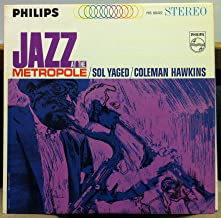
Sol Yaged was born on December 8, 1922 in Brooklyn, New York and began playing the clarinet at the age of 12 after hearing Benny Goodman’s broadcasts for Nabisco in 1935. He studied under a New York Philharmonic clarinetist, however turned down a classical career to play jazz in New York City nightclubs.
After three years in the Army during World War II, Yaged played clarinet professionally and continuously for over 70 years, with Phil Napoleon, Coleman Hawkins, Red Allen, and Jack Teagarden among others. In the 1960s, he began working primarily as an ensemble leader in City. In the Nineties he worked in Felix Endico’s swing band, and served as a consultant on Benny Goodman’s musical style for the 1956 film, The Benny Goodman Story.
For two years in the mid-1990s he worked under the musical direction of bandleader Jack Vartan at the Stony Hill Inn in Bergen County, New Jersey. He recorded four albums as a leader and six as a sideman. Clarinetist Sol Yaged, who was strongly influenced by Benny Goodman passed away on May 11, 2019.
More Posts: bandleader,clarinet,history,instrumental,jazz,music
Daily Dose Of Jazz…
Harry Barris was born on November 24, 1905 in New York City to Jewish parents. Educated in Denver, Colorado. he became a professional pianist at the age of 14. He led a band that toured the Far East at the age of 17.
The same year, he played the piano and occasionally sang in the Paul Ash Orchestra, while Al Rinker and Bing Crosby became members of the Paul Whiteman Orchestra as a singing duo. However, while the duo was appearing at the vast New York Paramount in 1927, sans microphones, they could not be heard by the audience. They were promptly dropped from the bill. However, a band member who knew Barris suggested that they add him to make a trio and The Rhythm Boys was formed in April 1927.
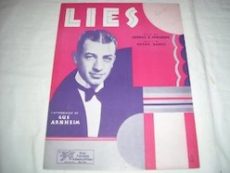
In 1930, The Rhythm Boys left Whiteman and joined Gus Arnheim’s Cocoanut Grove Orchestra. They made one more recording together, Them There Eyes but the boys decided to quit in 1931 agoing their separate ways. Harry however, changed his mind and returned to the Cocoanut Grove to complete his contract. Joining Arnheim’s singing group The Three Ambassadors.
Barris appeared in 57 films between 1931 and 1950, usually as a band member, pianist or singer. Seven of those films had Bing Crosby as the star. In 1932, Barris signed a contract to star in six shorts for Educational Pictures.
During World War II, along with Joe E. Brown, he went overseas to entertain troops. Having a lifelong drinking problem, sustaining a fall that fractured his hip in 1961, and despite a series of operations, he developed a cancerous tumor. Vocalist, pianist, and composer Harry Barris, who was one of the earliest to utilize scat singing in recordings passed away on December 13, 1962 at the age of 57 in Burbank, California.
Share a dose of a New York City composer to inspire inquisitive minds to learn about musicians whose legacy lends their genius to the jazz catalog…

More Posts: composer,history,instrumental,jazz,music,piano,vocal