

Daily Dose Of Jazz…
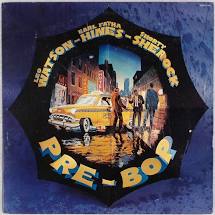
Clarence “Shorty” Sherock was born on November 17, 1915 in Minneapolis, Minnesota and attended the Illinois Military Academy. In the 1930s he was a soloist with the Jimmy Dorsey Orchestra and with the Gene Krupa Orchestra. He led a big band in the 1940s. In 1944 he was a featured soloist in Los Angeles, California at the first Jazz at the Philharmonic concert, a series started by Norman Granz. The concert included Nat King Cole, Illinois Jacquet, J. J. Johnson, Jack McVea, and Les Paul.
1946, Sherock recorded Leonard Feather’s composition Snafu, and in 1955 he recorded three tracks for Freddie Slack’s Boogie Woogie on the 88. As a member of the Nelson Riddle Orchestra, he recorded with Dean Martin, Frank Sinatra, Ella Fitzgerald, Van Alexander, Benny Carter, Bobby Darin, Bing Crosby, Pete Fountain, Mel Henke, Freddy Martin, Matty Matlock, and Mavis Rivers.
He only recorded two albums as a leader during his career. Swing trumpeter passed away on February 19, 1980 in Northridge, Los Angeles, California.
More Posts: bandleader,history,instrumental,jazz,trumpet
Daily Dose Of Jazz…
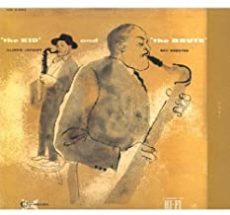
Albert Bennington Lucas was born on November 16, 1912 in Brantford, Ontario, Canada and took piano lessons as a child from his mother, Francis Bradley Lucas, a concert pianist. By the age of twelve, he had switched to bass and tuba. After his move to New York City in 1933, he played with Kaiser Marshall before joining the Royal Sunset Orchestra, where he played until 1942.
During the 1940s Albert appeared on record with Hot Lips Page, Coleman Hawkins, Eddie Heywood, Duke Ellington, Mary Lou Williams, James P. Johnson, J.J. Johnson, Ben Webster, Erroll Garner, and Eddie South.
Throughout his career he toured and recorded with Illinois Jacquet from 1947–53, recording in Detroit with Jacquet’s all-star band which included Sonny Stitt, Leo Parker, Sir Charles Thompson, Maurice Simon and Shadow Wilson before returning to play with Heywood again from 1954–56. He also recorded in the 1950s with Ruby Braff, Charlie Byrd, Teddy Wilson, Bill Doggett, Dexter Gordon, Oliver Nelson.
Working primarily as a studio musician in his last two decades, backing up groups at Apollo Theater performances, he played jazz only occasionally. Double-bassist Albert Lucas passed away on June 19, 1983, in New York City.
Daily Dose Of Jazz…
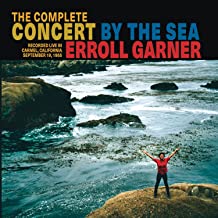
Eddie Calhoun was born November 13, 1921 in Clarksdale, Mississippi and raised in Chicago, Illinois. During the late Forties, he worked with Dick Davis and Ahmad Jamal in the early 1950s. Through the decade he played with Horace Henderson, Johnny Griffin, Roy Eldridge, Billie Holiday, and Miles Davis. He joined Erroll Garner in 1955 and played with him through 1966, recording extensively and touring worldwide.
After his time with Garner, Calhoun settled again in Chicago, where he played with vocalist and pianist Norvel Reed from 1967 to 1968. For two years from 1972 to 1974, he ran a nightclub called Cal’s in Chicago and led a sextet at the Fantasy Club from 1975 to 1980.
1980 to 1986 saw him accompanying pianist Lennie Capp before joining the Chicago All-Stars alongside Erwin Helfer for a tour of Europe. Never recorded as a leader, he recorded ten albums as a sideman during his career. Double bassist Eddie Calhoun passed away on January 27, 1993 in Paradise Lake, Mississippi.
More Posts: bass,history,instrumental,jazz,music
Daily Dose Of Jazz…
Sonny White was born Ellerton Oswald White on November 11, 1917 in Panama City, Panama. He took the nickname Sonny while a member of Jesse Stone’s band in the middle of the 1930s. Later in the decade, he played with Willie Bryant, Sidney Bechet, Frankie Newton, and Teddy Hill alongside Dizzy Gillespie and Kenny Clarke.
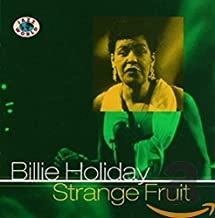
He recorded several sessions with Billie Holiday, with whom he had a yearlong affair in 1939, and their engagement was announced in Melody Maker that May. A member of different line-ups backing Holiday in New York between January 1939 and October 1940, Sonny performed on the classic recording of Strange Fruit.
The 1940s saw him spending time in the bands of Artie Shaw, Benny Carter, with whom he played before and after his World War II military service. He would play again with Carter, Dizzy Gillespie, Big Joe Turner, Lena Horne, Dexter Gordon from 1944 to 1946, and Hot Lips Page in 1947.
In the 1950s he played with Harvey Davis and then with Wilbur De Paris, remaining with the latter until 1964. In the 1960s he freelanced with Eddie Barefield, among others, and was working with Jonah Jones at the time of his death. Pianist Sonny White passed away on April 28, 1971 in New York City.
More Posts: history,instrumental,jazz,music,piano
Daily Dose Of Jazz…
Red Wooten was born Lawrence Bernard Wooten on November 5, 1921 in Social Circle, Georgia and started his career playing country & western before moving to big band jazz. While still in his teens, he landed a six-dollar-a-week gig on Archie “Grandpappy” Campbell’s C&W show on radio station WDOD in Chattanooga, Tennessee. The band included future Sons of the Pioneers guitarist Roy Lanham. Texas crooner Gene Austin hired the band and dubbed them the Whippoorwills. He toured with Austin for a time, then quit the band due to exhaustion.
Red went on to play with several successful big bands of the ’40s, including those led by Jan Savitt and Tony Pastor. Beginning in 1949, he played with a succession of prominent swing bandleaders, including Tommy Dorsey, Woody Herman, and Charlie Barnet. In 1957, he recorded with Harry Babasin’s Jazzpickers in a rhythm section that also included Red Norvo. He hooked up with Norvo and recorded and toured with the vibist in 1957-1958.
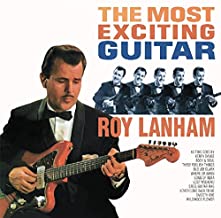
He recorded The Most Exciting Guitar with Lanham in 1959. That year, Wootten also toured with Benny Goodman and Frank Sinatra. With Sinatra, he did movies, TV, and worked the Sands Hotel in Las Vegas. In the ’60s and ’70s, he worked mostly in the studios, composed and arranged for film, and authored a book of musical exercises for bass instruments.
In addition to the aforementioned, Wootten played with Merle Travis, Glen Campbell, Eddie Dean, Mary Ford, Tex Williams, Jimmy Bryant, Joe Maphis, and Roy Rogers, among many others. He also worked on Gene Autry’s Melody Ranch radio show. Returning to country and won an Academy of Country Music Award as Best Bassist in 1982.
By the start of the Seventies, he was less active as a jazz musician and concentrated more on studio work. He also composed and arranged film scores. In the mid-1970s he recorded with Anita O’Day. Double bassist Red Wooten, whose name was sometimes spelled Wootten, at present no date of his transition is available.
More Posts: bass,history,instrumental,jazz,music