


Daily Dose Of Jazz…
Teddy McRae was born in Waycross, Georgia on January 22, 1908 but was raised in Philadelphia, Pennsylvania. Playing with local ensembles, including one composed of family members, when he was young. He played with June Clark in 1926 before his move to New York City to form his own band.
Through the Thirties he played with Charlie Johnson, Elmer Snowden, Stuff Smith, Lil Armstrong, and Chick Webb, the last as both a soloist and arranger. After Webb’s death he was musical director for the orchestra during its tenure under the leadership of Ella Fitzgerald from 1939 to 1941. He recorded in the decade with Benny Morton, Teddy Wilson, and Red Allen.
In the 1940s McRae worked in the orchestras of Cab Calloway, Jimmie Lunceford, Lionel Hampton, and Louis Armstrong; he also served as Armstrong’s musical director during his period with that band. He wrote tunes for Artie Shaw and formed his own band in 1945.
He and Eddie Wilcox formed their own short~lived R&B label, Raecox, in the 1950s. Teddy recorded with Champion Jack Dupree in 1955-56, and recorded a few sides for Groove Records in 1955 and Moonshine Records in 1958.
Tenor saxophonist and arranger Teddy McRae, who was also known as Teddy (Mr. Bear) McRae, or simply as Mr. Bear, passed away on March 4, 1999.
More Posts: arranger,bandleader,history,jazz,music,saxophone
Daily Dose Of Jazz…
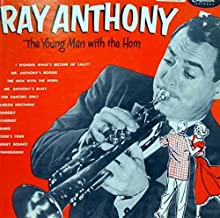
Ray Anthony was born Raymond Antonini on January 20, 1922 into an Italian family in Bentleyville, Pennsylvania but moved with his family to Cleveland, Ohio, where he studied the trumpet. From 1940~1941 he played in Glenn Miller’s band and appeared in the Glenn Miller movie Sun Valley Serenade before joining the U.S. Navy during World War II. After the war he formed his own group and the Ray Anthony Orchestra became popular in the early 1950s with The Bunny Hop, Hokey Pokey, and the theme from Dragnet. He had a No. 2 chart hit with a remake of the Glenn Miller tune At Last in 1952, the highest charting pop version of the song in the United States.
The following year his orchestra was featured when Helen O’Connell and Bob Eberly headlined a summer replacement program for Perry Como’s CBS television show. From 1953–1954 Ray was musical director of the television series TV’s Top Tunes.
After appearing as himself in the 1955 film Daddy Long Legs and starring in a short-lived television variety show, The Ray Anthony Show. Anthony he revved up his acting appearing in films during the late 1950s. In 1957, Anthony and his orchestra recorded the music score for the film This Could Be The Night, with vocals performed by Julie Wilson.
After his marriage to Mamie van Doren ende so did his brief film career. He continued his musical career and had another hit record with the theme from Peter Gunn, which reached No. 8 on the Billboard Hot 100 pop chart. Among his pianists was Allen “Puddler” Harris, and Kellie Greene, who also played the vibraphone. As a composer he wrote Thunderbird, The Bunny Hop, Trumpet Boogie, Big Band Boogie, and Mr. Anthony’s Boogie. Trumpeter Ray Anthony remains active today.
More Posts: bandleader,history,instrumental,jazz,music,trumpet
Daily Dose Of Jazz…
Wayman Carver was born on December 25, 1905 in Portsmouth, Virginia and was one of the earliest flute soloists to perform jazz. He was one of very few jazz flautists active in the swing era and his first professional experience was with J. Neal Montgomery.
After he moved to New York City in 1931, he recorded in the early Thirties with Dave Nelson, and played with Elmer Snowden, Benny Carter, and Spike Hughes.
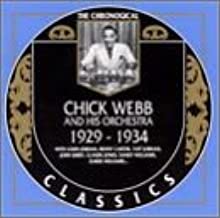
From 1934 to 1939 he played with Chick Webb on both alto saxophone and flute. After Webb died he continued in the orchestra during its period of leadership under Ella Fitzgerald until 1941.
>After leaving the jazz scene he became a professor of music at Clark College, where he taught saxophonists George Adams and Marion Brown, among others. Flutist and alto saxophonist Wayman Carver passed away on May 6, 1967 in Atlanta, Georgia.

Daily Dose Of Jazz…
Jabbo Smith, born as Cladys Smith on December 24, 1908 in Pembroke, Georgia. At the age of six he went into the Jenkins Orphanage in Charleston, South Carolina where he learned trumpet and trombone. By the age of 10 was touring with the Jenkins Band and at the age of 16, he left the Orphanage to become a professional musician, first playing in bands in Philadelphia, Pennsylvania, and Atlantic City, New Jersey. Around 1925 he made his home in Manhattan, New York City, where he made the first of his well-regarded recordings till 1928.
In 1928 Jabbo toured with James P. Johnson’s Orchestra until the show broke up in Chicago, Illinois. He stayed for a few years and his series of twenty recordings for Brunswick Records in 1929 are his most famous of which 19 were issued. Billed as a rival to Louis Armstrong, unfortunately, most of these records did not sell well enough for Brunswick to extend his contract.
1935 Chicago had him featured in a recording session produced by Helen Oakley under the name of Charles LaVere & His Chicagoans, which included vocals by him and LaVere on LaVere’s composition and arrangement of Boogaboo Blues. In the 1930s, he made his base in Milwaukee, Wisconsin for many years, alternating with returns to New York. While there he collaborated with saxophonist Bill Johnson. Subsequently, Smith dropped out of the public eye, playing music part-time in Milwaukee, and worked a regular job at an automobile hire company.
He made a successful comeback in the late 1960s playing with bands and shows in New York, New Orleans, Louisiana, London, and France through the 1970s and into the 1980s.
He recorded concerts in France, Italy, Switzerland and Netherlands with the Hot Antic Jazz Band. Trumpeter Jabbo Smith, known for his virtuoso playing, passed away on January 16, 1991.
More Posts: bandleader,history,instrumental,jazz,music,trumpet
Daily Dose Of Jazz…
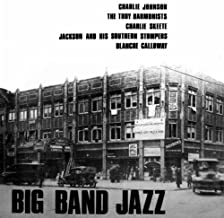
Mike Jackson was born on December 23, 1888 in Louisville, Kentucky. The details of his early life are not known, however, in 1921 he began composing songs for publisher Joe Davis. Soon after he became an accompanist playing piano for a number of early jazz and blues recordings, with Clara Smith, Alberta Hunter, Laura Smith, Thomas Morris, the New Orleans Blue Five, the Dixie Jazzers Washboard Band, Perry Bradford, and Buddy Christian.
He also recorded under his own name as Jackson and His Southern Stompers. With Morris, he worked in the vaudeville show The Wicked Age in 1927. He emigrated to Montreal, Canada in 1928, but returned to New York City in 1930, where he continued working as a composer.
His compositions included The Louisville Blues, written with Bob Ricketts in 1921 and recorded by W.C. Handy in 1923; Scandal Blues and Black Hearse Blues, both written in 1925; and Slender, Tender and Tall and Hey, Knock Me a Kiss, both of which were recorded by Jimmie Lunceford and Louis Jordan among others.
Pianist and composer Mike Jackson passed away on June 21, 1945 in New York City.