

Daily Dose Of Jazz…
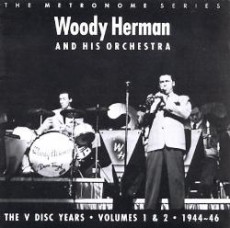
Dave Tough, born April 26, 1907 in Oak Park, Illinois was sometimes Davie or Davey Tough. His decision to become a drummer was not supported by his family or community, so he ventured from his upper-middle class world to the evolving jazz scene of Chicago’s Southside, breaking both cultural and musical boundaries.
Dave worked Bud Freeman, Woody Herman, Eddie Condon, Red Nichols, Red Norvo, Tommy Dorsey, Bunny Berigan and Benny Goodman. Appearing as the poet-drummer character Dick Rough in the Autobiographical Novel of Kenneth Rexroth, he played at Chicago’s legendary Green Mask,
In the later 1920s, Tough floated between Nice and Paris doing freelance work, touring and recording throughout Europe mostly on the Tri-Ergon label in the early Thirties. During this overseas period he worked loosely with George Carhart and while in Paris he had extensive sessions with Mezz Mezzrow.
Though without official record,he spent portions of 1942-44 in the Navy playing behind Shaw’s Naval Band. He only led one album, a small-sided release by the Jamboree label. Although he had varied successes, one being with the Artie Shaw band, Dave also had difficulties with alcoholism and illness that caused him to lose a number of prominent jobs.
Although he was not known as a bebop drummer, he was a fan and admired the drumming of Max Roach. He was not a flashy, crowd-pleasing drummer like Gene Krupa or Buddy Rich, he was widely admired by other musicians for his taste and subtle rhythmic drive. Dixieland and swing drummer Dave Tough, described as the most important of the drummers of the Chicago circle in the 1930s and 1940s, passed away from a cerebral trauma after falling down on a Newark, New Jersey street on December 9, 1948 at age 41. He was inducted into the Big Band and Jazz Hall of Fame in 2000.

Put A Dose In Your Pocket

More Posts: drums
Daily Dose Of Jazz…
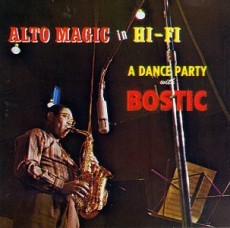
Earl Bostic was born in Tulsa, Oklahoma on April 25, 1912. He turned professional at the age of 18 when he joined Terence Holder’s Twelve Clouds of Joy. He then performed on the riverboats of New Orleans with Frank Marable before graduating from Xavier University.
He worked with territory bands as well as with Arnett Cobb, Hot Lips Page, Rex Stewart, Don Byas, Charlie Christian, Thelonious Monk, Edgar Hayes, Cab Calloway and others His first recording session was with Lionel Hampton in 1939 along with Charlie Christian, Clyde Hart and Big Sid Catlett. In 1938, and again in 1944, Earl led the house band at Smalls Paradise and while there he doubled on guitar and trumpet. During the early 1940s, he was a well-respected regular at the famous jam sessions held at Minton’s Playhouse.
Forming his own band in 1945, Bostic made his first recordings as a leader on the Majestic label. In the late Forties turned to rhythm and blues and had his biggest hits with Temptation, Sleep, You Go To My Head, Cherokee and his signature hit Flamingo. At various times his band included Keter Betts, Jaki Byard, Benny Carter, John Coltrane, Teddy Edwards, Benny Golson, Blue Mitchell, Tony Scott, Cliff Smalls, Sir Charles Thompson, Stanley Turrentine, Tommy Turrentine and others who rose to prominence in jazz.
He would go on to record Jazz As I Feel It with Shelly Manne, Joe Pass and Richard “Groove” Holmes. He wrote arrangements for Paul Whiteman, Louis Prima, Lionel Hampton, Gene Krupa, Artie Shaw, Hot Lips Page, Jack Teagarden, Ina Rey Hutton and Alvino Rey. His songwriting hits include Let Me Off Uptown that was performed by Anita O’Day and Roy Eldridge, and Brooklyn Boogie, which featured Louis Prima and members of the Booklyn Dodgers.
During the early 1950s Earl lived in Addisleigh Park in St. Albans, Queens before moving to Los Angeles, California where he opened his club, the Flying Fox. Suffering a heart attack he concentrated on writing arrangements. Alto saxophonist Earl Bostic, whose recording career encompassed small group swing-based jazz, big band jazz, jump blues, organ-based combos and a string of commercial successes, passed away October 28, 1965 from a heart attack while performing with his band in Rochester, New York. He was inducted into the Oklahoma Jazz Hal of Fame in 1993.
Uplift Someone’s World
More Posts: saxophone

Daily Dose Of Jazz…
Slick Jones came into the world on April 13, 1907. He was born Wilmore Jones in Roanoke, Virginia and worked with Fletcher Henderson from 1934 to 1936, then recorded and toured with Fats Waller from 1936 to 1941.
Following his time with Waller, he played with Stuff Smith, Eddie South, Claude Hopkins, Hazel Scott, and Don Byas. In the 1950s Jones worked with Sidney Bechet, Wilbur DePris and Doc Cheatham.
He record with Gene Sedric, Don Redman, Lionel Hampton and Una Mae Carlisle. He worked with Eddie Durham and Eddie Barefield in the 1960s. Though he never recorded as a leader, drummer Slick Jones remained active almost up until his death on November 2, 1969.
More Posts: drums
Daily Dose Of Jazz…
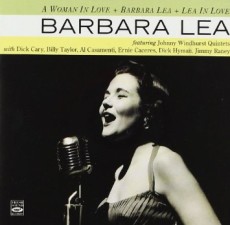
Barbara Lea was born Barbara Ann LeCocq on April 10, 1929 in Detroit, Michigan. A musical family, her musical heritage is traceable to a great uncle, Alexandre Charles LeCocq, an important nineteenth-century composer of French light opera. Her father changed their surname to Leacock and she shortened it to Lea when she began working professionally.
Boston was a hotbed of jazz in the late 1940s and early 1950s, allowing Lea to sing with major instrumentalists including as Marian McPartland, Bobby Hackett, Vic Dickenson, Frankie Newton, Johnny Windhurst and George Wein. She worked with small dance bands there before majoring in music theory at Wellesley College on scholarship. She also sang in the college choir, worked on the campus radio station and newspaper, and arranged for and conducted the Madrigal Group and brass choir concerts.
Barbara’s professional career started upon graduation with her early recordings for Riverside and Prestige. They were met with immediate critical acclaim that led to her winning the DownBeat International Critics’ Poll as the Best New Singer of 1956. She appeared in small clubs in New York and throughout the eastern U.S. and Canada, as well as on radio and TV.
With the near-demise of classic pop in the early 60s, Lea turned to the legitimate theatre, performing an impressive list of leading and feature roles in everything from Shakespeare to Sondheim. Moving to the West Coast received her M.A. in drama at Cal State Northridge and then returned to New York and taught speech at the American Academy of Dramatic Arts and acting at Hofstra University.
By the 1970s, with the resurgence of interest in show tunes and popular standards, Lea performed on NPR’s “American Popular Song with Alec Wilder & Friends”, appeared in two shows featuring the songs of Willard Robison and Lee Wiley, and received lengthy features in the New Yorker magazine. With her singing career was renewed she would consistently play the JVC, Kool and Newport Jazz Festivals as well as cabarets and concerts.
Jazz singer Barbara Lea, who also sang Dixieland, swing and cabaret, passed away on December 26, 2011 in Raleigh, North Carolina from complications of Alzheimer’s disease.
Put A Dose In Your Pocket
More Posts: vocal
Daily Dose Of Jazz…
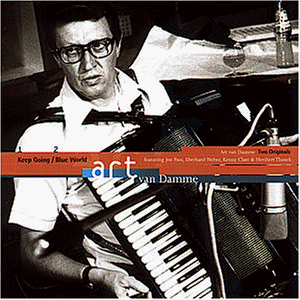
Art Van Damme was born on April 9, 1920 in Norway, Michigan. He began playing the accordion at age nine and started classical study when his family moved to Chicago, Illinois in 1934. By 1941 he joined Ben Bernie’s band as an accordionist and adapted Benny Goodman’s music to the instrument.
From 1945 to 1960 Art worked for NBC, performing on The Dinah Shore Show, Tonight, The Dave Garroway Show and other radio and TV shows with Garroway. He recorded 130 episodes of the 15-minute The Art Van Damme Show for NBC Radio.
Van Damme toured Europe and was popular with jazz audiences in Japan, regularly winning the domestic Down Beat Reader’s Poll for his instrument. Over the course of his career he recorded and released four-dozen albums for Capitol, Columbia, Harmony, BASF, Pausa, Finlandia, MPS record labels.
Retiring to Roseville, California, he continued to perform almost to the end of his life. Ill with pneumonia for several weeks, accordionist Art Van Damme passed away on February 15, 2010 at the age of 89.
Uplift Someone’s World
More Posts: accordion