

Daily Dose Of Jazz…
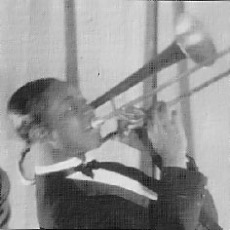
Jimmy Harrison was born on October 17, 1900 in Louisville, Kentucky and began on trombone at age 15, playing locally in the Toledo, Ohio area. He also played semi-pro baseball but chose music over a career in sports when he joined a traveling minstrel show in the late 1910s.
By 1919 Harrison was leading his own jazz ensemble in Atlantic City, New Jersey and played in the bands of Charlie Johnson and Sam Wooding. Moving to Detroit he played with Hank Duncan and Roland Smith. After returning to Toledo, he played gigs with June Clark and James P. Johnson. He followed this period with a stint in New York City with Fess Williams.
Giving leadership of his ensemble to June Clark in 1924, Jimmy continued to play with the group, worked with Duke Ellington during this period and in 1925 was working with Billy Fowler then with Elmer Snowden, Fletcher Henderson and Benny Carter’s Chocolate Dandies. While on tour with Henderson he took ill with a stomach ailment and though he continued to play for several months with Chick Webb. Trombonist Jimmy Harrison passed away on July 23, 1931 in New York City at the age of 30.

Put A Dose In Your Pocket
More Posts: trombone
Daily Dose Of Jazz…
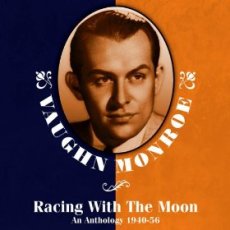
Vaughn Wilton Monroe was born on October 7, 1911 in Akron, Ohio and didn’t study music until attending the New England Conservatory in 1935 and then only one semester of voice. By 1940 he formed his first orchestra becoming lead vocalist and recording for the Bluebird label. That same year he built The Meadows, a restaurant/nightclub outside Boston and hosted the Camel Caravan radio program on location in 1946.
Monroe recorded extensively for RCA Victor into the 1950s and his signature tune was “Racing with the Moon” among his many other hits such as In The Still Of The Night, There I’ve Said It Again, Let It Snow, Let It Snow, Let It Snow; and Riders In The Sky are just a few. A composer, he also wrote a number of songs.
His interest turned to acting and as the movies also beckoned he pursued but with little vigor. He co-authored The Adventures of Mr. Putt Putt, a children’s book about airplanes and flying, published in 1949.
He hosted The Vaughn Monroe Show on CBS television in the Fifties, and appeared on Bonanza, the Mike Douglas Show, the Ed Sullivan Show, the Jackie Gleason Show and American Bandstand. A major stockholder in RCA, Monroe appeared in print ads and television commercials for the company’s TV and audio products.
Vaughan Monroe, baritone singer, trumpeter, bandleader actor and composer died on May 21, 1973 shortly after having stomach surgery. He has two stars on the Hollywood Walk of Fame for recording and radio.
Dose A Day – Blues Away
Daily Dose Of Jazz…
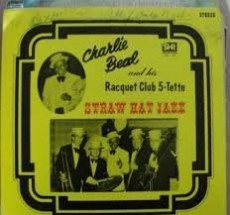
Charles Herbert Beal was born on September 14, 1908 in Redlands, California. He played freelance piano in the Los Angeles, California area before joining Les Hite’s band in 1930. Moving to Chicago, Illinois in 1932, he got a gig playing solo piano at the Grand Terrace in addition to working with Earl Hines, Carroll Dickerson, Jimmie Noone, Erskine Tate and Frankie Jaxon.
From 1933 to 1934 Beal accompanied and recorded extensively with Louis Armstrong. After departing from Armstrong he worked with Noble Sissle and then relocated to New York City late in 1934. There he did solo residencies and played with Adrian Rollini, Buster Bailey and Eddie South before moving to Canada for a time. After his return to the U.S. he served in the Army during World War II and upon his discharge he settled in Los Angeles again. There he played solo at the Jococo Room and found his way back into Armstrong’s ensemble in 1946.
From 1948 to 1956 he worked in Europe, returned to the States and spent three years as a member of the house trio at Embers in New York City. Later in his life he eventually returned to southern California, playing at the Racquet Club in Palm Springs. Pianist Charlie Beal passed away on July 31, 1991 in San Diego, California.
Inspire A Young Mind
More Posts: piano
Daily Dose Of Jazz…
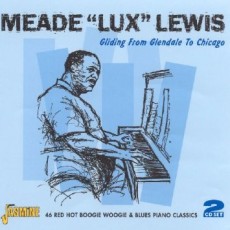
Meade Lux Lewis was born Meade Anderson Lewis on September 4, 1905 in Chicago, Illinois. As a child, he was greatly influenced by pianist Jimmy Yancey.
His 1927 rendition of “Honky Tonk Train Blues” for Paramount Records marked his recording debut and his best-known work. His early recordings included Adrian Rollini, Frankie Trumbauer, classical harpsichordist Sylvia Marlowe, theater organist George Wright and drummer Cozy Cole. His performance at John Hammond’s historic “From Spirituals to Swing” concert at Carnegie Hall in 1938 brought Lewis to public attention.
He went on to perform with Albert Ammons and Pete Johnson, played an extended engagement at Café Society, toured as a trio, and inspired the formation of Blue Note Records in 1939. Their success led to a decade long boogie-woogie craze with big band swing treatments by Tommy Dorsey, Will Bradley and others.
He became the first jazz pianist to double on celeste, recorded with Edmond Hall and Charlie Christian, also, then continued to Chicago and California. Lewis appeared in the movies “New Orleans”, “Nightmare” and “It’s A Wonderful Life” playing piano in the scene where George Bailey gets thrown out of Nick’s Bar.
Pianist and composer Meade Lux Lewis, who played the swing, blues and boogie-woogie styles, died in a car accident in Minneapolis, Minnesota on July 7, 1964.
Put A Dose In Your Pocket
More Posts: piano
Daily Dose Of Jazz…
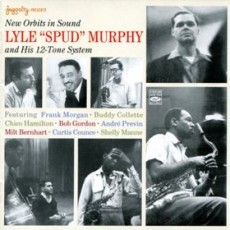
Lyle Stephanovic was born Miko Stefanovic to Serbian émigré parents in Berlin, Germany on August 19, 1908. Better known in the jazz world as Spud Murphy, he grew up in Salt Lake City, Utah where he took the name of a childhood friend. Murphy studied clarinet and saxophone when young and took trumpet lessons from Red Nichol’s father.
He worked with Jimmy Joy in 1927-28 and with Ross Gorman and oboist Slim Lamar in 1928. He worked the early 1930s as saxophonist-arranger for Austin Wylie, Jan Garber, Mal Hallett and Joe Haynes, and then became a staff arranger for Benny Goodman from 1935 to 1937. At the same time he also contributed charts to the Casa Loma Orchestra, Isham Jones, Les Brown and many others.
From 1937 to 1940 Murphy led a big band and recorded for Decca and Bluebird Records in 1938-39. In the 1940s he relocated to Los Angeles where he did work in the studios and with film music, in addition to authoring and teaching the 1200-page “System of Horizontal Composition” also known as the “Equal Interval System”. The Equal Interval System is a modern system of music composition, developed by Murphy over a lifetime of research.
Spud recorded two jazz albums in the 1950s, but his later career was focused on classical and film music. In 2003, orchestra leader Dean Mora, a close friend of Murphy’s, recorded some two dozen of his arrangements in a tribute CD, “Goblin Market”.
Multi-instrumentalist, bandleader and arranger Spud Murphy died in Los Angeles, two weeks short of his 97th birthday on August 5, 2005.
Give The Gift Of Knowledge