

Daily Dose Of Jazz…
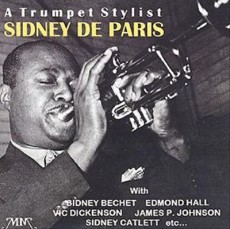
Sidney De Paris was born on May 30, 1905 in Crawfordsville, Indiana, the younger brother of trombonist Wilbur De Paris. A distinctive trumpeter who fit into both New Orleans jazz and swing settings, he was particularly expert with mutes. He was also a versatile musician, playing tuba, cornet, flugelhorn and singing from time to time.
From 1926 on into the Sixties, Sidney worked with Charlie Johnson’s Paradise Ten, Don Redman, Zutty Singleton, Benny Carter, Art Hodes, Jelly Roll Morton and Sidney Bechet. He recorded on the famed Panassie sessions of 1938 and as a leader recorded some highly enjoyable and freewheeling sessions in the Forties for Commodore and Blue Note.
He played with his brother Wilbur’s New New Orleans Jazz Band through the ’50s before ill health forced his retirement in the 1960s. Trumpeter Sidney De Paris passed away on September 13, 1967 in New York City.

Give The Gift Of Knowledge
More Posts: trumpet
Daily Dose Of Jazz…
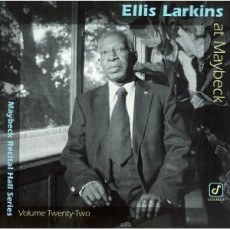
Ellis Larkins was born in Baltimore, Maryland on May 15, 1923. The pianist was the first African American to attend the Peabody Conservatory of Music in Baltimore and began his professional playing career in New York City after moving there to attend the Julliard School. Following school Larkins performed with Billy Moore and Edmond Hall.
He recorded with Coleman Hawkins, Mildred Bailey and Dickey Wells in the 1940s, Ruby Braff and Ella Fitzgerald in the Fifties recording “Ella Sings Gershwin” and “Songs In A Mellow Mood” with the latter. His 1960s work included recordings and/or performances with Eartha Kitt, Joe Williams, Helen Humes, George Gibbs and Harry Belafonte.
Though he was best known as an accompanist, Larkins recorded several solo albums in the 1950s. In the 1970s he performed regularly at several New York venues, including Gregory’s, a small bar in the east 70s. Next to Jimmy Jones, traditional jazz fans regard him as one of the most lyrical and romantic pianists in jazz history. Ellis Larkins passed away on September 30, 2002.
Take A Dose On The Road
More Posts: piano
Daily Dose Of Jazz…
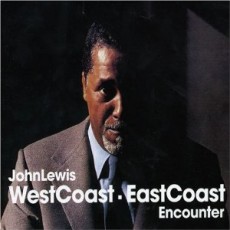
John Aaron Lewis was born in LaGrange, Illinois on May 3, 1920 but was raised in Albuquerque, New Mexico. He learned classical music and piano from his mother starting at the age of seven, then continued his musical training at the University of New Mexico and also studied anthropology. He served in the Army stationed in France during World War II and during his three-year tour of duty he met and performed with Kenny Clarke. Together they formed a band and in the bop style, John composed and arranged.
After the war he went to New York where he found work in the 52nd Street clubs with Allen Eager, Hot Lips Page and others. This led to him joining dizzy Gillespie’s bop-style big band and further developing his skill as a composer and arranger while matriculating through the Manhattan School of Music. He soon returned to Europe on tour, remained a continued to write and study piano. By ’48 he was back in the States playing with Charlie Parker, Illinois Jacquet, Lester Young, Miles Davis and Ella Fitzgerald.
Lewis, vibraphonist Milt Jackson, drummer Kenny Clarke, and bassist Ray Brown had been the small group within the Gillespie big band that played their own short sets when the brass and reeds needed a break. This led to the foursome forming a full-time working group in 1950, known at first as the Milt Jackson Quartet. After replacing Brown with Percy Heath the name was changed to the Modern Jazz Quartet and assuming the role of musical director from 1954 to 1974, John oriented it toward a quiet, chamber style of music that found a balance between his gentle, almost mannered compositions and Jackson’s more elemental writing and playing.
Over a long and illustrious career, John directed the School of Jazz at the Music Inn, was musical director for the Monterey Jazz Festival from 1958 to 1982, taught at City College of New York and Harvard University, rejoined the re-formed MJQ, led his own sextet, founded the American Jazz Orchestra, participated in Re-Birth of the Cool, was involved in various Third Stream Projects all while continuing to teach, compose and perform.
John Lewis, conservative bop pianist, composer, arranger and musical director for the Modern Jazz Quartet passed away in New York City on March 29, 2001.
Give A Gift Of Jazz – Share
More Posts: piano
Daily Dose OF Jazz…
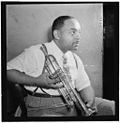
Ward Pinkett was born on April 29, 1906, the son of an amateur cornet player. He started playing the trumpet when he was ten years old. He played in the school band at Hampton Institute and later attended the New Haven Conservatory of Music.
After working with the White Brothers Orchestra in Washington, D. C. he moved to New York City and played for brief periods with the bands of Charlie Johnson, Willie Gant, Billy Fowler, Henri Saparo, Joe Steele and Charlie Skeete.
During his stint with Jelly Roll Morton in 1928–30, he participated in seven of Morton’s recording sessions and his solos on “Strokin’ Away” and “Low Gravy” that are considered by music historians to be the best of his career. He also worked with Chick Webb, Bingie Madison, Rex Stewart and Teddy Hill but was never able to achieve fame.
By 1935 he teamed with Albert Nicholas and Bernard Addison at Adrian Rollini’s Tap Room and also had a short stint with Louis Metcalf’s Big Band. He recorded with King Oliver, Bubber Miley, Clarence Williams, the Little Ramblers and James P. Johnson.
Ward Pinkett died of alcoholism-aggravated pneumonia on March 15, 1937 just six weeks short of his thirty-first birthday.
Take A Dose On The Road
Take A Dose On The Road
More Posts: bandleader,trumpet
Daily Dose OF Jazz…
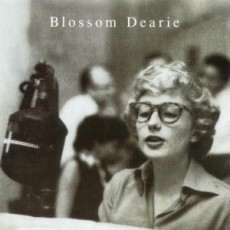
Blossom Dearie was born April 28, 1924 in East Durham, New York and as a child she studied Western classical piano but switched to jazz in her teens. After high school Dearie moved to New York City to pursue a music career and began to sing in groups such as the Blue Flames with the Woody Herman Orchestra and the Alvino Rey’s Blue Reys before starting her solo career.
She moved to Paris in 1952 and formed a vocal group, the Blue Stars of Paris, which included Michel Legrand’s sister Christine and Bob Dorough. In 1954 the group had a hit in France with a French version of “Lullaby of Birdland”. The Blue Stars would later evolve into the Swingle Sisters. Interestingly, on her first solo album released two years later, she plays the piano but does not sing.
After returning to the U.S. Blossom, Dearie made her first six American albums as a solo singer and pianist for Verve Records in the late 1950s and early 1960s, mostly in a small trio or quartet setting. In 1962, she recorded a radio commercial for Hires Root Beer. Through the Sixties she recorded with orchestra, performed in supper clubs around New York, appeared at Ronnie Scott’s in London and recorded four albums in the UK.
After a period of inactivity, by the ‘’70s she established her own label, Daffodil Records, lent her voice to “Mother Necessity” and “Figure Eight” on “Schoolhouse Rock!” and she collaborated with Johnny Mercer on one of his final songs “My New Celebrity Is You”. Her voice and songs have been featured in such films as Kissing Jessica Stein, The Squid and the Whale, My Life Without Me and The Adventures of Felix.
Blossom Dearie, vocalist, pianist and one of the last remaining supper-club performers, continued to perform in clubs until shortly before she passed away on February 7, 2006 at age 84 in Greenwich Village, New York.
Dose A Day-Blues Away