

Requisites
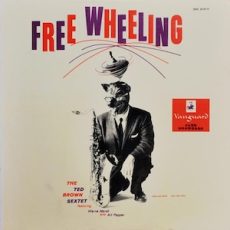
Free Wheeling ~ The Ted Brown Sextet Featuring Warne Marsh and Art Pepper | By Eddie Carter
I first heard a track from Free Wheeling (Vanguard VRS-8515) by The Ted Brown Sextet a few years ago on Sirius XM’s Real Jazz. I’ve loved the tenor sax since I was a child, so I was ecstatic to discover a new musician and finally get a copy. It was Ted’s first release as a leader, and the music within it is an excellent representation of West Coast jazz. During his career, he recorded with Lee Konitz, Hod O’ Brien, and Lennie Tristano, and on this date, he’s joined by Art Pepper on alto sax, Warne Marsh on tenor sax, Ronnie Ball on piano, Ben Tucker on bass, and Jeff Morton on drums. My copy is the 1975 King Record Company Japanese Mono reissue (Vanguard GXC 3121M).
Side one starts with the front line’s brisk introduction to Aretha by Ronnie Ball. Ronnie infuses the first solo with energy and agility. Art and Warne follow in successive order, hitting an ideal groove. Jeff is up next with a brief but lively finale ahead of the sextet’s theme’s restatement and climax. The ensemble moves the needle upward for Long Gone by Warne Marsh. The front line sets the mood in the opening chorus; then, Ted makes his entrance first for an exciting solo. Warne steps up next and takes the reins. Ronnie follows with a swift reading; then Art gets right to work and cooks. Jeff signals the end with a brief comment into the closing chorus and ending.
Once We Were Young by Walter Gross is a lovely song that Ted begins with a dreamy melody that Warne picks up in the background. Ronnie comes in for a short, sensitive interlude until both horns return for a beautiful theme restatement and tender climax. Foolin’ Myself is the creation of Andy Razaf and Thomas “Fats” Waller. The rhythm section starts with a mid-tempo introduction, segueing into the catchy melody. Ronnie takes the lead and gives an enchanting interpretation. Ted begins the second statement, then is joined by Art and Warne in succession for a hauntingly sincere reading that concludes softly.
The sextet takes us to Avalon by Al Jolson, Buddy DeSylva and Vincent Rose. The song’s title comes from a California city, and the front line kicks off the lively melody together. Ted goes first and makes a vigorous opening statement. Jeff succeeds him and delivers the goods in a spirited conversation with the leader before the group reconvenes to take the song out. On a Slow Boat To China by Frank Loesser starts Side Two with the sextet slowing the beat slightly for the opening chorus. Ted is thoroughly at ease in the first interpretation, and then Ronnie takes a few lovely choruses. Ted and Ronnie have a short exchange preceding the song’s conclusion.
Crazy She Calls Me by Carl Sigman and Bob Russell begins with the ensemble’s moving, deeply satisfying theme. Warne is the first soloist, and from his horn, notes of velvety softness flow. Ronnie expresses the song’s sentimentality next. Ted handles the following reading with a good deal of warmth, and then Warne returns to help bring the song to a gorgeous climax. Broadway by Wilbur H. Bird, Teddy McRae and Henri Woode opens with the front line’s collective melody. Warne, Art, and Ted are the first three in the solo spotlight, followed by an ensemble chorus together. Ronnie takes a splendid reading next, then Ben has a short summation as Jeff keeps perfect time toward the finale.
Arrival by Ronnie Ball is our final stop in this cool jazz session, and it’s off to the races from the start of the melody. Art leads the way with a swift opening statement. Warne delivers the second solo fleetingly; then, both horns make quick work of the finale in an exchange with Jeff before taking the song out. Alfred Marx supervised the original session, and the Vanguard Recording Society, Inc. recorded it. The sound quality of this reissue is exceptionally good and for a vintage fifties recording, exceeded my expectations. The music is also excellent, as is the pressing, and the vinyl is noticeably quiet.
There is one error on my copy, which doesn’t appear on the original album. The composers for Crazy She Calls Me are incorrectly listed on the Side Two label as the team of Cahn and Mayer but actually are Carl Sigman and Bob Russell. The album cover is also one of the strangest I’ve ever seen, but don’t let that dissuade you from checking out Free Wheeling by The Ted Brown Sextet on your next record hunt. If you’re a fan of cool jazz or West Coast Jazz, it’s a great-blowing session with Warne Marsh and Art Pepper and a wonderful introduction to a musician deserving of wider recognition. To borrow a quote from the great Vin Scully in game one of the 1988 World Series, “Not a bad opening act!”
~ Avalon – Source: JazzStandards.com ~ Broadway, Crazy She Calls Me, On a Slow Boat To China – Source: Wikipedia.org © 2024 by Edward Thomas Carter
More Posts: choice,classic,collectible,collector,history,instrumental,jazz,music,saxophone
Requisites
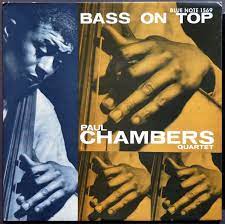
Bass on Top ~ Paul Chambers Quartet | By Eddie Carter
I was in the mood to hear something soothing before going to bed a few nights ago. The record I chose to play inspired my first March discussion by one of the great jazz bassists, Paul Chambers. Bass on Top (Blue Note BLP 1569/BST 81569) by The Paul Chambers Quartet is a 1957 release and his second record for the label. It was one of my mom’s favorite albums to listen to when she was cooking dinner. She always loved his big and warm sound, and his playing always knocked me out whenever I heard him. He is joined on this date by a marvelous rhythm section: Kenny Burrell on guitar, Hank Jones on piano, and Art Taylor on drums. My copy is the 2021 Blue Note Tone Poet Series Stereo Audiophile reissue, sharing the original catalog number.
Side One gets underway with Paul and Kenny’s two-instrument introduction to Yesterdays by Walter Gross and Jack Lawrence. Hank and Art come in to pick up the pace to deliver the alluring melody. The standard’s only solo is a thoughtful, reflective showcase by Paul, complemented by Hank, Kenny, and Art’s delicate accompaniment leading to the gentle ending. You’d Be So Nice To Come Home To by Cole Porter brings the beat up a few notches for the bassist’s introduction, segueing into his stating the melody supported by his colleagues. Chambers starts it off with an easy swinging interpretation, then gives way to Burrell’s unhurried statement. Jones brings on the pleasant finale before the leader’s return for the reprise and conclusion.
Chasin’ The Bird by Charlie Parker affords everyone a solo opportunity and begins with Kenny’s introduction to the group’s medium melody. Paul takes the lead with a lightly swinging solo, then Hank follows with a splendid statement. Kenny comes in next for a thoroughly satisfying reading, and Art cooks comfortably in the closer, preceding the theme’s return. Dear Old Stockholm is a Swedish folk song and jazz standard that receives a medium groove by the quartet. Kenny makes the introduction, and the ensemble joins in for the opening chorus. Chambers is up first and gives a soothing interpretation. Burrell follows with a sensitive and delicate performance; then, Jones wraps up the readings with a delightfully pleasant statement until the quartet regroups for the close.
The Theme ended many of Miles Davis’ live sets. The group opens with Kenny and Paul’s introduction to their lively melody. Paul swings right out of the gate in the opening solo. Kenny follows, maintaining the infectious beat in a vibrant statement. Hank comes in and builds the next reading exquisitely; then, Art shares the finale with Paul ahead of the climax. Confessin’, aka I’m Confessin’ That I Love You by Doc Daugherty, Ellis Reynolds and Al Neiburg begins with Paul’s introduction ahead of the foursome’s lovely opening chorus. Chambers handles the first of two interpretations flawlessly with excellent taste. Jones follows with a short solo as pleasant as a Sunday evening stroll. Chambers returns to give a brief statement that brings the set to a fitting climax.
Alfred Lion produced the original session, and Rudy Van Gelder was the man behind the dials of the recording. Joe Harley supervised this reissue’s release, and Kevin Gray mastered it. The sound quality is superb, with a breathtaking soundstage. A lot of thought and care went into the remastering of this audiophile reissue. The record is pressed on 180 grams of audiophile vinyl and is incredibly quiet until the music starts. The covers could be displayed at home on any wall, and the inside gatefold photos are wonderful. Every once in a while, something magical happens in a recording session where all the musicians come together in such a way that perfection is the result. Bass on Top by Paul Chambers is one of those albums.
Paul Chambers and his bandmates compel you to listen as they’re playing and, as the album unfolds, they provide the perfect backdrop to help you unwind after a long day, night, or week. If you’re new to jazz or only know of his work as a sideman with The Miles Davis Quintet and others. In that case, I happily recommend and invite you to check out Bass on Top by The Paul Chambers Quartet the next time you’re out record shopping. It’s a stellar album of soulful, swinging jazz at its best and a title you won’t have to listen to twice to know you love it!
~ I’m Confessin’ That I Love You, Yesterdays, You’d Be So Nice To Come Home To – Source: JazzStandards.com
~ Chasin’ The Bird, Dear Old Stockholm – Source: Wikipedia.org
© 2024 by Edward Thomas Carter
More Posts: bass,choice,classic,collectible,collector,history,instrumental,jazz,music
Requisites
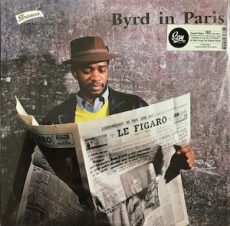
Byrd in Paris, Volume 1 ~ The Donald Byrd Quintet Featuring Bobby Jaspar | By Eddie Carter
The Donald Byrd Quintet enters this morning’s spotlight with Byrd in Paris, Volume 1 (Brunswick 87 903), the first of two albums taken from the group’s 1958 appearance at The Olympia Theatre. Its companion release is Parisian Thoroughfare, and both were recorded at the conclusion of the quintet’s tour to Europe. Byrd in Paris was initially a French release in 1958 and would make its way to the U.S. two years later. The personnel is Donald Byrd (tracks: A1, A2, B3) on trumpet, Bobby Jaspar on flute (B1) and tenor sax (A1, A2, B3), Walter Davis Jr. on piano, Doug Watkins on double bass, and Art Taylor (A1, A2, B2, B3) on drums. My copy is the 2014 Sam Records French Mono audiophile reissue, sharing the original catalog number.
The set opens with Dear Old Stockholm, and as the song begins, Donald is off in the distance behind the quintet. He brings the horn into the forefront as he walks to the microphone, and the ensemble completes the melody. Bobby opens with a marvelous first solo. Donald is equally loose and free in the following reading. Doug offers one of the song’s best musical moments in the closing statement preceding the theme’s reprise and finale. Donald introduces Paul’s Pal by Sonny Rollins next and all the remaining tunes. The group begins with a mid-tempo melody. Bobby starts the solos with an easygoing statement. Donald follows with a neatly paced reading, and then Walter greets the finale like an old friend before the group takes it out.
Side Two gets underway with Bobby Jaspar on flute for his tune, Flute Blues. Bobby and Doug introduce the song’s first chorus with a two-instrument conversation before Walter joins them. Bobby dives into the opening statement with a consummate feeling. Doug finds a few new things to say in the second solo, and then Bobby and Doug are in complete agreement in the closing interpretation, leading back to the theme. The spotlight is on the rhythm section in Ray’s Idea by Ray Brown. Donald and Bobby sit this one out, and the trio works in perfect balance on the song’s speedy melody. Walter is the first to solo and puts the piano through a vigorous workout, then he and Art share an energetic exchange into the theme’s reprise, climax and audience’s approval.
The Blues Walk by Sonny Stitt is off and running from the ensemble’s theme. Donald opens at a blistering pace; then Bobby continues blowing up a storm. Walter communicates his ideas confidently next, and then Doug makes a few quick remarks. Art generates considerable heat in an aggressive conversation with Donald and Bobby, leading to the song’s climax and a huge ovation from the audience. Bruno Coquatrix produced the original session, and the reissue was remastered from the original tapes. This Sam Records audiophile reissue was also pressed at Pallas in Germany on 180 grams of audiophile vinyl, and the front and rear covers are sturdy. The album possesses an excellent soundstage, placing the listener in the audience. Also included is an additional insert with a photo of Donald Byrd.
I thoroughly enjoyed listening to Byrd in Paris, Volume 1. After hearing this Sam Records reissue, I’m going to revisit a few other titles I have in the library and feature them in future columns. If you’re in the mood for a live hard bop album with great tunes and tight musicianship. I invite you to consider Byrd in Paris, Volume 1 by The Donald Byrd Quintet Featuring Bobby Jaspar, on your next record treasure hunt. It’s a wonderful live album that still sounds great over six decades later and shouldn’t be missed for a spot in any jazz library!
~ Parisian Thoroughfare (Brunswick 87 904) – Source: Discogs.com ~ Dear Old Stockholm – Source: Wikipedia.org © 2024 by Edward Thomas Carter
More Posts: choice,classic,collectible,collector,history,instrumental,jazz,music,trumpet
Requisites
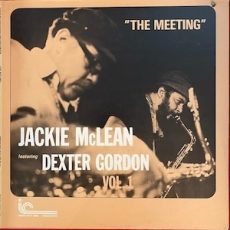
The Meeting, Vol. 1 ~ Jackie McLean Featuring Dexter Gordon | By Eddie Carter
I was looking for something to listen to after dinner a few nights ago when I came across a title I hadn’t heard in a while by two of my favorite saxophonists, Jackie McLean and Dexter Gordon. This morning’s record from the library is The Meeting, Vol. 1 (SteepleChase SCS-1006). It hit the Danish and Japanese stores in 1974 and is the first of two live albums recorded a year earlier on July 20 and 21 at Montmartre Jazzhus in Copenhagen. The front line is Jackie McLean on the alto sax and Dexter Gordon on the tenor sax. The supporting cast for both sets is a magical rhythm section: Kenny Drew on piano, Niels-Henning Ørsted Pedersen on bass, and Alex Riel on drums. My copy is the 1976 U.S. Stereo reissue (Inner City IC 2006).
Side One opens with Jackie’s introduction of the quintet ahead of the rhythm section’s introduction to All Clean by Dexter Gordon. Both horns enter next to introduce the vibrant melody. Dexter goes to work first on a lengthy opening solo. Jackie checks in next and keeps the flame burning. Kenny makes a vigorous contribution next, and then Niels-Henning takes a brisk walk in the following reading. Dexter and Jackie return to have a spirited conversation, leading to the song’s conclusion. Rue De La Harpe by Sahib Shihab begins with the ensemble’s mid-tempo theme. Jackie has the opening chorus and takes command effectively. Dexter flies straight ahead into the following solo, and Kenny keeps things moving with considerable passion until the theme’s climax.
Side Two starts with Sunset, a hauntingly beautiful ballad by Kenny Drew that he initially recorded on Everything I Love. Both horns introduce the song, proceeding to the ensemble’s delicately tender melody. Jackie begins the opening statement gently. Dexter follows with an extremely personal interpretation, and Kenny adds a meaningful comment preceding the theme’s restatement. On The Trail by Ferdé Grofé is the third of five movements in his Grand Canyon Suite. Jackie kicks off the theme’s first chorus. Dexter takes the baton in the second chorus and then makes a distinctive impression on the first solo. Jackie speaks with captivating inspiration in the following reading. Kenny executes a rewarding performance in the closer ahead of the finale.
Nils Winther did double duty on this release. He produced and recorded The Meeting, Vol. 1. The reissue’s sound quality is excellent, with a superb soundstage that transports the listener to a front-row seat in the Montmartre audience as the musicians are performing. Since I have this album in my library, I’ll be on the lookout for its companion, The Source, Vol. 2. If you’re a fan of Jackie McLean and Dexter Gordon, I invite you to attend The Meeting, Vol. 1 on your next record shopping trip. It’s a stellar lineup with great playing from each member of the quintet and a wonderful document of a live set that anyone can revisit anytime the album is on the turntable!
~ Everything I Love (SteepleChase Records SCS-1007), The Source, Vol. 2 (SteepleChase Records SCS-1020) – Source: Discogs.com ~ On The Trail – Source: Wikipedia.org © 2024 by Edward Thomas Carter
More Posts: choice,classic,collectible,collector,history,instrumental,jazz,music,saxophone
Requisites
A Letter From Slowboat ~ Ryo Fukui | By Eddie Carter
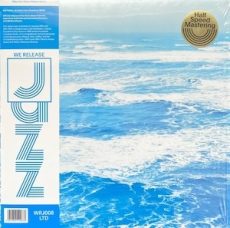
My nephew Kyle introduced me to this morning’s album by Ryo Fukui. A Letter From Slowboat (Sapporo Jazz Create SJC-1501) was initially released as a CD album in 2015. It was his final release and recorded with no audience on January 25 and 26 at the Sapporo Jazz Club that he owned with his wife, Yasuko. Ryo Fukui was born in Biratori, Hokkaido, Japan and at eighteen, learned the accordion. Four years later, he taught himself the piano and moved to Tokyo in 1970. His first album, Scenery, was released in 1976, and as his skills improved, he often performed at Shinjuku Pit Inn in Kichijōji and Jazz Inn Lovely in Nagoya. Takumi Awaya on bass and Ittetsu Takemura on drums complete the trio. My copy is the 2020 We Release Jazz Switzerland Stereo audiophile reissue (WRJ008LTD).
The album opener, Sonoro by Ryo Fukui, swings at a lively pace, beginning with the trio’s introduction ahead of their melody. Ryo takes the lead and stretches out on a cheerfully bright opening statement. Takumi takes over and walks effectively in the second reading. Ryo shares the final conversation with Ittetsu, preceding the theme’s restatement and lovely ending. Stella By Starlight, by Victor Young and Ned Washington, starts with a beautiful solo introduction by Fukui until his colleagues join him for the opening chorus. Ryo is the song’s only soloist, and he delivers an elegantly tender interpretation before the song’s gentle climax.
The tempo moves upward for Speak Low by Kurt Weill and Ogden Dash, opening at a fast clip with the trio’s brisk introduction and speedy theme. Ryo launches the first solo, exhibiting great energy, followed by the vigorous workout Ittetsu gives his drums ahead of the quick closing chorus and ending. Nobody Knows The Trouble I’ve Seen is an African American spiritual song from the 1800s. Their rendition opens with a gorgeous piano introduction that blossoms into a bluesy theme. Fukui stirs the soul with a tasteful interpretation. Awaya and Takemura compliment the pianist with their support into the elegant reprise and close.
Side Two starts with the trio’s visit to the Old Country by Nat Adderley and Curtis Lewis. It gets underway with a mid-tempo stroll through the melody. Ryo speaks prominently in the opening statement, and then Takumi builds the next reading efficiently. Ittetsu gets down to business last, until the group says goodbye in their closing chorus. Soultrane by Tadd Dameron is a pretty song that Fukui begins with a gentle introduction leading to a softly subdued melody. Ryo’s opening statement possesses all the warmth and feeling that one could ask for. Awaya answers with a response of haunting beauty in Fukui’s return for a tranquil finale.
Chasin’ The Bird by Charlie Parker is a lively tune with an irresistible groove as the melody unfolds. Ryo leads the way with an excellent interpretation. Takumi has a lot to say in the following reading. The pianist then blends beautifully with Ittetsu in an exchange of closing remarks before the theme resurfaces. Be My Love by Nicholas Brodszky and Sammy Cahn brings the album to a close with a showcase for one of Fukui’s prettiest performances. As the song’s only soloist, he provides an exquisite presentation that shows off his lyrical side, shadowed by Awaya and Takemura, leading to the lovely ending.
Masato Komatsu produced the original session of A Letter From Slowboat. It is unknown who recorded the original session, but Stephen Armleder and Oliver Ducret supervised this half-speed mastered audiophile reissue. The sound quality on this limited edition album is excellent with an impressive soundstage that’s very detailed. The record is pressed on one hundred eighty grams of audiophile vinyl and is quiet until the music starts. The front and rear cover is printed on three hundred fifty GSM (grams per square meter) of heavy card stock that despite not being a glossy cover, is still quite sturdy.
Ryo Fukui’s professional career lasted forty years, and, in that time, he only recorded five albums, but he did travel to and perform live in America and France. Fukui also taught jazz piano to students internationally. In 1995, Ryo opened the Slowboat Jazz Club with his wife and hosted local and international jazz musicians. He passed away on March 15, 2016, at age sixty-seven. After his death, Yasuko took over the day-to-day operations of the club, and it’s still going strong with live jazz daily. I thoroughly enjoyed listening to A Letter From Slowboat by Ryo Fukui. If you’re a fan of jazz piano, it’s a great discovery that I recommend you check out for a spot in your library!
~ Scenery (Nadja PA-7148) – Source: Discogs.com ~ Speak Low, Stella By Starlight – Source: JazzStandards.com ~ Be My Love, Chasin’ The Bird, Nobody Knows The Trouble I’ve Seen, Old Country, Ryo Fukui – Source: Wikipedia.org © 2024 by Edward Thomas Carter
More Posts: choice,classic,collectible,collector,history,instrumental,jazz,music,piano