

Requisites
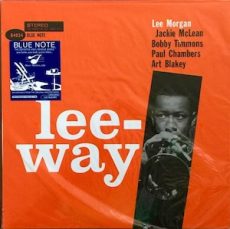
A few nights ago, I spent the evening listening to records by Howard McGhee, Freddie Hubbard and Woody Shaw and was still in the mood to hear another trumpet player, so I picked one of my favorite albums by Lee Morgan. This morning’s record submitted for your approval is Leeway (Blue Note BLP 4034/BST 84034), an excellent 1961 quintet session. I’ve always loved Lee’s tone, articulation, energy, and imagination since first hearing him on A Night In Tunisia, Blue Train, Candy, Houseparty, Introducing Wayne Shorter, The Cooker and The Sermon. An exceptional supporting cast backs Lee on this date: Jackie McLean on alto sax, Bobby Timmons on piano, Paul Chambers on bass and Art Blakey on drums. My copy is the 2016 Music Matters Stereo audiophile reissue (MMBST-84034).
These Are Soulful Days by Cal Massey opens Side One at an easy pace for the quintet’s bluesy melody. Paul leads off the solos with an immensely soothing interpretation. Bobby follows with an attractive performance. Jackie enters next with a satisfying statement, and Lee makes a brief point in the closing solo ahead of the theme’s return. Lee Morgan’s The Lion And The Wolff is his tribute to label founders Alfred Lion and Francis Wolff. The rhythm section’s introduction gets it started for the front line’s collective melody. Jackie leads the way with a relaxing solo; then Lee comes in for a carefree reading. Bobby delivers a delightful statement next, followed by Paul’s bouncy bass lines and Art’s concise comment until the closing chorus fades out slowly.
The quintet dives into Jackie McLean’s Midtown Blues to begin Side Two. The group’s leisurely-paced theme gets things off to a good start. Lee begins the opening solo in a happy vein. Jackie responds with a lightly swinging reading. Bobby keeps the ideas flowing in the third statement, and Paul puts together a satisfying conclusion preceding the ensemble’s reprise and exit. Nakatini Suite by Cal Massey was composed in 1948 and is dedicated to a columnist of The Pittsburgh Courier. The rhythm section sets the tone with their introduction to the quintet’s vibrant melody. Lee leads off the solos with a spirited statement. Bobby follows the leader and gets a chance to stretch out next. Art is right on the mark, with a brisk workout leading to the theme’s restatement.
Alfred Lion produced the original session, and Rudy Van Gelder was the recording engineer. Kevin Gray of Cohearent Audio mastered this audiophile reissue, and the album’s sound quality is simply breathtaking. If you close your eyes while listening, you’ll swear that the quintet is in your listening room playing. The record is pressed on 180 grams of audiophile vinyl and is dead silent until the music starts. The album cover is worthy of hanging on your listening room wall, and the gatefold photos from the session are gorgeous. Lee Morgan recorded thirty albums as a leader and appeared on some of the greatest jazz albums as a sideman. Leeway is sadly overlooked in his discography, but in my opinion, it’s one of his best releases of the sixties. If you’re in the mood for hard bop, I happily recommend Leeway by Lee Morgan. It’s an excellent introduction to his music and a terrific album you shouldn’t miss when record-shopping!
~ A Night In Tunisia (Blue Note BLP 4049/BST 84049), Blue Train (Blue Note BLP 1577/BST 1577), Candy (Blue Note BLP 1590/BNST 1590), Houseparty (Blue Note BLP 4002/BST 84002), Introducing Wayne Shorter (Vee Jay VJLP 3006/SR 3006), The Cooker (Blue Note BLP 1578/BST 81578), The Sermon (Blue Note BLP 4011/BST 84011) – Source: Discogs.com
© 2024 by Edward Thomas Carter
More Posts: choice,classic,collectible,collector,history,instrumental,jazz,music,trumpet
Requisites
Intermission Riff ~ Sonny Criss | By Eddie Carter
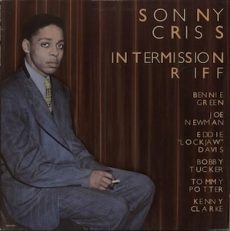
In 1951, producer Norman Granz, the founder of several jazz labels and the chief architect behind the Jazz at The Philharmonic concerts, began a tour featuring Billy Eckstine at the Shrine Auditorium in Los Angeles, California. During the intermission, an all-star septet led by alto saxophonist William “Sonny” Criss took the stage. The result of their performance is this morning’s album from the library, Intermission Riff (Pablo Records 2310-929), released in 1988 after archivist Eric Miller discovered the tapes. His bandmates are Joe Newman on trumpet, Bennie Green on trombone, Eddie “Lockjaw” Davis on tenor sax, Bobby Tucker on piano, Tommy Potter on bass and Kenny Clarke on drums. My copy is the original U.S. Mono release.
Intermission Riff by Ray Wetzel and Michael H. Goldsen opens the set. Eddie begins with a robust introduction before the ensemble’s lively melody. “Lockjaw” gets busy first in the opening solo. Joe motors along in the next spirited statement, and then Sonny follows with an electrifying reading that receives a huge ovation from the audience at its climax. Green provides an exclamation point with an exhilarating solo into a thrilling ending. How High The Moon by Nancy Hamilton and Morgan Lewis starts with the trio’s calypso introduction preceding the high-spirited theme. Newman starts things off, and then Davis is remarkably assured on the next solo. Potter gives an impressive reading next. Green excels on the following reading, and Criss cooks with passionate enthusiasm on the closer.
A rocking version of Perdido by Juan Tizol, Ervin Drake and Hans Lengsfelder starts with the septet’s vigorous melody. Criss makes a strong impression on the first solo. Newman shows assurance and confidence in the second reading. Tucker takes over with an energetic performance, followed by Davis’ unrestrained enthusiasm. Green enters the next solo with a vengeance, then Clarke closes with a brisk workout into the reprise and ending. Body and Soul by Johnny Green, Edward Heyman, Robert Sour and Frank Eyton begins with Green’s soothing introduction before the pace moves to mid-tempo for the ensemble’s melody. Newman, Tucker, Criss, and Davis all contribute concise readings that are expressed very well.
High Jump by E. Greene culminates the set in a blowing session as fast as the Road Runner after the septet’s joyous exuberance in the melody. Bennie speaks his piece first with the added horsepower of the front line in one chorus. Sonny meets the challenge on the second statement, and then Newman gives an aggressive reading that dares the rhythm section to keep up with him. Davis infuses his solo with a few bars of Wild Blue Yonder while exchanging a few thoughts with Kenny, who responds in explosive form preceding the closing chorus. George Horn initially mastered Intermission Riff and it was digitally remixed by Danny Kopelson. The album’s sound quality does have a few momentary sound dropouts, but Eric Miller thought the music was too important to be edited, so he didn’t remove them.
Intermission Riff gives a glimpse of Sonny Criss, who possessed a beautiful sound that was capable of creating emotional solos. He had much to offer the jazz world, as demonstrated on his albums for Imperial, Impulse, Muse Peacock, Prestige and Xanadu. In 1977, he was diagnosed with stomach cancer, and on November 19 of that year, at age fifty, he took his own life as a result of the constant pain. Whether you’re just discovering his music or are already familiar with his discography, I offer for your consideration on your next record shopping trip, Intermission Riff. It’s a remarkable live performance by
Sonny Criss that swings with the best of them and is recommended for a spot in any jazz library!
~ Body and Soul, How High The Moon, Perdido – Source: JazzStandards.com ~ Sonny Criss – Source: Wikipedia.org © 2024 by Edward Thomas Carter

More Posts: choice,classic,collectible,collector,history,instrumental,jazz,music,saxophone
Requisites
The Rat Race Blues ~ Gigi Gryce | By Eddie Carter
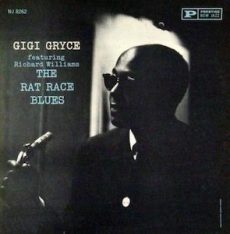
Multi-instrumentalist Gigi Gryce was one of the most exciting jazz musicians during the hard-bop era. In addition to the alto sax, he also played the flute and clarinet. He was also known as a brilliant arranger and composer. This morning’s record from the library, The Rat Race Blues (Prestige New Jazz NJLP 8262), is a splendid 1960 session that was one of the best records he recorded between 1955 and 1960. It’s the quintet’s second appearance together following their previous release, The Hap’nin’s. The ensemble consists of Richard Williams on trumpet, Gigi Gryce on alto sax, Richard Wyands on piano, Julian Euell on bass, and Mickey Roker on drums. My copy is the 1983 U.S. Original Jazz Classics Mono reissue (Prestige New Jazz OJC-081).
Side One opens with The Rat Race Blues by Gigi Gryce. A fiery uptempo smoker that begins with a scintillating introduction by Gigi and Richard soaring over the rhythm section. Wyands begins the first solo with his fingers flying fiercely over the keys. Williams opens the throttle on the muted trumpet next, and Gryce heightens the excitement in the finale. Strange Feelin’ by Sam Finch slows the speed to a medium pace for the ensemble’s relaxing melody. Williams steps up first for a carefree solo. Gryce gets into something good in the following reading. Wyands concludes with a charming interpretation, leading to a perfect climax.
Boxer’s Blues by Gigi Gryce begins with a two-instrument dialogue between Richard and Wyands. Gigi, Julian, and Mickey join them for a mellow theme. Gigi starts the solos with a lovely melodic line. Williams lays down the next elegant groove. Wyands takes over to give a graceful performance ahead of the reprise and slow fade. Blues In Bloom by Norman Mapp begins Side Two with a soft-voiced bass solo by Euell that segues into the quintet’s melody. Gryce goes to work first with an exceptionally tender tone, and then Williams carefully caresses the second reading with sensitivity. Richard delivers the closer with plenty of heart and soul into the theme’s restatement.
Monday Thru Sunday, also by Norman Mapp, is a slow blues that reaches a medium beat for the ensemble’s melody. Gigi solos first with a beautifully conceived interpretation. Williams maintains the therapeutic tempo in the second reading. Wyands is entirely at ease in the third statement, and Euell makes an impeccably polite comment during the ending theme. Esmond Edwards supervised The Rat Race Blues, and Rudy Van Gelder was the recording engineer. Gary Hobish mastered this Original Jazz Classics reissue. The album’s sound quality is excellent, with a superb soundstage placing the listener’s sweet spot in the center, surrounded by the quintet as they’re playing.
The Rat Race Blues is the next to last record Gigi Gryce would make before leaving the music scene to become a beloved music teacher in the Bronx. He continued teaching until just before his death at age fifty-seven on March 14, 1983. Of the eleven albums he recorded in those five years, The Rat Race Blues by Gigi Gryce is one of the gems that hard-bop fans shouldn’t miss on their next record shopping trip. It’s also a superb listening experience I’m sure you won’t be able to listen to just once!
~ The Hap’nin’s (Prestige New Jazz NJLP 8246) – Source: Discogs.com © 2024 by Edward Thomas Carter
More Posts: choice,classic,collectible,collector,history,instrumental,jazz,music,saxophone
Requisites
The Eternal Triangle ~ Freddie Hubbard and Woody Shaw | By Eddie Carter
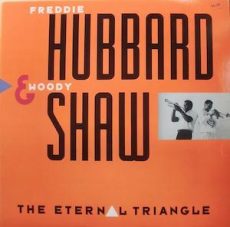
Freddie Hubbard and Woody Shaw enter this morning’s spotlight with a superb 1987 sextet album, The Eternal Triangle (Blue Note B1-48017). I’m a long-time fan of both trumpet players and have been listening to their albums recently. The Eternal Triangle is their second collaboration after Double Take, recorded and released two years earlier. Freddie is heard on the left channel, and Woody is heard on the right channel. Returning from the earlier session are Kenny Garrett on alto sax, Mulgrew Miller on piano and Carl Allen on drums. Ray Drummond takes over on bass for this date. My copy is the original U.S. Stereo release.
Down Under by Freddie Hubbard starts Side One with the rhythm section’s infectious introduction to the sextet’s danceable theme. Freddie kicks off the opening line with a strong tone. Mulgrew continues the effortless swing in the following reading. Woody makes quick work of the third solo, and then Kenny has a fine spot ahead of the ensemble’s return that fades out slowly. The Eternal Triangle by Sonny Stitt comes at you fast and furious from the sextet’s rapid-fire melody. Hubbard takes us for a high-speed ride first, and then Garrett heats things up in the second statement. Shaw steps up next for an aggressive reading. Miller gives a spirited presentation, and Carl ends the solos with a brisk workout into the reprise and quick stop.
The Moontrane by Woody Shaw takes off with him leading the ensemble in a lively melody. Woody is the first soloist, and he comes out swinging. Kenny gives a brisk reading in the second spot. Freddie adds a bit more fuel to the fire in the following statement, and Mulgrew leads us to a swinging conclusion with an inspired interpretation. Side Two gets underway with the sextet keeping its foot on the gas for Calling Miss Khadija by Lee Morgan. It begins with the rhythm section’s introduction; then, the front line joins in for the melody. Shaw ignites the song’s first brightly burning flame. Miller whets our appetite further in the second statement, and then Hubbard has a few memorable moments next. Garrett comes in to give a sizzling solo, and Carl gets the last word in a vigorous finale before the ensemble returns.
I first heard Freddie Hubbard’s Nostrand and Fulton on an earlier album, Here To Stay. The song’s title comes from a Brooklyn intersection, and the sextet begins the melody vibrantly. Freddie dives into the opening solo and wails, then Kenny follows with some heated sax play. Woody tackles the next reading with passionate fire, and Mulgrew closes with a very enthusiastic statement ahead of the theme’s reprise and conclusion. Tomorrow’s Destiny by Woody Shaw is off to the races from the sextet’s opening chorus. Miller is up first with a solo of high-spirited delight. Shaw goes to work next on a swift reading, then comes Hubbard’s exhilarating statement. Garrett builds the song’s final interpretation into an impressive conclusion preceding the ensemble’s ending theme and exit.
Michael Cuscuna and Don Sickler produced The Eternal Triangle. The recording engineer was Rudy Van Gelder. It is a full digital recording that emerges from your speakers with a stunning soundstage. The musicians are transported to your listening room with excellent fidelity. The pressing is also quite good, and the record is noticeably quiet until the music starts. If you are a fan of Freddie Hubbard and Woody Shaw, I hope you will consider The Eternal Triangle on your next record shopping trip. In my opinion, it’s one of the best albums in both musician’s discographies and a terrific release worthy of a spot in any jazz lover’s library!
~ Double Take (Blue Note BT-85121), Here To Stay (Blue Note BST-84135) – Source: Discogs.com © 2024 by Edward Thomas Carter For the serious collector of jazz… #Jazz #Classic #Collectible #Music #Notorious
More Posts: choice,classic,collectible,collector,history,instrumental,jazz,music,trumpet
Requisites
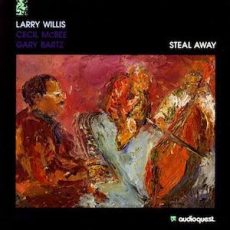
Steal Away ~ Larry Willis | By Eddie Carter
This morning’s album from the library is Steal Away (AudioQuest Music AQ-LP 1009), a little-known release by pianist Larry Willis. It’s the first of two records Willis made for the label and his seventh as a leader. He’s joined on this date by Gary Bartz (tracks: A2, B1) on alto sax and Cecil McBee (A2, B1, B2) on bass. My copy is the 1992 U.S. Stereo audiophile album.
Side One opens with Valdosta Blues by Larry Willis, the first of three solo piano performances. The title comes from the city in Georgia and begins with the pianist’s tranquil introduction that builds to a breezy melody. His ensuing solo is a superb performance that moves easily toward an exquisite ending.
The title tune, Steal Away, is an American Negro spiritual by Wallace Willis. It has been with Larry since age three and was a favorite song of his Mother’s to sing. Willis opens with a delicately gentle introduction to Bartz and McBee’s very pretty melody. Gary’s opening solo is imaginative and confident. Larry follows with sweet notes that shine like the rays of the sun, and Cecil breezes blissfully through the closing statement into a gentle climax. Fallen Hero is Larry’s tribute to his brother Victor. He tells an intimate story that reveals his love and affection for his brother with reflective inspiration and tenderness.
“D” Bass-ic Blues by Cecil McBee starts with the bassist’s bowed introduction, setting up Bartz and Willis to join him in a medium-tempo theme. Larry eases into the first solo with joyful vitality. Gary keeps the ball rolling with a remarkable reading of melodic lines. Cecil lets his bass do the talking in the finale preceding the theme’s reprise and conclusion. Ethiopia is a hauntingly beautiful song by Larry Willis that’s presented as a duet with Cecil McBee. The duo starts with a tender melody, and then Larry’s opening statement is as gentle as a light summer rain. Cecil comes in next with a graceful interpretation ahead of the duo’s delicately pretty ending.
The Meaning of The Blues by Bobby Troup and Leah Worth is given a tasteful treatment by Willis. He makes the song his own in a solo showcase that’s warm and nostalgic, thoughtful and heartfelt into a serene finale of haunting dreaminess. Joe Harley produced Steal Away, Pierre M. Sprey was the recording engineer, and Bernie Grundman mastered the album. It’s a pure analog recording with a stunning soundstage that was pressed on 180 grams of audiophile vinyl and is a perfect demonstration record for any quality audio system. Larry Willis recorded twenty-one albums as a leader and many more as a sideman. If you’re a fan of piano jazz, I invite you to consider Steal Away by Larry Willis on your next record-shopping trip. It’s an excellent place to start your discovery of his music and a welcome addition to any jazz fan’s library!
~ Fallen Hero, Ethiopia, “D” Bass-ic Blues – Source: Album Liner Notes by Bill Kohihasse
~ American Negro Spirituals were songs that contained hidden codes and messages for enslaved people to escape on their own or through the Underground Railroad – Source: Wikipedia.org © 2023 by Edward Thomas Carter
More Posts: choice,classic,collectible,collector,history,instrumental,jazz,music,piano