

Requisites
On The Spur Of The Moment ~ Horace Parlan | By Eddie Carter
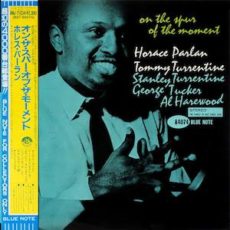
Any album by pianist Horace Parlan is always a delightful listen for yours truly. This morning’s choice from the library offered for your consideration is his 1961 release, On The Spur of The Moment (Blue Note BLP 4074/BST 84074). As a child, Horace was stricken with polio, resulting in the partial crippling of his right hand. He managed to develop a left-hand chord-voicing style and also learned to improvise with detailed comping using the right. Horace is supported on this date by Tommy Turrentine on trumpet, Stanley Turrentine (Tommy’s brother) on tenor sax, George Tucker on bass, and Al Harewood on drums. My copy used in this report is the 1984 Toshiba-EMI Japanese Stereo reissue (Blue Note BST 84074 – BNJ 71034).
Side One starts with an original by the leader, On The Spur of The Moment. Horace opens with a brief introduction segueing into the ensemble’s mid tempo melody. Tommy is up first and makes his mark with a gorgeous tone. Horace follows with some light-hearted swinging, then Stanley adds some soulful cooking to the third reading. George does some solid walking on the next solo and Al has a brief exchange with the front line ahead of the quintet’s closing chorus. Skoo Chee by Booker Ervin raises the energy level a few notches on the group’s collective melody. Stanley leads the way with a swinging opener, then Tommy attacks the second statement with spirited energy. Horace delivers a splendid solo next preceding Stanley’s vigorous closing statement and shouts during a slow fade.
And That I Am So In Love by Harold Ousley slows the pace down to midtempo with Stanley and the trio delivering a happy opening chorus. Stanley starts things off with a pleasant opening solo. Tommy follows with some thoughtfully interesting lines and Horace continues to mesmerize with a gorgeous finale before Stanley returns for the gentle dissolve into oblivion. Al’s Tune by Booker Ervin begins Side Two with the quintet’s easy-flowing melody. Tommy takes the lead this time with an exquisite opening statement. Stanley’s tenor brightens the second interpretation like the sun following the rain on a summer day. Horace serves up a sparkling reading next, followed by George who walks with authority on the finale into the ensemble’s conclusion.
Ray C. by Leon Mitchell is a slow blues that would be a perfect tribute to Ray Charles although this isn’t known according to Ira Gitler’s liner notes. The quintet creates a relaxed atmosphere on the bluesy theme, and Stanley, Tommy, Horace, and George all cruise at a comfortable speed before the quintet takes the song out. Roger Williams who wrote the album closer, Pyramid is a jazz pianist from Pittsburgh and the quintet begins the melody of this pretty song deceptively slowly. The pace picks up for Stanley who opens with an impressive interpretation. Tommy holds his own on the second statement with an exceptional performance and Horace puts the final stamp on the album with a sprightly finale leading to the ensemble’s out-chorus.
On The Spur of The Moment was produced by Alfred Lion and recorded by Rudy Van Gelder. This reissue was the first Stereo release of this album, and the sound quality is exceptional with a stunning soundstage. The musicians jump out of your speakers as if they’re playing in front of you. Tommy is on the left channel; Stanley is on the right channel, and the trio occupies both. Toshiba-EMI Limited has done an excellent job with the mastering of Rudy’s original tapes. This is one of three albums this group recorded together, the other two are Speakin’ My Piece (1960) and Comin’ Your Way (1987). If you’re in the mood for some Hard-Bop that swings, I offer for your next vinyl hunt, On The Spur of The Moment by Horace Parlan. It’s a great find for anyone who enjoys jazz and should fit nicely in any library!
~ Comin’ Your Way (Blue Note BLJ 84065), Speakin’ My Piece (Blue Note BLP 4043/BST 84043) – Source: Discogs.com © 2022 by Edward Thomas Carter

More Posts: choice,classic,collectible,collector,history,instrumental,jazz,music,piano
Requisites
The Great Jazz Trio At The Village Vanguard | By Eddie Carter
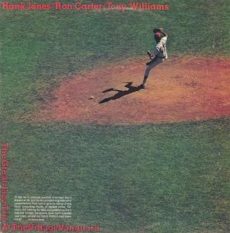
This morning’s subject submitted for your consideration is a recent addition to the library by one of the quintessential small groups in jazz. The Great Jazz Trio At The Village Vanguard (East Wind EW-8053) is the first of three live albums by Hank Jones on piano, Ron Carter on bass, and Tony Williams on drums recorded over two nights at the venue in 1977. My copy used in this report is the 1978 US Stereo release (Inner City Records IC 6013).
Side One starts the set with a speedy rendition of Moose The Mooche by Charlie Parker. The trio takes off on a lively opening chorus, succeeded by Hank who accelerates quickly on the first solo. Tony takes over for the closing statement with a fierce attack of intense heat preceding the trio’s swift climax.
Up next is Naima, John Coltrane’s beautiful ballad named for his first wife. The trio’s rendition begins with a delicately graceful piano introduction segueing into a breathtaking collective theme. Jones opens the first solo luxuriously, gaining momentum into an enticing ending. Carter displays his abundant skills on a delightful finale complemented by Williams’ gentle brushwork leading to a warm, expressive exit.
Side Two gets underway with a pretty tune by Claus Ogerman, Favors. The ensemble begins with an easygoing midtempo opening chorus. Hank is up first and lets his ideas unfold at a leisurely pace. Ron follows with a relaxing message on the second solo, then Hank and Tony share a carefree conversation leading to the ensemble’s theme reprise and soft close.
The set closes with a blues by Ron Carter, 12 + 12. After the ensemble’s happy melody, Jones kicks off the solos with an utterly joyful performance. Carter also says plenty on an impressively buoyant statement, followed by Williams who speaks last in an exchange with Jones into the theme’s reprise and Tony’s introductions of the group. The album was produced by Kiyoshi Itoh and Yasohachi Itoh. Co-Producer David Baker also was the recording engineer. He’s done a phenomenal job because the sound quality is splendid with an exquisite soundstage placing the listener’s sweet spot in the crowd as the trio’s performing. The only issue is a small typo appearing on the back cover and the Side Two record label of both the Japanese and US releases, Claus Ogerman’s name is mispronounced.
Hank Jones was regarded by critics and fans alike as one of the most gifted musicians in jazz with an extensive discography and a career lasting sixty-six years including thirty-six as a member of The Great Jazz Trio. He passed away on May 16, 2010, at age ninety-one. Ron Carter is a living legend and the most recorded jazz bassist in history. He also plays the cello, is still performing and recording, and just celebrated his eighty-fifth birthday. Tony Williams was one of the best drummers in jazz and for five years provided the power behind The Miles Davis Quintet. He passed away at age fifty-one on February 23, 1997; but leaves a lasting legacy of music as a leader and sideman. If you enjoy live jazz and are a fan of these great musicians, I invite you to check out The Great Jazz Trio At The Village Vanguard. It’s a terrific jazz album with superb performances that is sure to please novice and seasoned jazz fans alike!
~ The Great Jazz Trio At The Village Vanguard, Volume 2 (East Wind EW-8055), ~ The Great Jazz Trio At The Village Vanguard Again (East Wind UCCJ-4001) – Source: Discogs.com ~ Naima – Source: JazzStandards.com ~ Moose The Mooche – Source: Wikipedia.org © 2022 by Edward Thomas Carter
More Posts: bass,choice,classic,collectible,collector,drums,history,instrumental,jazz,music,piano
Requisites
My Laurie ~ Art Pepper | By Eddie Carter
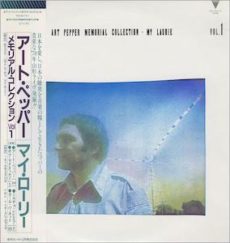
I’ve listened to and enjoyed the music of Art Pepper for many years. Despite his drug addiction and times spent in prison that interrupted his career, he recorded some great live and studio albums. My Laurie (Trio Records PAP-25037) is a 1978 live performance documenting the final part of a twenty-one-day, nineteen concert Japanese tour by the quartet. It was also the alto saxophonist’s first tour with his group, Milcho Leviev on piano, Bob Magnusson, on bass, and Carl Burnett on drums. My copy used in this report is the 1983 Japanese Mono release.
Side One starts with an original tune from Art’s pen, Ophelia. The quartet gets our fingers popping on the collective melody. Art is up first and sparkles brightly on the opening solo, then Milcho takes an infectiously swinging turn next. Bob comes in and has his say on a lively reading. Carl shares a feisty finale with Art ahead of the ending and the trio’s introductions.
Bésame Mucho by Consuelo Velázquez and Sunny Skylar is one of the most popular and recorded songs in jazz. Pepper stretches himself ambitiously on the vivacious introduction preceding the song’s theme. Art then tugs at our emotions with a heartfelt first solo. Leviev begins the second reading with a tender lyricism that soars briskly to a satisfying finish. Magnusson has a short say next leading to the foursome’s gorgeous exit and the crowd expressing their approval.
My Laurie is Art’s loving tribute to his wife occupying the second side. The ensemble makes a regal introduction into a gentle melody by the altoist. He makes a compelling case with two beautifully expressed readings culminating with appreciative applause from the audience at the song’s end. Sandwiched between Art’s solos is a tender interpretation by Milcho.
The concert was produced by Haruo Serikawa, the recording engineer was Morio Shoya, and the remastering for My Laurie is by James Mooney. The sound quality on Side One is excellent with a vibrant soundstage across the highs, midrange, and low end. On Side Two, there’s a slight bit of harshness during Pepper’s second solo on My Laurie. That said, I hope that won’t dissuade you from seeking out this album for a spot in your library. The highlight for me personally is Bésame Mucho, the quartet gives this old favorite new life with an exceptionally fresh and creative approach. There are three other live records in The Art Pepper Memorial Collection, and I’ll be on the lookout for them. If you’re a longtime fan of his or are just discovering his music, I hope you’ll consider My Laurie by Art Pepper on your next vinyl expedition. He’s in great form here and the rhythm section compliments him splendidly!
~ The Summer Knows, Vol. 2 (Trio Records PAP-25038), I’ll Remember April, Vol. 3 (Trio Records PAP-25041), A Night In Tunisia, Vol. 4 (Trio Records PAP-25044) – Source: Discogs.com ~ Bésame Mucho – Source: JazzStandards.com © 2022 by Edward Thomas Carter
More Posts: choice,classic,collectible,collector,history,instrumental,jazz,music,saxophone
Requisites
Curtain Call ~ Hank Mobley | By Eddie Carter
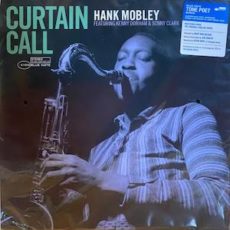
Hank Mobley was one of the most productive musicians on Blue Note during the fifties, recording as a leader and with some of the label’s best artists. This morning’s subject is a recent acquisition to the library that was originally recorded in 1957 but remained shelved until a 1984 Japanese release. Curtain Call (Blue Note BST 61006) is an excellent quintet session by the tenor saxophonist featuring Kenny Dorham on trumpet, Sonny Clark on piano, Jimmy Rowser on bass, and Art Taylor on drums. My copy used in this report is the 2022 Blue Note Tone Poet Series Stereo audiophile reissue, the first US vinyl release.
Side One starts with the first of four tunes by Hank Mobley. Don’t Get Too Hip is an easy-flowing midtempo blues that Clark introduces preceding the quintet’s collective theme. Sonny is up first with an easygoing attitude on the first statement. Kenny continues this pleasant exercise with a lengthy solo spot. Hank takes center stage next and sails smoothly through the third reading. Jimmy applies the finishing touch on a short statement ahead of the group’s reprise and ending. Curtain Call is off to the races on the ensemble’s speedy melody. Hank moves with astonishing velocity in the opening statement. Kenny drives the second reading with intense emotion, then Sonny takes an exhilarating turn. Art shares the final solo with the front line briefly before the close.
Deep In a Dream by Eddie DeLange and Jimmy Van Heusen is a gorgeous quartet performance illustrating Hank’s ability to interpret a ballad. Mobley and the trio begin with a delicately tasteful melody. He continues with an exquisitely beautiful opening statement. Clark expresses great warmth to the second solo, then Hank adds the exclamation point with sensitive delicacy into the foursome’s luscious ending. The quintet raises the curtain on Side Two with The Mobe. The ensemble begins the happy theme in unison, then Hank takes off on a terrifically agile first solo. Kenny takes over, feeling right at home on the second reading. Sonny spreads some joyful enthusiasm on the next statement. The front-line reappears to exchange a few final verses leading to the finish.
My Reverie by Claude Debussy and Larry Clinton is one of the delights of the set. Dorham has the spotlight to himself on the melody and first solo, handling both with equal effectiveness. Clark comes on next with an intriguing interpretation, followed by Mobley who delivers the next statement confidently. Dorham returns to take the song out with Mobley shadowing him in the background. On The Bright Side ends the album on a cheerful note beginning with the quintet’s brisk melody. Kenny draws us into the song with a lively opening statement. Sonny gives a sterling account on the second solo. Hank endows the third interpretation with a feisty spirit, and Taylor sparkles in a brief exchange with Dorham and Mobley into the closing theme.
Curtain Call was originally produced by Alfred Lion and Rudy Van Gelder was the man behind the dials. Joe Harley supervised this reissue and Kevin Gray did the mastering. The sound quality is breathtaking with a terrific soundstage that transports the musicians to your listening room as you enjoy the album. The cover’s worthy of hanging on your wall and the gatefold photos are gorgeous. The record is pressed on 180-gram audiophile vinyl and is incredibly quiet until the music starts. If you enjoy Hank Mobley and love good Hard-Bop, I invite you to check out Curtain Call on your next vinyl treasure hunt. In my opinion, it’s one of his best fifties recordings and one listen is sure to hook you, just as one listen sold me!
~ Hank Mobley Quintet Featuring Sonny Clark (Blue Note BNJ 61006) – Source: Discogs.com ~ My Reverie – Source: Wikipedia.org © 2022 by Edward Thomas Carter
More Posts: choice,classic,collectible,collector,history,instrumental,jazz,music,saxophone
Requisites
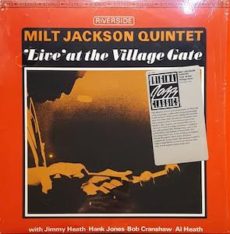
Live At The Village Gate ~ Milt Jackson Quintet | By Eddie Carter
I’ve been a huge fan of Milt Jackson ever since seeing him in concert with The 1972 Newport Jazz All-Stars at Music Hall in New York City. He swung effortlessly that evening with solos that were exciting and spirited, and I began collecting all his albums. A few nights ago, I was listening to this morning’s choice from the library and that’s what prompted this discussion. Live at The Village Gate (Riverside RM 495/RS-9495) is a 1967 release documenting the vibraphonist leading a wonderful quintet, Jimmy Heath on tenor sax, Hank Jones on piano, Bob Cranshaw on bass, and Albert “Tootie” Heath (Jimmy’s brother) on drums. My copy used in this report is the 1987 Original Jazz Classics Stereo reissue (Riverside OJC-309 – RLP-9495).
Side One starts with the first of three tunes by Bags, a nickname given to Milt by a Detroit bass player that he would be called the rest of his life. Bags of Blue is a tune that’ll have you tapping your toes from the quintet’s lively melody. Milt opens with a peppy first solo, then Jimmy takes a sprightly reading. Hank makes everyone feel good on the next statement. Milt and Jimmy split the finale with a few verses ahead of the ensemble’s ending and club’s applause. Little Girl Blue by Richard Rodgers and Lorenz Hart is one of their prettiest compositions from the Broadway musical, Jumbo (1935). Bags and Hank make a dainty introduction, then Bob and Albert come in for the tender theme. As the song’s only soloist, Milt gives a gorgeous performance complemented by the trio’s delicately sensitive support.
Up next is an upbeat original by Jimmy Heath, Gemini. It made its first appearance on his album, Triple Threat (1962). The group begins the melody briskly, then Milt leads off the opening statement with high-spirited energy. Jimmy applies some vigorous passion to the second presentation. Hank closes with a dazzling reading before the quintet takes their exit. Jackson’s light-hearted Gerri’s Blues begins Side Two with the first of two sparkling solos by Hank preceding the ensemble’s theme. Bags takes the first solo and constructs an infectious interpretation that’s perfectly suitable for dancing. Hank keeps the happy beat alive on the next reading, followed by Jimmy’s extremely nimble solo. The leader and saxophonist engage in a three-way conversation with Albert leading to a very satisfying conclusion.
Time After Time by Sammy Cahn and Jule Styne is a beautiful jazz standard and the second quartet presentation featuring Bags as the lone soloist. The quartet states a delicately pretty melody, then Milt seamlessly moves into a statement of great tenderness and intimacy capable of melting even the coldest heart. The quintet ends the set with Jackson’s Ignunt Oil that Bags first recorded on Plenty, Plenty, Soul (1957). The group struts their stuff on the opening chorus in unison. Milt starts off the solos with a joyous workout. Jimmy follows with some inspired ideas. Hank comes in next and cooks at a nice momentum. Bags leads toward the close with a few final thoughts preceding the quintet’s perfect ending to a great set.
Live at The Village Gate was originally recorded by Ray Fowler. The remastering by Phil DeLancie delivers a spacious soundstage transporting the listener to the club with all the intimacy and ambiance of being there in person. The result is a great recording of swinging jazz by one of the consummate musicians, Milt Jackson. It’s also a good place to discover his immense discography as a leader, sideman, and principal member of The Modern Jazz Quartet in an illustrious career lasting forty years. If you’re a fan of Bags, Jimmy Heath, or Hank Jones, I invite you to check out Live at The Village Gate by The Milt Jackson Quintet on your next vinyl hunt. It’s a nice way to unwind after a long day with your favorite drink and in my opinion, would make a great addition to any jazzophile’s library!
~ Plenty, Plenty, Soul (Atlantic 1269/SD 1269), Triple Threat (Riverside RLP 400/RLP 9400) – Source: Discogs.com ~ Little Girl Blue, Time After Time – Source: JazzStandards.com © 2022 by Edward Thomas Carter
More Posts: choice,classic,collectible,collector,history,instrumental,jazz,music,vibraphone