

Requisites
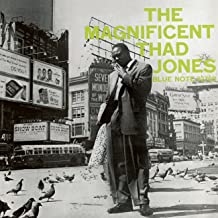
The Magnificent Thad Jones | By Eddie CarterMy next entry from the library is the second of three albums released in 1956 by trumpeter, Thad Jones. The Magnificent Thad Jones (Blue Note BLP 1527) finds him in the company of Billy Mitchell on tenor sax, Barry Harris on piano, Percy Heath on bass, and Max Roach on drums. He comes from a musical family, his older brother is pianist Hank Jones and his younger brother, the dynamic drummer, Elvin Jones. Jones also taught himself to play the cornet, and French horn, becoming a professional musician at sixteen. Thad was also a member of some great big bands including Count Basie, Gil Evans, Quincy Jones, and Ernie Wilkins. Jones also led small groups as well and co-led The Jazz Orchestra with drummer Mel Lewis for twelve-years. He led The Danish Radio Big Band and the Count Basie Orchestra for a time after Basie’s death in 1984. His status as an accomplished arranger and composer has given the music world some of the most beautiful compositions ever written including what many consider his masterpiece, A Child Is Born. My copy used in this report is the 2016 Music Matters Jazz Mono audiophile reissue (MMBLP-1527).
April In Paris, written in 1932 by Vernon Duke and E.Y. Harburg begins our five-song journey. It premiered in the Broadway musical Walk a Little Faster that year, later becoming a favorite song among jazz and pop musicians and vocalists. Percy and Max introduce the tune softly, then the front line and piano enter for the melody with Thad dispensing a mellow tone from his horn. Billy makes a brief comment during the opening and ending chorus. Jones opens with a quote from the English nursery rhyme and children’s song, Pop Goes The Weasel. His ensuing verses flow at a relaxing pace into the reprise and fadeout.
Thad’s Billie-Do is a blues characterized by the quintet’s carefree feeling from the brief introduction of the trio into the opening chorus providing a delightful treat of what’s to come. Everyone kicks back individually except Max who provides pleasant brushwork behind each soloist. Jones begins the lead solo with a sweet-toned delivery, then Mitchell conveys a bluesy impression of playful relaxation with a down-home flavor. Harris swings easily on the third reading, then Percy illustrates his rhythmic ingenuity on an abbreviated closer before the quintet takes the song out.
If I Love Again, the 1932 ballad written by Ben Oakland and J.P. Murray ends Side One at an upbeat pace with the quintet delivering high-spirited energy on the melody. Barry opens the soloing with a jubilant performance, then Billy takes over for a vigorously brisk workout. Thad follows with a captivating reading, then Max closes with a clear, crisp attack providing some irresistible musical thrills swinging to the ensemble’s finale.
If Someone Had Told Me is a little-known ballad by Peter DeRose and Charles Tobias that I believe was written in 1952 because the two earliest vocals of the song were released that year. The first was by vocalist Dolores Gray, and the second was done by Sarah Vaughan. The version heard here is a quartet presentation and an attractive feature for Thad who is the only soloist with the trio providing an elegantly lush foundation under him. The trumpeter delivers a performance of beguiling warmth reflecting a bittersweet, poignant moment into a delicately tender finale as good as any you’ve ever heard or will hear.
Side Two closes with Thedia, a cheerfully joyful tune written for and named after Thad’s young daughter. The rhythm section makes a brief introduction for both horns to walk comfortably at an easy beat during the main theme. Billy takes the first solo, establishing a nice momentum in a meticulously conceived and well-executed performance. Barry is next in the spotlight, strolling and swinging to an intriguing beat. Perry grabs and holds the listener’s attention on the third interpretation with two brief choruses that’ll make him or her feel right at home. Thad takes a long, lengthy ride, soaring to the heights on the next statement seamlessly. Max shares the final spot with the leader in several exceptional exchanges ahead of the ensemble’s closing chorus and exit. The sound quality on The Magnificent Thad Jones is positively stunning with an excellent soundstage and tonal balance between the highs, midrange, and bass that transports your sweet spot to the studio hearing the musicians at their best.
The MMJ reissues also include exceptional front and rear covers, high-definition gatefold photos and the pressings by RTI are on 180-gram Virgin Vinyl. If you’re a fan of Hard-Bop or are just discovering Thad Jones, you’ll be delightfully surprised by The Magnificent Thad Jones. It’s jazz at its best and a title I’m certain you’ll enjoy for a very long time! During the fifties, Blue Note employed a sales strategy of giving distinguishing names to some of the artists on its label to spark the public’s interest in their albums and possibly boost their sales. Other examples of this are The Fabulous Fats Navarro, The Amazing Bud Powell, and The Incredible Jimmy Smith. In the cases of the artists listed above, the strategy succeeded beyond their expectations and the names stuck. Debut Records also used this method for The Fabulous Thad Jones in 1954!
~ April in Paris (Verve Records MG V-8012); The Fabulous Thad Jones (Debut Records DLP-12); If Someone Had Told Me (Decca Records 28051), (Columbia 4-39719, 39719) – Source: Discogs.com
~ April in Paris – Source: JazzStandards.com ~ If I Love Again – Source: MusicNotes.com ~ Thad Jones, Pop Goes The Weasel – Source: Wikipedia.org ©2020 by Edward Thomas Carter
More Posts: choice,classic,collectible,collector,history,instrumental,jazz,music,trumpet
Requisites
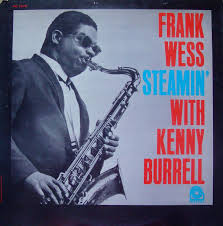
I begin this morning’s discussion with a 1963 reissue of an album originally released in 1957 titled After Hours (Prestige 7118), one of the label’s excellent jam session records. Steamin’ (Prestige PRST 7278) features an all-star group led by Frank Wess on flute, tenor sax, and Kenny Burrell on guitar. Joining them are Thad Jones on trumpet, Mal Waldron on piano, Paul Chambers on bass, and Art Taylor on drums. Waldron composed all four tunes on the album, and my copy used for this report is the 1963 Mono reissue (Prestige PRLP 7278).
Steamin’ begins Side One with a swinging introduction by Art. Both horns present the melody in unison with Thad on the muted trumpet. Frank opens with an aggressive performance, then Kenny takes over for a hard-swinging reading. Thad creates a volcanic eruption on the third interpretation, and Frank takes a second solo, this time on flute and at breakneck speed. Wess and Jones take a few spirited riffs before Walton zips through the next reading. Taylor punctuates the final statement with a stinging bite in a momentary spotlight before the ensemble takes the song out quickly.
Blue Jelly begins at a laid-back pace, gradually ascending to midtempo as the sextet states the opening chorus. Jones solos first, his ideas flowing freely to a slowly unfolding beat. Thad, Kenny, and Frank (on flute) exchange short riffs, then Burrell settles into a comfortable tempo for the second solo. The three instruments repeat, then Wess serves up a stylish dish of blues. Walton follows the next exchange with a very satisfying statement. Chambers speaks easily on the finale with great skill ahead of the close. Count One opens Side Two and the sextet gets right to work with a lightly swinging introduction by Cedar. Thad and Frank wail on the melody and everyone gets solo space except Art who keeps things in check with a driving backbeat. Frank begins the opening statement with skillful dexterity, and Thad soars on the second solo with a riveting presence. Kenny engages the ear delightfully on the next reading, then Cedar continues the bopping beat with an insistent swing. Paul accentuates the final interpretation with two short verses that are flawless.
The album closes with a trip down an Empty Street at a slow, easy tempo opening with a wistful introduction in unison. Jones leads the opening march on the muted trumpet, and the first solo by Burrell is superbly interpreted with a soothing timbre and sensitivity. Wess follows on flute with a thoughtfully pleasant reading that’s one of the most beautiful moments on the album. Jones sounds each note of the next performance tenderly and with the utmost clarity. Walton comes in next with a dreamlike, poignant presentation of sensual beauty, and Chambers wraps up the record with a rather beautiful and deeply moving interpretation before the sextet reassembles for the reprise and coda. Although, Steamin’ is credited to Frank Wess and Kenny Burrell, this album and its original title After Hours should have been released under Mal Waldron’s name in my opinion. His spirit pervades these four tunes with incredible passion and perfect pacing in his playing, complemented by the rhythmic energy and consummate musicianship of his bandmates.
That issue aside, Steamin’ serves as an excellent starting point for those who are just discovering the music of Mal Waldron or the other albums by the group who was also known as The Prestige All-Stars. The album has a brilliant soundstage across the highs, midrange, and low end that places you in the studio alongside the musicians as they’re playing. If you’re a fan of Hard-Bop and enjoy a good jam session, I invite you to audition Steamin’ by Frank Wess with Kenny Burrell or After Hours by The Prestige All-Stars. Either version should make a welcome addition to any fan’s library!
© 2020 by Edward Thomas Carter
More Posts: choice,classic,collectible,collector,flute,history,instrumental,jazz,music,saxophone
Requisites
Inner Urge ~ Joe Henderson | By Eddie Carter
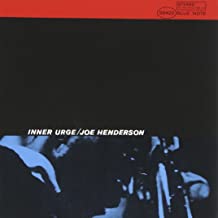
Superb artistry is the name of the game whenever one listens to the music of Joe Henderson. A proficiently skilled bandleader, composer, and tenor saxophonist who made some of his most important jazz contributions as a leader and sideman recording for Blue Note from 1963 to 1968. The subject of this morning’s discussion is his 1965 album, Inner Urge (BLP 4189/BST 84189). Here, he leads an outstanding quartet session with McCoy Tyner on piano, Bob Cranshaw on bass, and Elvin Jones on drums. My copy used in this report is the 2019 Music Matters Jazz SRX Stereo reissue (MMBST-84189).
The album opens with Inner Urge, a swiftly paced composition that cooks from the first notes of the melody. The walloping tones of Cranshaw’s bass start the soloing with an impressive presentation. The leader charges into the next reading enthusiastically. Tyner takes no prisoners as he slices through the third solo vigorously. Jones shows off his musical gifts with a breathless dash, then Henderson adds a few more soulful explorations preceding the song’s climax.
Isotope is a lightly swinging blues by the saxophonist paying a compliment to pianist Thelonious Monk and the humor in his music. The quartet begins with a distinctive angularity as Joe leads them on the theme. Henderson’s opening solo is excitingly direct and incisive. McCoy illustrates his ability to swing with lots of energy next, then Elvin puts together a remarkable performance for the finale, exchanging sprightly thoughts with Joe into the reprise and ending.
El Barrio, Henderson’s third original starts Side Two with the distinguished character of a Spanish influence due to him growing up in an international neighborhood in Lima, Ohio. Utilizing two chords, B major and C major 7 with a Flamenco flavor to build the melody, Joe makes one of his most adventurous, personal statements through a rich palette of colors and moods on the unaccompanied introduction and lead solo. McCoy draws the listener into the magical rapport of the trio on the next interpretation with a noteworthy performance capturing the breathtaking beauty of the tune with uncompromising honesty.
You Know I Care is a very pretty ballad by Duke Pearson. The composer recorded the song two years later on the album, Honeybuns. The quartet introduces the song elegantly. Joe begins the opening solo with a quiet fire exhibiting a great deal of passion. McCoy follows with a short solo that’s incisive, subtle, and very easy on the ear thanks to the tender warmth of Bob’s bass and Elvin’s delicate command of the brushes. The album ends on an upbeat note with Night and Day, the 1932 jazz standard by Cole Porter. It’s one of his most recorded songs and made its debut in the Broadway musical, Gay Divorce. The quartet’s brisk melody puts the listener in a happy frame of mind, riding down the highway on a warm sunny day with the top down and music rocking. Henderson steps up first with a scintillating solo of dynamic energy. Tyner follows, keeping things moving with a convincing workout on the piano. Joe wraps up the album with a few more sweet sounds into a swinging fadeout and fitting end to this very satisfying album.
The remastering of Rudy Van Gelder’s original analog tapes was done by Kevin Gray and Ron Rambach at Cohearant Audio, and the reissue was pressed at Record Technologies, Inc. Their work here is an amazing sit-down and listening experience with a wide soundstage that’s accurately recreated throughout the treble, midrange, and bass. If you’re a fan of Joe Henderson, Post-Bop or Modal Jazz, and don’t already own an original Mono or Stereo LP, or Liberty reissue, I submit for your consideration the SRX 33 1/3 LP of Inner Urge by Joe Henderson. It’s a delightful album of straight-ahead jazz at its best by one of the quintessential tenor men, and a title that would be a great addition to any LP library!
~ Honeybuns (Atlantic 3002/SD 3002) – Source: Discogs.com ~ Night and Day – JazzStandards.com, Wikipedia.org © 2020 by Edward Thomas Carter
More Posts: choice,classic,collectible,collector,history,instrumental,jazz,music,saxophone

Requisites
Tenor and Flute ~ Bobby Jaspar | By Eddie Carter
Bobby Jaspar steps into the spotlight for this morning’s discussion with his 1957 album, Tenor and Flute (Riverside RLP 12-240). I first heard him on two records he made with Herbie Mann, Flute Flight, and Flute Soufflé (1957). Bobby was born in Liège, Belgium, and began playing the piano at eleven and the clarinet at sixteen. He later switched to the flute and tenor saxophone, and in 1950 began working with French pianists Henri Renaud and Bernard Peiffer. Jaspar was also a member of the Bop Shops band and played and recorded with Toshiko Akiyoshi, Chet Baker, Kenny Burrell, Donald Byrd, John Coltrane, Miles Davis, Milt Jackson, J.J. Johnson, Hank Jones, John Rae, and Wynton Kelly. He was married to jazz pianist and singer Blossom Dearie. His supporting cast is Idrees Sulieman on trumpet (tracks: A1, B1, B2), George Wallington on piano, Wilbur Little on bass, and Elvin Jones on drums. My copy used in this report is the 1976 Japanese Mono reissue (Riverside SMJ-6156M).
The opener, Seven Up is Bobby’s easy blowing vehicle beginning with everyone laid-back on the melody. Idrees starts the song in a nice happy mood on the first interpretation, then Bobby takes over for an outstanding solo as solid as the Rock of Gibraltar. George follows with some carefree cruising that’s a treat for the ears and Wilbur is rhythmically infectious on a short statement ahead of the ensemble’s breezy climax.
Jaspar changes to flute for My Old Flame, written in 1934 by Arthur Johnston and Sam Coslow. It appeared in the film, Belle of The Nineties that year. He embraces the jazz standard lovingly on the melody and paints a compassionate portrait on the opening statement. The second presentation by Wallington is tenderly expressed, then the leader gives a second performance that’s delicately pretty and Jones offers some beautifully shaped brushwork on the closer ahead of a tranquil ending.
Bobby returns to tenor sax for a spirited quartet rendition of All of You, Cole Porter’s 1954 jazz standard that first appeared in the 1955 Broadway musical, and 1957 film, Silk Stockings. The quartet gives a lift to this timeless classic with a briskly paced theme treatment. The saxophonist displays a lively intensity on the lead solo, then George adds a bouncy effervescence to the second reading. Wilbur and Elvin split the third statement for a short, incisive comment, followed by Bobby and Elvin who guide us into the reprise with an expressive exchange. Idrees Sulieman’s Doublemint is an energetic companion to his blues, Juicy Fruit, heard on The Hawk Flies High (1957). It opens Side Two with a collective infectious melody. Jaspar cooks vivaciously on the first statement, then Sulieman breaks into a robust reading. Wallington moves in next for a scintillating solo and Jones finds something good to say on the closing chorus sharing notes with the front line.
George Wallington wrote the final two tunes on Tenor and Flute beginning with his tenderly passionate ballad, Before Dawn. It starts slowly with a breathtakingly beautiful theme by Bobby and the rhythm section. Jaspar then creates a mood of ecstasy on the first performance, then Idrees delivers a fine solo punctuated with delicate lyricism. George follows, sharing a brief moment of intimacy before Bobby adds a few additional affectionate remarks preceding the ensemble’s sultry coda.
Jaspar and the rhythm section take Sweet Blanche for a brisk ride on the finale with the leader back on flute. The quartet opens with a cheerfully pleasant theme and Jaspar excels with vigorous flair on the first interpretation. Wallington heads into the second reading expressing considerable delight, then Jaspar and Jones take us home sparring with each other into a satisfying climax. Tenor and Flute was produced by Orrin Keepnews, and the man behind the dials was Jack Higgins.
I was pleasantly surprised with the sound quality, the instruments produce an exceptional soundstage across the highs, midrange, and low end that’s right on the money. The analog Mono transfer by Victor Musical Industries from the original tapes has been gorgeously remastered and transports the listener to the studio alongside the musicians during the session. During 1961 & 1962, Jaspar formed a quintet with guitarist René Thomas and performed in a series of concerts and several recordings including appearing on Chet Is Back (1962). He passed away from a heart attack at age thirty-seven on February 28, 1963. I’ve enjoyed listening to this album and am happy to have it in my library. If you aren’t familiar with Bobby Jaspar, are a fan of Hard-Bop or tenor sax, I hope you’ll seek Tenor and Flute out during your next vinyl hunt. It’s a perfect album to get into jazz and the music is sure to make you tap your foot!
~ Chet Is Back (RCA Victor PML-10307); Flute Flight (Prestige PRLP 7124); Flute Soufflé (Prestige PRLP 7101); The Hawk Flies High (Riverside RLP 12-233) – Source: Discogs.com
~ My Old Flame ~ Source: JazzStandards.com ~ All of You, Bobby Jaspar ~ Source: Wikipedia.org © 2020 by Edward Thomas Carter
More Posts: choice,classic,collectible,collector,flute,history,instrumental,jazz,music,saxophone
Requisites
Bags’ Opus ~ Milt Jackson | By Eddie Carter
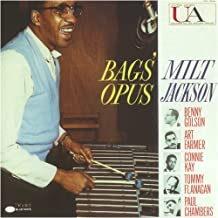
Milt Jackson steps into the spotlight to begin this morning’s discussion with one of my favorite albums from 1959, Bags’ Opus (United Artists UAL 4022/UAS 5022). This is my album to listen to when reading or relaxing because the music is so soothing, I can listen to it endlessly. Here, the vibist is leading an exceptional sextet consisting of Art Farmer on trumpet, Benny Golson on tenor sax, Tommy Flanagan on piano, Paul Chambers on bass, and Connie Kay on drums. My copy used in this report is the 1976 Japanese Stereo reissue (United Artists GXC-3135), and the album opens with the leader in ballad mode on Ill Wind by Harold Arlen and Ted Koehler. It was written in 1934 and performed by vocalist Adelaide Hall in their final show at The Cotton Club. Milt’s vibes are delicately discreet on the melody and as the featured soloist, he tells an exquisitely tender story matched by the sensitive accompaniment of the rhythm section into a gorgeous finale.
Blues For Diahann is Jackson’s tribute to actress, model, singer, Diahann Carroll, and the only original of the session. It opens with a jubilant intro by the rhythm section and a collective theme by the sextet. Golson takes off first with some straightforward blowing. Farmer doesn’t let up the pace on the next reading with a spirited solo. Flanagan follows with a dazzling display of his virtuosity, and Chambers gives a spicy performance that’s worth the wait. Kay begins the next reading with some brisk brushwork in a shared statement with Jackson. The leader wraps up everything with a short workout ahead of the close. Afternoon In Paris by John Lewis was written in 1949 and was first recorded by Phineas Newborn Jr. on the album, Here Is Phineas-The Piano Artistry of Phineas Newborn Jr. (1956). Lewis made it the title song for his 1957 release with guitarist Sacha Distel, and the group takes this tune for an easy ride with five soulful statements by Milt, Benny, Art, Tommy, and Paul.
Benny Golson’s timeless 1957 jazz standard, I Remember Clifford, was written to honor the memory of trumpet player Clifford Brown who alongside pianist Richie Powell and his wife Nancy perished in an auto accident a year earlier. It opens Side Two delicately with the front line featured on the melody and reprise. Bags gives this evergreen all the poise and elegance it deserves on a sublimely beautiful performance backed by the trio. Thinking of You was composed by Harry Ruby and Bert Kalmar in 1927, and debuted in the Broadway show, The Five O’Clock Girl that year. It was also featured in the 1950 film, Three Little Words. Art takes the lead on the gentle opening chorus with Milt and the rhythm section providing the lush background. He continues on the first solo with an intimately moving interpretation. Bags comes in next to add a touch of sensuous beauty to the closing statement ahead of Art’s return for the tenderly expressive coda.
Benny Golson wrote Whisper Not in 1956 while a member of Dizzy Gillespie’s Big Band. It’s one of his most popular tunes and has been a signature song of Golson’s since its inception. Leonard Feather wrote lyrics for Anita O’Day who recorded it in 1962. The sextet begins the melody at an easy beat with an irresistible toe-tapping melody. Jackson cruises at a comfortable speed with impeccably-crafted lines. Farmer works the next solo using his mute with a firm tone and relaxing informality. Golson gets the next nod for an infectious groove that just won’t stop, and Flanagan sparkles on the final reading before the sextet reassembles to take the song out. Bags’ Opus was produced by Jack Lewis and engineered by Tommy Nola whose work can also be found on Argo, Atlantic, Blue Note, Cadet, Contemporary, Jazztime, Mercury, Riverside, and Verve to name a few. The album has a solid soundstage with an excellent definition from each instrument bringing the musicians from your speakers into your listening room.
Milt Jackson was one of the extraordinary musicians of jazz whose consistency on record is unequaled. He played and recorded with Cannonball Adderley, Ray Charles, Miles Davis, Dizzy Gillespie, Coleman Hawkins, Wes Montgomery, and countless others as a leader, sideman, and on many records as a member of The Modern Jazz Quartet. He was given the nickname Bags by a Detroit bass player, referring to the bags under his eyes. I’ve been a huge fan of his ever since seeing him live in 1972. On Bags’ Opus, Jackson and his colleagues offer an album of easy listening jazz that any fan of Post-Bop should consider a must-have for their library!
~ Afternoon In Paris (Atlantic 1267); Anita O’Day and The Three Sounds (Verve Records V-8514/V6-8514); Here Is Phineas-The Piano Artistry of Phineas Newborn Jr. (Atlantic 1235/SD 1235) – Source: Discogs.com
~ Ill Wind, I Remember Clifford – Source: JazzStandards.com ~ Afternoon In Paris, Thinking of You, Whisper Not – Wikipedia.org ~ © 2020 by Edward Thomas Carter
More Posts: choice,classic,collectible,collector,history,instrumental,jazz,music,vibraphone