

Requisites
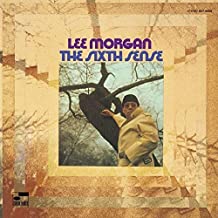
The Sixth Sense ~ Lee Morgan | By Eddie Carter
Mention trumpeter Lee Morgan during his years at Blue Note and one of seven albums usually comes to mind. Blue Train (1957), Art Blakey and The Jazz Messengers (1958), Leeway (1961), The Sidewinder and Search For The New Land (1964), Cornbread (1967), and The Gigolo (1968). All are considered choice selections for any library featuring the talented bandleader and composer. Lee was the youngest musician in Dizzy Gillespie’s orchestra, joining the band at age eighteen and further honed his skills with The Jazz Messengers from 1958 to 1961.
Drug addiction temporarily derailed his career from 1961 to 1963, but he emerged stronger and got his life back on track, recording prolifically as a leader and sideman. The Sidewinder became his biggest-selling album and greatest success, changing all Blue Note releases that followed. The Sixth Sense (Blue Note BST 84335) hit the stores in 1969 featuring one of his best groups. Jackie McLean on alto sax, Frank Mitchell on tenor sax, Cedar Walton on piano, Victor Sproles on bass, and Billy Higgins on drums complete the ensemble. My copy used in this report is the 1969 Liberty Records Stereo album.
The Sixth Sense, the first of four tunes by the leader kicks off Side One with a relaxing drum introduction by Billy, segueing into an intriguing Bossa Nova styled melody led by the front line. Lee solos first, pacing himself at an easy swing with plenty of feeling. Frank displays his inventive ability with a passionately frisky tone next, then Jackie takes flight on a solo full of tasty grooves. Cedar comes next, conveying an abundance of youthful energy, and Billy exchanges a spirited conversation with Lee leading to the ensemble’s closing chorus and fadeout.
Short Count, the second Morgan tune takes an aggressive uptempo approach to the melody vigorously. McLean charges out of the gate, almost stealing the show with incandescent intensity anchored by Lee and Frank on his final verse. Morgan raises the temperature a few more degrees to a level of feisty assertiveness on the next reading. Mitchell applies some high voltage to the third interpretation. Walton delivers the final enthralling statement before the quintet takes the song out.
Morgan’s Psychedelic will set your body in motion and have you dancing from the rhythm section’s leisurely flowing introduction to the infectious theme. Lee establishes the relaxing atmosphere on the opening chorus with bluesy lines. Frank shows some improvisational creativity on the next performance. Jackie takes over for some fine blowing and Cedar keeps things interesting with nimble fingers until the ensemble’s fadeout.
Afreaka is Cedar Walton’s contribution to the album, starting Side Two with an Afrobeat flavor possessing a very interesting rhythm that’s also danceable. Morgan, McLean, Mitchell, and Walton are the principal soloists providing plenty of musical inspiration. Anti-Climax, the final tune from the trumpeter’s pen begins with a brief bass introduction by Victor preceding the sextet’s upbeat theme treatment. Lee opens the first solo with inspired agility, then Jackie charges into the second statement with a dazzling improvisation. Frank infuses the next presentation with strong-lined lyricism, and Cedar finishes with an aggressive reading preceding the ending.
The Cry Of My People by trumpeter Cal Massey ends the album with a gorgeous quartet number by Morgan and the trio. Lee begins the melody with a hauntingly elegant-muted performance, picking up the pace gradually for his exceptionally pretty opening statement. Cedar gets a brief moment to share his thoughts with evocative softness, then Lee returns with so much sensitivity and feeling, it’ll bring tears to your eyes. The sound quality on The Sixth Sense is superb with all six instruments full of body, presence, and a vibrantly, clear sound.
Lee Morgan was an exceptional composer and musician who possessed an exciting, relentless drive. He recorded twenty-five albums for Blue Note as a leader and appeared as a sideman on countless others, elevating each record to something special. But changes were on the way as AllMusic.com reviewer Michael G. Nastos describes. “The appropriate title Sixth Sense presents a transition between one of the most intriguing sextets during the last years of post-bop and Morgan’s final ensembles that saw him reaching higher and higher before, like Icarus, falling from grace”.
Lee would die tragically from a gunshot wound by his common-law wife Helen Morgan on February 19, 1972, after an altercation while performing at jazz club Slug’s Saloon in New York City. He left an incredible body of music also recording for Savoy, Vee-Jay, and Jazzland that still amazes and thrills fans around the world. At just over thirty-nine minutes, The Sixth Sense by Lee Morgan is an excellent album that you’ll play again and again, and a must-have for any Hard-Bop fan’s library!
~ Quote by Michael G. Nastos – Source: AllMusic.com~ Art Blakey and The Jazz Messengers (Blue Note BLP 4003/BST 84003); Blue Train (BLP 1577/BST 81577); Cornbread (BLP 4222/BST 84222); Leeway (BLP 4034/BST 84034); Search For The New Land (BLP 4169/BST 84169); The Gigolo (BLP 4214/BST 84214); The Sidewinder (Blue Note BLP 4157/BST84157) – Source: Discogs.com
~ Lee Morgan, Helen Morgan – Source: Wikipedia.org © 2020 by Edward Thomas Carter
More Posts: choice,classic,collectible,collector,history,instrumental,jazz,music
Requisites
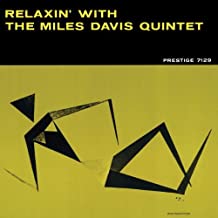
Relaxin’ With The Miles Davis Quintet | By Eddie Carter
It took only two days in 1956 for The Miles Davis Quintet to record four incredible jazz albums that have not only stood the test of time but are considered by many to be perfect examples of Hard-Bop at its best. All four LP’s the ensemble recorded completed Davis’ contractual obligation to Prestige before moving on to Columbia Records where he would make some of the most important music over the next thirty years. The albums are Cookin’, (1957), Workin’ (1959), Steamin’ (1961), and this morning’s title submitted for your approval, Relaxin’ With The Miles Davis Quintet (Prestige PRLP-7129), released in 1958. The personnel is Miles on muted trumpet (tracks: A1 to A3, B1, B2), trumpet (track: B3); John Coltrane on tenor sax; Red Garland on piano; Paul Chambers on bass and Philly Joe Jones on drums. The copy used in this report is the 2013 Mono audiophile reissue (APRJ 7129) by Analogue Productions.
The album opens with If I Were a Bell composed by Frank Loesser from the 1950 Broadway musical Guys and Dolls. It became a jazz standard after Miles’ rendition on Relaxin’ and would become a signature song during the quintet’s live performances. The trumpeter comments the band, then several snaps of his fingers bring the tune to life. The quintet begins the medium melody with Miles leading on the muted horn, then continuing on the first solo cruising along at an easy speed. John steps in next for some smooth sailing and Red ends with an exciting performance that swings masterfully ahead of the leader’s closing chorus into the subtle summation.
You’re My Everything is by Harry Warren, Mort Dixon, and Joe Young. This song debuted in the 1931 Broadway show, The Laugh Parade and after two false starts, the quintet opens with a delicately tender intro and melody by Davis moving into an exceptionally gentle presentation showing off Miles’ sentimental side. Coltrane follows, executing his thoughts intimately with refined grace secured by the tasteful richness of the trio into a pensive ending by the leader.
The tempo moves upward for I Could Write A Book by Richard Rodgers and Lorenz Hart. This show tune comes from the 1940 Broadway musical Pal Joey. The trio makes a brief introduction before the quintet delivers the medium-fast melody collectively. Miles takes off on the lead solo with some fast blowing that sets the tone. John attacks the next reading with formidable energy and Red climaxes the performances with exhilarating agility before Davis’ theme reprise ends abruptly.
Sonny Rollins’ Oleo was written in 1954 and first recorded on the album, Miles Davis With Sonny Rollins. This jazz classic is one of Rollins’ most recorded compositions and the title comes from the butter substitute, Oleomargarine that was first made in France in 1869.
Side Two begins with two false starts and some studio small talk leading to the leader’s quick intro and fast-paced theme treatment with Trane finishing the melody. Miles rips into the lead solo with an expedient performance. John soars high into the sky on the second solo and Red provides a speedy resolution of the interpretations with sprightly notes ahead of the quintet’s reprise and brisk ending. Paul and Philly provide the propulsive power behind each soloist on Oleo, inspiring them to the next plateau.
Up next is the 1943 popular song, It Could Happen To You by Jimmy Van Heusen and Johnny Burke. This standard has been a favorite for musicians and vocalists for over seventy years. Jo Stafford made the first recording with The Paul Weston Orchestra. The group eases the throttle back for this rendition with Miles establishing the relaxing midtempo framework for the group on the melody. He then goes to work with a sweet-toned delivery that’s pitch-perfect. John follows with a compelling statement as cool as the other side of the pillow and Red delivers a very happy melodic interpretation showing great interaction with Paul and Philly into the quiet coda.
The 1943 jazz standard, Woody‘n You aka Woody ‘n’ You by Dizzy Gillespie was written for bandleader and clarinetist Woody Herman ends the album at an uptempo beat. The song starts with a brief introduction by Garland ahead of the quintet’s lively theme. Miles fuels the lead solo with plenty of fire from his open horn, then Trane delivers an aggressively energized performance of strength and virility. The final statement of the album is split between Miles and Philly who deliver passionate phrases flowing into the reprise and soft fade into emptiness followed by a few final words by Miles.
Relaxin’ With The Miles Davis Quintet is part of Analogue Productions’ Prestige Mono Series and the sound quality is crystal clear demonstration class, and spectacular. The mastering is by Kevin Gray of Cohearent Audio and was cut from Rudy’s original analog masters using two-hundred-gram Virgin Vinyl, pressed by QRP (Quality Record Pressings) and features a deluxe high-gloss laminated album cover. The record is very quiet until the music starts, and what’s great about listening to this reissue are the false starts, and Miles’ comments while talking to Rudy. Their brief conversations transport the listener into the studio, making them part of the event. On a good mid-fi or high-end audio system, the tonal balance between the highs, midrange, and the low end will stand out. There’s inspired playing from each member of the group on every track and Relaxin’ With The Miles Davis Quintet is a great album of standards. It’s also a perfect choice to sit back, listen, and enjoy any time of the day, evening, or night!
~ Cookin’ With The Miles Davis Quintet (Prestige PRLP 7094); It Could Happen To You (Capitol Records 158); Miles Davis With Sonny Rollins (Prestige PRLP 187); Steamin’ With The Miles Davis Quintet (Prestige PRLP 7200/PRST 7580); Workin’ With The Miles Davis Quintet (Prestige PRLP 7166/PRST 7166) – Source: Discogs.com
~ Oleo, It Could Happen To You, Woody’n You – Source: JazzStandards.com
~ If I Were A Bell, You’re My Everything, I Could Write A Book, Oleomargarine – Source: Wikipedia.org
© 2020 by Edward Thomas Carter
More Posts: choice,classic,collectible,collector,history,instrumental,jazz,music,trumpet
Requisites…
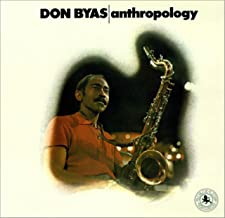
<Anthropology~Don Byas | By Eddie Carter
I begin this morning’s discussion with an album by tenor saxophonist Don Byas, a swing and bebop musician who played in the orchestras of Count Basie, Duke Ellington, and Lionel Hampton. He also worked with Art Blakey, Dizzy Gillespie, Bud Powell, and Ethel Waters among others. Anthropology (Black Lion Records BLP 30126) is a 1963 album that was recorded live at the Jazzhus Montmartre (also known as Café Montmartre). The rhythm section is an outstanding trio of Danish descent, pianist Bent Axen, bassist Niels-Henning Ørsted Pedersen and drummer William Schiöpffe. My copy used in this report is the US Stereo reissue (Black Lion BL-160), the date of release is unknown.
The album opens with Anthropology, a bebop classic written in 1945 by Dizzy Gillespie and Charlie Parker that’s also known as Thriving From a Riff or Thriving on a Riff. Schiöpffe introduces the tune, preceding the leader’s feisty delivery of the melody. Byas takes the lead with a compelling lift to start the soloing, then Axen executes the second reading efficiently. Pedersen turns in a brief presentation closely shadowed by Byas and Schiöpffe ends the readings by exchanging a few splendid phrases with the leader.
Moonlight In Vermont was written in 1944 by John Blackburn and Karl A. Suessdorf. This timeless evergreen provides a perfect backdrop for Byas’ gorgeous melody. The saxophonist continues with a very dreamy interpretation of the slow-paced, serene opening solo. Bent follows, displaying a graceful elegance on the next performance with discreet, perfectly tailored support by Niels-Henning and William. Byas’ closing chorus is lovingly rendered, completing the song with a tender finale that’s gorgeous.
Charlie Parker’s 1945 bebop anthem Billie’s Bounce ends the first side with a spirited rendition by the quartet. Pedersen and Schiöpffe open the song as a duet that becomes a lively theme treatment. Don raises the temperature on the lead solo with an effervescent beat that energizes the trio. Bent takes the spotlight last hitting a perfect groove on a swinging performance preceding the leader’s final remarks, theme’s reprise, and coda.
The gears shift upward for Dizzy Gillespie’s most famous recorded tune, Night In Tunisia was written in 1942 with Frank Paparelli. The rhythm section introduces the song at a speedy velocity proceeding to the aggressively energetic theme by Byas who also rips into the first solo voraciously. Bent takes the reins next zipping along like a whirlwind, then Don returns for a second exhilarating statement with bassist and drummer providing the fuel. NHØP takes over for an abbreviated scorcher, then Schiöpffe speaks last exhibiting mesmerizing brushwork into the invigorating climax.
The finale is the 1932 ballad, Don’t Blame Me, written by Jimmy McHugh and Dorothy Fields. This song made its first appearance on Broadway in the show, Clowns in Clover, and later in two films, The Bad and The Beautiful (1952) and Two Weeks in Another Town (1962). Byas begins with a delicate introduction and heart-warming melody ahead of a sultry first statement that’s exquisite. Axen expresses a gentle affection on the final solo preceding Byas who ends the song and LP with a tender sincerity.
In 1964, Byas was celebrating his third decade as a professional musician. In honor of that achievement, the LP was also released as The Big Sound – Don Byas’ 30th Anniversary Album on Fontana in the Netherlands and Debut Records in Denmark. Two songs on the original LP are omitted on Anthropology, There’ll Never Be Another You by Harry Warren and Mack Gordon and Walkin’ by Richard Carpenter. Don Byas was a masterful musician who was adept at a fast clip or on a romantic ballad.
He lived the last twenty-six years of his life in Europe, working extensively before passing away from lung cancer on August 24, 1972, at the age of fifty-nine. The dialogue between the quartet is fascinating and their music a treat for the Café Montmartre crowd. The album was produced by UK music executive Alan Bates who began Black Lion Records and also re-launched the Candid label in London. The sound quality is excellent, transporting the listener to the club amid the crowd. Though out of print for many years, Anthropology is a remarkable live album by Don Byas that I not only recommend but am sure will become a welcome addition in any library.
~ Alan Bates, The Big Sound – Don Byas’ 30th Anniversary Album (Debut Records DEB-142, Fontana 688 605 ZL) – Source: Discogs.com ~ Moonlight In Vermont, Night In Tunisia – JazzStandards.com ~ Don’t Blame Me – Source: Wikipedia.org © 2020 by Edward Thomas Carter
More Posts: choice,classic,collectible,collector,history,instrumental,jazz,music,saxophone
Requisites
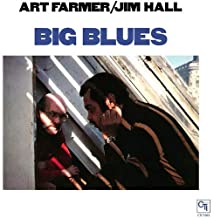
Big Blues ~ Art Farmer & Jim Hall | By Eddie Carter
This next choice from the library I acquired after hearing a selection on SiriusXM’s Real Jazz channel. The album is titled Big Blues (CTI Records CTI 7083), released in 1979 and the two men co-leading this enjoyable date are Art Farmer on flugelhorn and Jim Hall on guitar. Rounding out the ensemble are Mike Mainieri on vibes, Mike Moore on bass, and Steve Gadd on drums. My copy used in this report is the 2017 ORG Music Stereo Audiophile reissue (ORGM-2019).
The song that initially sparked my interest leads off the first side, Benny Golson’s 1956 contemporary jazz classic, Whisper Not! It’s one of his most recorded compositions and also became a beloved vocal after Leonard Feather added lyrics in 1962. The quintet jointly creates a mellow melody with a blues beat to begin the song. Jim makes his guitar sing first with a relaxed casualness and steady rhythm. Art gets into an infectious laid-back groove next moving upward with bright chops and impeccable prowess. Mike takes over for the finale with an astonishing drive and intensity preceding the reprise and gentle coda.
The 1969 jazz standard, A Child Is Born by Thad Jones closes the first side starting gently with a brief introduction and tender theme by the rhythm section. Farmer starts the soloing with a ravishingly beautiful, muted performance, followed by Hall who delivers passionately elegant lines on the next interpretation. Mainieri gives a delicately gentle and evocative presentation recalling the spirit and imagination of the song’s composer into the serenely beautiful climax. Big Blues by Jim Hall starts the second side with a spirited midtempo opening chorus by the ensemble and the solo order is the same as on Whisper Not. Jim takes the lead here, showing us his versatility with charming articulation. Art follows, using the mute to deliver skillful assertion on the next reading. Mike’s closing statement is captivating from the moment it starts, expressing joy into the reprise and fadeout. Pavane For A Dead Princess by Maurice Ravel ends the album and was written as a solo piano piece in 1899. The song’s original title is Pavane pour une infante défunte (Pavane for a Dead Infanta) and the ensemble begins the introduction and melody at a slow tempo fitting the original composition. Farmer steps up first, back on the open horn, beginning as he did on the theme, then raises the temperature to midtempo before returning to a softer mood for the close. Mainieri pulls out all the stops on the next reading with a sparkling presentation. Hall takes the final bow with a gorgeous performance preceding the reprise and graceful fadeout.
Big Blues was originally produced by Creed Taylor and engineered by David Palmer who worked at Electric Lady Studios, and Joel Cohn who’s worked on many CTI albums. This reissue was mastered from the original analog tapes by Bernie Grundman and pressed on 180-gram Audiophile vinyl at Pallas Group in Germany. As was the case of many of the classic CTI Records, the sound quality is first-rate with an excellent soundstage across the highs, midrange, and low end that won’t disappoint the listener in their favorite spot to listen to music. Art Farmer and Jim Hall recorded together four other times, Interaction (1963), Live at The Half Note, To Sweden With Love (1964), and Panorama-Live at The Village Vanguard (1997). Each is highly recommended, and I feel the same can be said for Big Blues. I invite you to make time for this one on your next vinyl hunt, it’s an enjoyable album of Contemporary Jazz with extraordinary chemistry, and exceptional performances you won’t soon forget!
~ Interaction (Atlantic 1412/SD 1412); Live at The Half Note (Atlantic 1421/SD1421); Panorama-Live at The Village Vanguard (Telarc Jazz CD-83408); To Sweden With Love (Atlantic 1430/SD 1430) – Source: Discogs.com
~ Whisper Not, A Child Is Born ~ Source: JazzStandards.com
~ Pavane For A Dead Princess ~ Source: Wikipedia.org
© 2020 by Edward Thomas Carter
More Posts: choice,classic,collectible,collector,guitar,history,instrumental,jazz,music,trumpet
Requisites
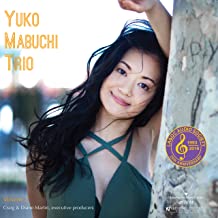
Yuko Mabuchi Trio, Volume 2 | By Eddie Carter
I’d reached the end of a very long day and was ready to relax and unwind with some piano jazz. I went to the library and came across Yuko Mabuchi Trio, Volume 2 (Yarlung Records YAR71621-161V). The second LP from the trio’s live performance at The Brain and Creativity Institute’s Cammilleri Hall with bandmates, Del Atkins on bass and Bobby Breton on drums. The concert honored the 25th Anniversary of The Los Angeles and Orange County Audio Society, plus President and CEO, Bob Levi’s 70th Birthday. My copy used in this report is the 2018 45-rpm Stereo Audiophile release.
Yuko starts Side One with a trio of solo standards, All The Things You Are by Jerome Kern and Oscar Hammerstein II, Take The “A” Train by Billy Strayhorn, and Satin Doll by Duke Ellington, Strayhorn, and Johnny Mercer. She begins with a stunningly beautiful interpretation capturing the song’s romanticism. Yuko then takes a vivaciously playful ride on The “A” Train with zestful excitement. She wraps up the trilogy with an invigorating interpretation of Satin Doll receiving an ovation from the audience at the song’s end.
The ensemble begins a Japanese Medley trilogy next, Hazy Moon by Teiichi Okano, Cherry Blossom, the Japanese folk tune from the Edo period, and Look At The Sky by Hachidai Nakamura. Yuko opens with a gentle introduction developing into a subtle collective theme. The mood of this first melody is incredibly tender, and the soothing splendor of her solo is purely captivating. She also dominates on the second segment, bringing out the musical substance and expressive beauty in an attractive reading culminating with a regal coda. The finale picks up the pace with the trio fitting together like fingers in a glove on the lively theme. Her technique is assured and quite confident in a dazzling exhibition against the backdrop set up perfectly by Del and Bobby.
Side Two starts with Sona’s Song, the pianist’s very touching tribute to a beautiful young girl in her family. The threesome makes the most of this original with seamless pacing and execution. Yuko demonstrates a mature elegance and heartfelt love in every note of her reverently lush performance before a serene summation. The group takes the audience and listener to the Caribbean on Sonny Rollins’ signature song, St. Thomas with a festive holiday atmosphere right from the start. Yuko invites everyone to enjoy the ride on a jubilantly cheerful lead statement with Atkins and Breton sustaining the rhythm. The drummer adds some buoyant brushwork for a propulsive reading before Yuko puts the finishing touches on a memorable, jazz-filled celebration.
Like its companion, Yuko Mabuchi Trio, Volume 2 has an outstanding soundstage across the highs, midrange, and low end, making it a good choice to show off a high-end audio system. This album was engineered by Bob Attiyeh and Arian Jansen, and mastered by Attiyeh, and Steve Hoffman. The 45-rpm remastering is by Bernie Grundman. The trio’s musicianship is excellent throughout the album and they shift gears as smoothly as a sports car. I’ll leave you with what I think is an ideal ending for my report, it comes from an old 1960 LP by The Joyce Collins Trio: Girl Here Plays Mean Piano. Yuko Mabuchi does this very well and if you’re discovering her for the first time, you’re in for a treat!
~ All The Things You Are, Satin Doll, Girl Here Plays Mean Piano (Jazzland JLP 24), Take The “A” Train – Source: Discogs.com
~ St. Thomas – Source: Wikipedia.org © 2020 by Edward Thomas Carter
More Posts: choice,classic,collectible,collector,history,instrumental,jazz,music,piano