

Requisites
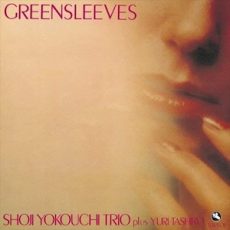
Greensleeves ~ Shoji Yokouchi Trio plus Yuri Tashiro | By Eddie Carter
I was looking for something interesting to play at the start of my Tuesday morning when I came across an album by the Shoji Yokouchi Trio and Yuri Tashiro. Greensleeves (Three Blind Mice TBM-5011) is a 1978 release with a program of four jazz standards and three creative originals. The personnel consists of Yuri Tashiro on Hammond organ (tracks A1 to A4, B3), Shoji Yokouchi on folk guitar (tracks A1, A2), electric guitar (tracks A4, B1, B2), and gut guitar (tracks A3, B3), Kunimitsu Inaba on bass, and Hajime Ishimatsu on drums. The copy I own is the 2017 Impex Records U.S. Limited Edition stereo audiophile reissue, sharing the original catalog number. No. 2581 of 3000.
Side One opens with Willow Weep For Me by Ann Ronnell. Shoji’s gentle introduction gets things off to a good start for the quartet’s slow-paced melody. Shoji has the first say and tenderly embraces the opening solo. Yuri follows with a thoughtfully passionate reading, while Kunimitsu and Hajime complement both elegantly into the theme’s reprise and finale. Bobby Timmons’ Moanin’ affords everyone solo space beginning with the quartet’s happy, upbeat theme. Shoji takes the song’s first lively reading, then Yuri makes her presence felt with skillful assurance. Kunimitsu follows with a brief statement, and Shoji and Hajime share a short exchange, preceding the closing chorus and vibrant climax.
Misty by Erroll Garner and Johnny Burke begins with Shoji setting the stage as he leads the ensemble through the gorgeous theme. He continues to reveal his lyrical side in a delicate opening statement. Yuri then enhances the song’s charm with a graceful interpretation. Kunimitsu and Hajime contribute the romantic, disciplined accompaniment, leading into the reprise and a soothing finale. The first of three compositions by Shoji Yokouchi, Drink Up, Vodka Martini, features the guitarist in a playful mood throughout the introduction and melody. As the song’s only soloist, Shoji conveys a driving vitality that bounces along, and the band’s chemistry shines, supporting him ahead of the melody’s restatement.
New Orleans Sunday is a trio performance featuring Shoji, Kunimitsu and Hajime. The trio puts the song through its paces with a catchy melody out of the gate. Shoji launches the opening with a driving rhythm, then Kunimitsu mines a vein of unsuspected riches in the following solo. Shoji and Hajime add a tasty treat in a short conversation before the trio’s reprise and conclusion. Greensleeves begins with a haunting intro, before picking up pace for the trio’s theme. Shoji takes the lead solo in a series of infectiously propulsive choruses. Kunimitsu goes for a lightly swinging walk next, then Hajime enters the spotlight to give a brief workout, leading back to the ending theme and soft summation.
Your Watch Is Ten Minutes Slow picks up the tempo one final time to wrap up the album. The quartet’s agile melody starts things off, then Shoji gets down to business on the opening solo. Yuri responds with a spirited reading ahead of the foursome’s return to the theme and close. Takeshi Fujii produced the initial session, and Yoshihiko Kannari managed the recording console. Bernie Grundman mastered this audiophile reissue, and Chris Bellman engineered it. The reissue features a thick cardboard cover; the sound quality is excellent, with a spacious, clear, and detailed soundstage. The record was pressed on 180-gram audiophile vinyl and is silent until the music begins.
Shoji Yokouchi recorded 46 albums over his career, and Yuri Tashiro released 51 titles over her career. If you’re in the mood for an album that weaves together beloved jazz standards with fresh, creative compositions, I invite you to check out Greensleeves by the Shoji Yokouchi Trio and Yuri Tashiro, the next time you’re out record-shopping. It’s an excellent place to start discovering the music of both artists. A delightful album that’s perfect for late-night listening and is sure to please any jazz enthusiast and fans of guitar and organ-centered ensembles!
~Misty, Moanin’, Willow Weep For Me – Source: JazzStandards.com ~ Greensleeves – Source: Wikipedia.org © 2026 by Edward Thomas Carter

More Posts: choice,classic,collectible,collector,guitar,history,instrumental,jazz,music,organ
Requisites
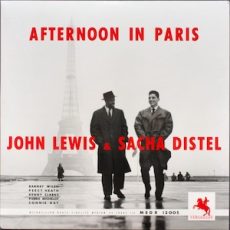
Afternoon in Paris ~ John Lewis and Sacha Distel | By Eddie Carter
My mother was a big fan of The Modern Jazz Quartet, and today’s selection from the library highlights its founder and musical director, pianist John Lewis, joining French guitarist Sacha Distel on their 1957 collaborative album Afternoon in Paris (Atlantic 1267). It was one of her favorite records to play during our Sunday dinners growing up,and I had almost forgotten how enjoyable this album truly is. The supporting cast is superb: Barney Wilen on tenor saxophone, Pierre Michelot (tracks A1-A3) and Percy Heath (tracks B1-B3) on bass, Connie Kay (tracks A1-A3) and Kenny Clarke (tracks B1-B3) on drums. The copy I own is the 2021 French limited-edition mono audiophile reissue (Versailles MEDX 12005) released by Sam Records.
I Cover The Waterfront by Johnny Green and Edward Heyman, which opens side one, begins with John’s beautiful introduction. Sacha takes over to state the tasteful theme, and leads the way in a gorgeous reading. Barney has the last word in a warm performance that picks up pace until the pianist ends the way he began, softly. Dear Old Stockholm opens with piano, guitar, and tenor sax playing a brief segment of the melody, incorporating Pierre’s bass interlude, until it concludes. The pace picks up significantly for Barney’s swinging opening statement. Sacha delivers straight passion in the following solo, then John builds the third reading with smooth efficiency. All three soloists engage in a short exchange ahead of the pianist’s reprise and gentle ending.
The title tune, Afternoon in Paris by John Lewis, slows the pace to mid-tempo as the group begins the melody. Barney is the first to solo and cooks aggressively. Sacha steps in next to offer a splendid study in soulful improvisation. John makes his entrance with a perfectly locked-in groove. Pierre has the last word, and his sturdy bass lines lead the ensemble into the melody’s restatement. All The Things You Are by Jerome Kern and Oscar Hammerstein II gets side two underway with John’s pretty introduction. Barney launches into a swinging performance, then Sacha takes the reins and gets into a fantastic groove. John follows with a short solo, then he shares a brief word with Kenny before taking the song out softly.
Bags’ Groove by Milt Jackson got its title from the composer’s nickname. It opens with Barney stating the theme, leisurely, alongside Percy and Kenny. Sacha then begins the opening solo. John taps a creative vein next. Barney begins the third reading at ease, but gradually cruises to a satisfying climax. Percy and Kenny share a brief conversation preceding the theme’s reprise and summation. Ann Ronnell’s Willow Weep For Me begins with John’s gentle piano introduction, setting the stage for Sacha’s elegant, understated approach to the melody and his opening statement. The spotlight shifts to Barney, who delivers one of his most memorable solos on the album. John steps in last, providing a gorgeous improvisation that guides the ensemble to a graceful finish.
Although the producer of the original Afternoon in Paris session remains unidentified, Disques Versailles recorded the initial album, and Fred Thomas oversaw this audiophile reissue for Sam Records. The album’s sound quality is exceptional for a 1950s recording, with a warm, airy soundstage that makes you feel as if you’re in the studio with the musicians as they’re performing. It was remastered from the original tapes and pressed on 180-gram vinyl at Optimal Press using the Metal Mothers process from Pallas in Germany. This edition offers a listening experience that truly captures the album’s essence.
This was Sacha Distel’s sole album collaboration with John Lewis, yet both ensembles seamlessly integrate Lewis’s lyrical piano sensibility with Distel’s refined guitar elegance. The musicians’ interaction is both spontaneous and intuitive, culminating in six extraordinary performances. If you’re in the mood for an engaging blend of Bop and Cool Jazz, I cordially invite you to spend an Afternoon in Paris with John Lewis and Sacha Distel on your next record-shopping trip. I’m confident you’ll encounter a memorable album that will leave a lasting impression well beyond the record’s end!
~ All the Things You Are, I Cover The Waterfront, Willow Weep For Me – Source: JazzStandards.com ~Afternoon in Paris, Bags’ Groove, Dear Old Stockholm – Source: Wikipedia.org © 2026 by Edward Thomas Carter
More Posts: choice,classic,collectible,collector,guitar,history,instrumental,jazz,music,piano
Requisites
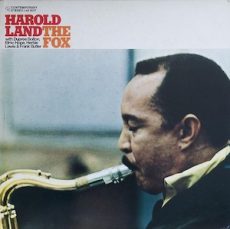
The Fox ~ Harold Land | By Eddie Carter
>This morning’s selection from the library features one of my favorite tenor saxophonists, Harold Land, who, alongside his band members, is in pursuit of a cunning opponent: The Fox (HiFi Jazz J 612/SJ 612), which initially hit the stores in 1959. Harold was a leading West Coast tenor saxophonist who played with some of the best jazz groups, including those led by Clifford Brown and Max Roach. After leaving the Clifford Brown-Max Roach Quintet to prioritize his family life in California, he may have sacrificed the chance for even greater recognition. Still, his impressive discography continues to illuminate a career that lasted almost fifty years. Land receives exemplary support on this date from Dupree Bolton on trumpet, Elmo Hope on piano, Herbie Lewis on bass, and Frank Butler on drums. My copy is the 1975 U.S. Stereo reissue (Contemporary Records S7619).
Side One kicks off with the title track, The Fox, a high-energy opener by Harold Land that is fueled by the quintet’s theme. The tune takes its name from a nickname given to Harold by drummer Lawrence Marable. Land leads the way, delivering a solo bursting with fiery passion. Bolton steps in next and cooks hard. Hope surges ahead with an energetic touch in the following reading. Butler then engages in a lively and playful exchange with the front line, until the theme’s reprise brings the tune to an abrupt and thrilling end. Mirror-Mind Rose, the first of Elmo Hope’s four contributions, serves as a lyrical showcase for Land, whose opening solo after the ensemble’s touching theme paints an affectionate, mellow soundscape. Bolton’s turn is a dreamy, gorgeous presentation, and Hope wraps up the solos with elegance before the group gently ends the tune together.
Hope’s One Second, Please is a rocking groove with dynamic interaction between both horns and the trio on the melody. Harold lets his horn do the talking in the opening statement. Dupree responds by getting so many ideas into the second solo. Elmo glides efficiently over the rhythm section’s backdrop next. Frank collaborates with the front line in the closing segment preceding a satisfying finale. Sims-A-Plenty, Hope’s third original starts Side Two with the unfolding of a cheerful, mid-tempo theme by the quintet. The pianist steps up first, building the opening solo into a firm, solid groove. Land matches the momentum with a swinging statement next. Bolton impresses with inventive, nuanced lines in a remarkable interpretation. Butler moves toward the reprise with exciting agility on the closer preceding the ensemble’s cohesive finale.
The playful spirit of Little Chris radiates the joy and happiness Harold Land felt for his then nine-year-old son, and that feeling shines through in the quintet’s opening notes of the melody. Harold takes the lead with a captivating statement that draws thelistener in. Bolton brings a bright, assertive tone and confident energy to the second reading. Hope makes his entrance next and swings soulfully, then Butler adds a few lively thoughts before the quintet reassembles for the closing theme. One Down by Hope begins with Butler’s breezy, island-inspired introduction, ahead of the group’s medium-fast melody. Bolton opens the solos with seasoned flair, then Elmo responds with polished virtuosity. Harold takes up the next spot vigorously, and Frank adds the exclamation point in a brief but effective solo before the quintet returns to take the song out.
Bassist Herbie Lewis is the only member of the quintet who doesn’t take a solo on any track, but his presence is truly felt throughout. His controlled strength and engaging ensemble playing create a reliable, steady foundation that beautifully supports Land, Bolton, Hope and Butler at the forefront. This album was produced by David Axelrod and recorded by Art Becker and David Wiechman at Contemporary Records. The reissue’s sound quality is first-rate and offers its owner a marvelous stereo listening experience. For fans of West Coast Jazz, the incredible interaction among the musicians is captivating, and these performances are definitely worth exploring. The Fox by Harold Land may seem like an elusive adversary during your record-shopping hunt, but once you acquire it, it won’t bite or attack; instead, it could become a treasured addition to your jazz library!
~ Little Chris – Source: Album liner notes by Leonard Feather ~ Lawrence Marable was also known as Larance Marable – Source: Wikipedia.org. © 2025 by Edward Thomas Carter

More Posts: choice,classic,collectible,collector,history,instrumental,jazz,music,saxophone
Requisites
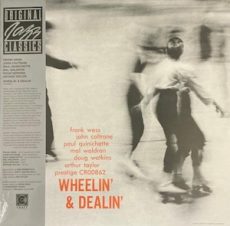
Wheelin’ & Dealin’ ~ Frank Wess, John Coltrane, Paul Quinichette, Mal Waldron, Doug Watkins and Arthur Taylor | By Eddie Carter
This morning’s album from the library is an excellent 1957 jam session by Frank Wess, John Coltrane, Paul Quinichette, Mal Waldron, Doug Watkins and Arthur Taylor. Wheelin’ & Dealin’ (Prestige PRLP 7131) is an outstanding album featuring an impressive team of musicians. The ensemble consists of John Coltrane and Paul Quinichette on tenor saxophones, Frank Wess on flute (tracks: A1, B1, B2) and tenor saxophone (track: A2), Mal Waldron on piano, Doug Watkins on bass, and Arthur Taylor on drums. The copy of this album that I own is the 2025 Worldwide Stereo audiophile reissue (Craft Recordings CR00862).
The album opens with Things Ain’t What They Used To Be by Mercer Ellington and Ted Parsons. Frank’s flute sets a welcoming tone for the sextet’s laid-back melody before moving into a relaxing first solo. Paul soars with graceful ease, then John follows him effortlessly with a mellow reading, then the saxophones revisit the sequence. Mal responds with a breezy interpretation, and Doug takes a quick walk, leading to the closing chorus. Wheelin’ by Mal Waldron takes off with the ensemble’s spirited theme. Coltrane leads the way with an energetic statement. Quinichette lets loose next, then Wess wails on the tenor saxophone. Waldron delivers a lengthy, vigorous performance. Taylor adds a brief footnote that leads to the ensemble reprising the theme and a rousing finish.
Side Two opens with Robbins’ Nest by Illinois Jacquet, Bob Russell, and Sir Charles Thompson, a tribute to DJ Fred Robbins. Frank, returning on flute, gently guides the ensemble through the melody, then enters like a cool breeze for the first solo. Paul then offers some down-home cooking; John makes every note count in a relaxed interpretation. Mal then keeps the mood easygoing, and Doug takes a brief walk before the closing ensemble. Mal Waldron’s Dealin’ starts with the sextet’s collective melody; Waldron leads with an inviting opening solo. Wess, on flute, produces a warm, fluid sound. Quinichette steps in for a few relaxing choruses, then Coltrane flows with fresh, creative ideas. Wess makes a short return on tenor sax, and Waldron has the last word before the group reunites to close the set.
The dynamic combination of Coltrane and Quinichette on tenor saxophones infuses the sextet with vibrant energy, establishing an engaging lead voice for the group. Coltrane, poised on the threshold of stardom, plays with deep emotion and a sense of adventurousness, while Quinichette’s silky, relaxed approach pays homage to Lester Young’s signature sound. Frank Wess further elevates the ensemble’s texture, seamlessly alternating between flute and tenor sax; his flute contributions, in particular, bring a light, breezy quality to the arrangements. Supporting them, the rhythm section of Waldron, Watkins, and Taylor lays down a consistent, swinging foundation, artfully mixing delicacy with spirited drive to enhance each soloist’s performance throughout the album.
Bob Weinstock supervised the first session, and Rudy Van Gelder was at the recording console. Kevin Gray did an excellent job mastering this audiophile reissue from the original tapes at Cohearant Audio. The sound quality truly shines, offering a spacious soundstage and vibrant clarity that makes you feel like the musicians are right in front of you. The record is pressed on 180-gram Virgin Vinyl and is silent until the music begins. If you’re craving a fantastic Hard-Bop album, I highly recommend checking out Wheelin’ & Dealin’ by Frank Wess, John Coltrane, Paul Quinichette, Mal Waldron, Doug Watkins, and Arthur Taylor on your next record-shopping trip. It’s an outstanding album by the talented group that later became The Prestige All-Stars, and I believe it will become a beloved favorite in the libraries of both new and seasoned jazz fans for many years to come!
Things Ain’t What They Used To Be – Source: JazzStandards.com © 2025 by Edward Thomas Carter
Wheelin’ & Dealin’: 1957 | Frank Wess, John Coltrane, Paul Quinichette, Mal Waldron, Doug Watkins, Arthur Taylor
For the serious collector of jazz… #Jazz #Classic #Collectible #Music #Notorious
More Posts: bass,choice,classic,collectible,collector,drums,flute,history,instrumental,jazz,music,piano,saxophone
Requisites
That’s Where It’s At ~ Stanley Turrentine | By Eddie Carter
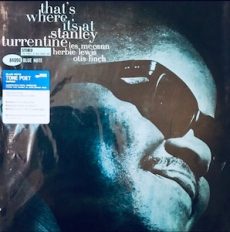
Stanley Turrentine was an exceptionally prolific tenor saxophonist who garnered numerous admirers throughout his career. He is widely recognized as a key contributor to the evolution of blues-inspired hard bop and soul jazz, as well as a trailblazer in smooth jazz. This morning’s featured album submitted for your approval is a 1962 release, That’s Where It’s At (Blue Note BLP 4096/BST 84096). This record was his second collaboration with pianist Les McCann and bassist Herbie Lewis, coming on the heels of their live performance at the Village Gate just a week prior. Drummer Otis Finch completes this dynamic quartet. The copy in my library is the 2020 Blue Note Tone Poet Series stereo reissue, which maintains the original catalog number.
The album opener, Smile, Stacey by Les McCann, begins with a brief dialogue between Stanley and Les that leads into the foursome’s theme. Stanley takes charge first, delivering a driving energy and brisk articulation. Les then swings in for the second interpretation. Herbie takes a short, sharply executed walk next, which Les finishes, then
Stanley and Les share a brief exchange with Otis before the ensemble’s soft fadeout. The quartet then cools down for Soft Pedal Blues by Stanley Turrentine, which starts with the trio’s slow-burning, soulful intro. Turrentine’s notes are placed with thoughtful precision during the melody and opening statement. McCann caresses each note of the second solo, and Turrentine delicately shapes a final comment into the theme’s restatement and slow fade.
Pia by Les McCann begins with the quartet easing into a mellow groove as the melody is introduced. Les initiates the solos with some good down-home cooking. Stanley steps in next, maintaining the calm atmosphere with a thoughtful message before the ensemble reunites for the closing chorus, which gently fades away. We’ll See Yaw’ll After While, Ya Heah by Les McCann is the pianist’s lively composition with a distinctly Southern flavor. After the quartet’s theme gets things off to a good start, Turrentine leads off the first solo, delivering each verse with precise articulation. McCann responds with a spirited interpretation that gets listeners tapping their feet and grinning along until the group’s return for the ending theme.
The tempo slows down again for Dorene, Don’t Cry, I, by Les McCann, a haunting ballad that begins with the ensemble’s beautiful melody. Stanley fully embraces the opening statement by gently attending to every note with careful lyricism and sensitivity. Les follows with something significant to say in a gorgeous performance preceding the tender reprise and close. Light Blue, by Stanley’s brother, Tommy Turrentine, brings this entertaining album to a close with a lightly swinging melody that invites listeners to sit back and enjoy the ride. McCann takes the lead with a loose, relaxed reading, then Lewis provides a few moments of pure joy. Turrentine offers the final memorable moment ahead of the group’s out chorus.
Alfred Lion produced the initial session of That’s Where It’s At, and Rudy Van Gelder was behind the dials of the recording. Joe Harley supervised the audiophile reissue, and Kevin Gray mastered the album from the original analog tapes at Cohearant Audio. The album’s sound quality is outstanding, with a stunning soundstage that transports the musicians to the sweet spot in your listening room with superb fidelity. The record was pressed on 180-gram Virgin Vinyl at RTI and is dead silent until the music begins. You’re also getting high-definition gatefold photos and superb cover packaging worthy of hanging on the wall. If you’re already a member of the Stanley Turrentine or Les McCann fan club, I highly recommend That’s Where It’s At on your next record hunt. If you aren’t already familiar with either musician, this record is an excellent introduction to their extensive discographies!
~ Les McCann Ltd. In New York (Pacific Jazz PJ-45/ST 45) – Source: Discogs.com © 2025 by Edward Thomas Carter
More Posts: choice,classic,collectible,collector,history,instrumental,jazz,music,saxophone