

Requisites
Blues In Trinity ~ Dizzy Reece | By Eddie Carter
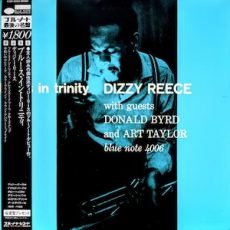
Last night, I listened to one of my mom’s favorites, Blues In Trinity (Blue Note BLP 4006/BST 84006) by Dizzy Reece, which inspired this discussion. It was his second album as a leader and first for Alfred Lion’s label. Reece was born in Kingston, Jamaica, and began playing the baritone sax at eleven. He took up the trumpet at fourteen and later got the nickname Dizzy. At sixteen, he started playing professionally and worked with some of the best musicians in England, France, and the United States. Donald Byrd (tracks: A3, B1) and Dizzy Reece (A1 to B2) on trumpet, Tubby Hayes (A1, A3, B1 to B3) on tenor sax, Terry Shannon on piano, Lloyd Thompson on bass, and Art Taylor on drums are the musicians. My copy is the 1983 King Record Company Japanese Mono reissue (Blue Note BLP 4006 – K18P 9245).
The title tune and first of four originals by Dizzy Reece, Blues In Trinity, gets the first side off to a good start with the quintet’s medium theme. Dizzy jumps out front with a bright lead solo, then Tubby blows a set of wailing choruses. Terry takes charge next with a stunning short performance until the trumpeter and tenor saxophonist exchange riffs preceding the theme’s return. I Had The Craziest Dream by Harry Warren and Mack Gordon is a beautiful song from the 1942 film Springtime In The Rockies. Reece and the rhythm section reveal the song’s sensual beauty in an elegantly tender presentation. He also delivers a heartfelt solo as the only soloist.
Close-Up opens with a relaxing ensemble melody. Dizzy takes the lead, making each note look effortless. Tubby takes an exciting turn next, then Donald sinks his teeth into an aggressive statement. Terry follows with a solo of absolute joy. The front line takes the final flight in an exchange, leading to the sextet’s reprise and finale. Shepherd’s Serenade starts Side Two at a burning beat with the sextet’s rollicking theme. Reece launches into the opening statement with pure fire. Hayes continues with a shower of fiery notes from his tenor sax. Donald follows, blowing fierce heat in his second and final presentation, and then Art converses with the front line before the theme’s reprise and close.
Color Blind eases the throttle back to medium for the quintet’s finger-popping opening chorus. Dizzy goes right to work on the opening solo with plenty of feeling. Tubby takes the baton and builds the following interpretation effectively. Teddy maintains the mellow mood in the third performance, and the front line shares the finale in a short exchange before the theme’s restatement and climax. ‘Round About Midnight by Thelonious Monk, Cootie Williams and Bernie Hanighen ends the album as a feature for Tubby Hayes and the rhythm section. The saxophonist combines the elements of elegance, restraint, and tenderness in a gorgeous performance that culminates softly.
Tony Hall produced the initial session of Blues In Trinity, and Rudy Van Gelder is credited as the recording engineer. However, he only re-recorded the initial session. The sound quality of this King reissue is sensational, with a superb soundstage that emerges from your speakers as if the musicians are playing right in front of your listening chair. This album holds a special place in my heart, as it was a staple during our Sunday jazz dinners with my mom and sister when I was younger. If you’re a hard bop fan, I offer Blues In Trinity by Dizzy Reece for consideration on your next record-shopping trip. It’s an underrated, excellent album by one of the best musicians most may not know, and I highly recommend it for a spot in your library!
~ ‘Round About Midnight – Source: JazzStandards.com
~ I Had The Craziest Dream – Source: Wikipedia.org
© 2024 by Edward Thomas Carter

More Posts: choice,classic,collectible,collector,history,instrumental,jazz,music,trumpet
Daily Dose Of Jazz…
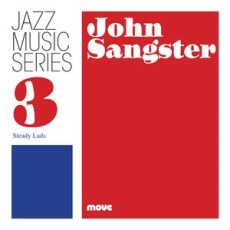
John Grant Sangster was born November 17, 1928 in the Melbourne suburb of Sandringham, Victoria, Australia. He was an only child that attended primary schools in Sandringham and Vermont, and then Box Hill High School. While at high school he taught himself to play trombone and with a friend, Sid Bridle, formed a band.
In 1946 he started a civil engineering course at Melbourne Technical School. Two years later Sangster performed at the third annual Australian Jazz Convention, held in Melbourne. By the following year he led his own ensemble, John Sangster’s Jazz Six, which included Ken Evans on trombone. He provided trombone for Graeme Bell and his Australian Jazz Band, later took up the cornet and then the drums. They toured several times from 1950 to 1955, and in the late Fifties he began playing the vibraphone.
He went on to play with Don Burrows in the early 1960s, form his own quartet and experimented with group improvisatory jazz, after becoming interested in the music of Sun Ra and Archie Shepp. By the end of the Sixties his attention turned to rock musicians and he joined the expanded lineup of the Australian progressive rock group Tully, who provided the musical backing for the original Australian production of the rock musical Hair. He performed and recorded with Tully and their successors, Luke’s Walnut, throughout the two years he played in Hair. In 1970 he re-joined the Burrows group for Expo 1970 in Osaka, Japan.
In the 1970s Sangster released a series of popular The Lord of the Rings inspired albums that started with The Hobbit Suite in 1973. He was also the composer of a large number of scores for television shows, documentaries, films, and radio. In 1988, Sangster published his autobiography, Seeing the Rafters.
Trombonist John Sangster, who also plays trumpet, drums, percussion, cornet, vibraphone and is best known as a composer, died in Brisbane, Queensland, Australia on October 26, 1995 at age 66.
More Posts: bandleader,composer,cornet,drums,history,instrumental,jazz,music,trombone,trumpet,vibraphone
Daily Dose Of Jazz…
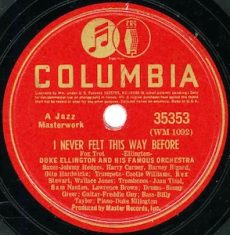
Wallace Leon Jones was born on November 16, 1906 in Baltimore, Maryland. He began playing trumpet in local Maryland bands such as Ike Dixon’s Harmony Birds and Percy Glascoe’s Kit Kat Orchestra early in his career.
He moved to New York City around 1935 and went to work with his cousin Chick Webb. He then joined Willie Bryant’s ensemble and recorded with Putney Dandridge and Duke Ellington, the latter where he was credited on clarinet, trombone and trumpet from 1938 to 1944.
He appeared in several sound films with Ellington, including 1943’s Cabin in the Sky. After this association, Wallace recorded with Ellington again in 1947, and also worked with Benny Carter, Snub Mosley, and John Kirby, but left music by the end of the Forties.
Trumpeter Wallace Jones died on March 23, 1983 in New York City.
More Posts: history,instrumental,jazz,music,trumpet
Daily Dose Of Jazz…
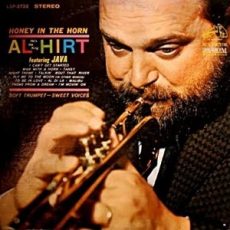
Alois Maxwell Hirt was born on November 7, 1922 in New Orleans, Louisiana to a police officer father. At the age of six, he got his first trumpet, which had been purchased at a local pawnshop. He played in the Junior Police Band with friend Roy Fernandez, the son of Alcide Nunez. By 16 he was playing professionally with his friend Pete Fountain, while attending Jesuit High School. During this time, he was hired to play at the local horse racing track, beginning a six-decade connection to the sport.
1940 saw Al in Cincinnati, Ohio studying at the Cincinnati Conservatory of Music with Dr. Frank Simon. After a stint as a bugler in the Army during World War II, he performed with various swing big bands, including those of Tommy Dorsey, Jimmy Dorsey, Benny Goodman, and Ina Ray Hutton.
In 1950 Hirt became the first trumpet and featured soloist with Horace Heidt’s Orchestra and after several years on the road he returned to New Orleans working with various Dixieland groups and leading his own bands. He soon signed with RCA Victor and posted twenty-two albums on the Billboard charts in the 1950s and 1960s. He recorded the theme for the 1960s television show The Green Hornet, with arranger and composer Billy May.
From the mid-1950s to early 1960s, Hirt and his band played nightly at Dan’s Pier 600, hosted the hour-long television variety series Fanfare, as the summer replacement for Jackie Gleason and the American Scene Magazine, and would go on to play for Pope John Paul II.
Trumpeter and bandleader Al Hirt died of liver failure on April 27, 1999 at the age of 76, after having spent the previous year in a wheelchair due to edema in his leg.
More Posts: bandleader,history,instrumental,jazz,music,trumpet
Daily Dose Of Jazz…
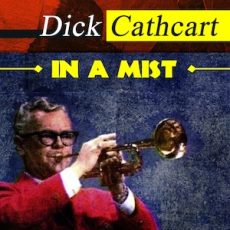
Charles Richard Cathcart was born on November 6, 1924 in Michigan City, Indiana. He was a trumpeter for the U.S. Army Air Force Band, and was a member of big bands led by Bob Crosby, Ben Pollack, and Ray Noble.
After World War II he moved to Los Angeles. His friend Jack Webb was playing the part of trumpeter Pete Kelly in the movie Pete Kelly’s Blues and told Cathcart he should supply the music. The band from the movie stayed together in the 1950s for performances and recordings under the name Pete Kelly’s Big Seven.
Cathcart also supplied music for the television show Dragnet, which starred Jack Webb as Joe Friday. He spent much of his career from 1962 to 1968 as a musician on The Lawrence Welk Show. On the Welk show, he met Peggy Lennon, a singer with the Lennon Sisters, and the two married.
Trumpeter Dick Cathcart, who played in both Dixieland and big band genres, died on November 8, 1993 in Los Angeles, California.
More Posts: history,instrumental,jazz,music,trumpet