

Daily Dose Of Jazz…
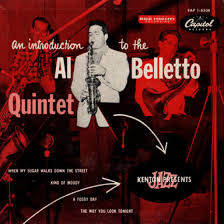
Al Belletto was born on January 3, 1928 and raised in New Orleans, Louisiana. He graduated from Warren Easton Charter High School before entering Loyola University New Orleans studying music and then earning a master’s degree from Louisiana State University.
Belletto played with Sharkey Bonano, Louis Prima, Wingy Manone and the Dukes of Dixieland in the 1940s and 1950s. He went on to lead his own band and record several albums on Capitol Records from 1952. Along with his ensemble they became part of Woody Herman’s band for U. S. State Department tours of South America in 1958 and 1959.
In the Sixtiess, Al worked at the New Orleans Playboy Club fronting the house band and serving as Musical/Entertainment Director, booking nationally known acts into the venue.
Saxophonist and clarinetist Al Belletto, who recorded six albums as a leader, died on December 26, 2014 in Metairie, Louisiana.

More Posts: bandleader,clarinet,history,instrumental,jazz,music,saxophone
Daily Dose Of Jazz…
Naomi Taylor was born January 2, 1967 in Nassau, Bahamas and was the last of four girls born to missionary parents. Absorbed in gospel and classical music before she was able to talk at the tender age of six, her musical talents surfaced when she and her sisters performed as an “a cappella” quartet. Her rich alto/tenor blend and her ability to harmonize at such a young age came as a pleasant surprise to many. She discovered that she was able to pick up just about any musical instrument for the first time and play away, even though she was never taught.
With her musical talents growing, Naomi spent countless hours listening to singing quartets, captivated by the close harmony and often adding her own creative synchronization to compliment a tune. Her early singing career encompassed performances with various local choirs and musical groups, including The Bahamas National Youth Choir, the Renaissance Singers and Bel Canto.
She developed her musical talent under the mentorship of Mr. Cleophas Adderley. Though very talented, she shied away from solo performances, opting for singing within the security of a line-up or choir. Taylor sought out private lessons from pianist and vocal coach Lee Callender. This serendipitous meeting, then catapulted her into the world of jazz by reconnecting with bassist and bandleader Adrian D’Aguilar.
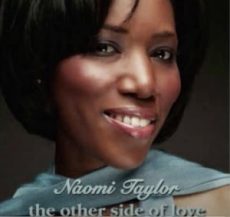
In 2008 she released her first recording The Other Side of Love, a compilation of warm and beautiful jazz standards. The recording features pianist Lou Rainone, saxophonist Ralph Munnings, percussionist Neil Symonette, bassist Adrian D’Aguilar and composer/guitarist Fred Ferguson.
Today, vocalist Naomi Taylor’s committed to jazz has her performing with Lee Calendar or Jazz Etcetera at the Oyster Bar in Nassau.
More Posts: bandleader,history,instrumental,jazz,music,vocal

Daily Dose Of Jazz…
Holly Cole was born November 25, 1963 in Halifax, Nova Scotia, Canada to a noted radio broadcasting father on the CBC Stereo network. Seeking a musical career, in 1983 she travelled to Toronto, Canada and three years later she founded a trio with bassist David Piltch and pianist Aaron Davis. It took two more years to get offered a record deal and in 1989 the Holly Cole Trio released an EP, Christmas Blues. The following year she released her debut album Girl Talk.
A succession of releases followed through the early 1990s covering r&b, blues, rock, country and show tunes with a jazz arrangement. In 1993 Holly’s hit single cover version of the Johnny Nash song I Can See Clearly Now earned a Juno Award nomination for Best Video and won a Juno Award for Best Contemporary Jazz Album, in 1994.
During the Nineties decade she appeared in film and television, releasing a track on the soundtrack of the Due South series. From 1993 to 1998 she recorded and released an album a year, took a break from recording, coming back in 2000 and recorded four more albums until 2007. In 2010, Cole contributed a track for the World Jazz For Haiti charity album.
In 2012 she got her original band back together again, added John Johnson on horns, guitarist Rob Piltch, Davide DiRenzo on drums and recorded a live album and dvd. She has been featured in several music specials which have rendered her multiple awards.
Vocalist Holly Cole, who has released 17 albums and received an honorary degree from Queen’s University in Kingston, Ontario, Canada, continues to perform and record.
More Posts: bandleader,history,instrumental,jazz,music,vocal
Daily Dose Of Jazz…
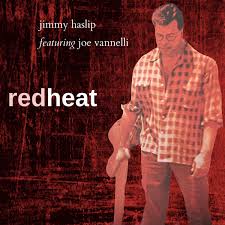
James Robert Haslip was born December 31, 1951 in the Bronx, New York City to Puerto Rican immigrants. Spanish was his first language but he learned to speak English in kindergarten. Moving to Huntington, New York when he was four years old, by age seven he was playing drums then trumpet and tuba until landing on the bass at 15.
Surrounded in the home with music that included classic and orchestra jazz, Latin, and pop vocals, he and his peers also visited nightclubs and concert venues. Jimmy took music lessons and attended a private music school, but considers himself self-taught. He went to a local music shop with his father, purchased a right-handed bass though he is left-handed, and learned to play it upside down without restringing.
During his high school years Haslip formed his first band called Soul Mine with his classmates, playing soul music at school dances and parties. The early 1970s saw him playing with New York glam band Street Punk, then moved to Los Angeles, California in 1976, where he played with guitarists Tommy Bolin and Harvey Mande.
A founding member of the jazz fusion group Yellowjackets in 1977, a relationship that lasted until 2012, he has also worked with Jeff Lorber, Eric Marienthal, Bruce Hornsby, Rita Coolidge, Gino Vannelli, Kiss, Tommy Bolin, Allan Holdsworth, Marilyn Scott, Chaka Khan, Al Jarreau, Donald Fagen, and Anita Baker.
Bassist Jimmy Haslip is currently taking a break from performance to concentrate on family and producing independent projects.

More Posts: bandleader,bass,history,instrumental,jazz,music
Daily Dose Of Jazz…
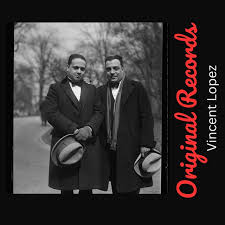
Vincent Lopez was born of Portuguese immigrant parents in Brooklyn, New York City on December 30, 1895. By 1916 he was leading his own dance band in New York City. Five years later his band began broadcasting on the new medium of entertainment radio, giving listeners a weekly 90-minute show on Newark, New Jersey station WJZ. The broadcast was instrumental in making him one of North America’s most popular bandleaders through the 1940s.
In the 1930s and ‘40s Vincent worked occasionally in feature films, notably The Big Broadcast and I Don’t Want to Make History and was one of the first bandleaders to work in Soundies movie musicals. His flamboyant style of piano playing influenced Eddy Duchin and Liberace.
Noted musicians who played in his band included Artie Shaw, Xavier Cugat, Jimmy Dorsey, Tommy Dorsey, Bob Effros, Mike Mosiello, Fred Lowery, Joe Tarto and Glenn Miller. He featured singers Keller Sisters and Lynch, Betty Hutton, and Marion Hutton. Lopez’s longtime drummer was Mike Riley, who popularized the novelty hit The Music Goes Round and Round.
In 1941, Lopez’s Orchestra began a residency at Manhattan’s Taft Hotel that lasted 25 years. In the early 1950s, he along with Gloria Parker hosted a radio program broadcast from the Taft Hotel called Shake the Maracas in which audience members competed for small prizes by playing maracas with the orchestra.
Bandleader, pianist and actor Vincent Lopez, who published his autobiography Lopez Speaking in 1960, died at the Villa Maria nursing home in North Miami, Florida on September 20, 1975.
More Posts: bandleader,history,instrumental,jazz,music,piano