

Daily Dose Of Jazz…
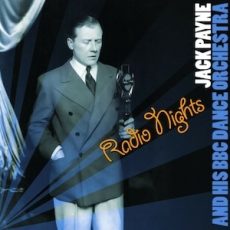
Jack Payne was born John Wesley Vivian Payne on August 22, 1899 in Leamington Spa, Warwickshire, England. He is the only son of a music publisher’s warehouse manager and it wasn’t until he was serving in the Royal Flying Corps that he played the piano in amateur dance bands. Towards the end of World War I, he led dance bands for the troops and was part of a voluntary group The Allies Concert Party that performed to wounded soldiers convalescing around Birmingham.
He played with visiting American jazz bands at the Birmingham Palais during the early 1920s, including the Southern Rag-a-Jazz Orchestra in 1922, before moving to London in 1925. He played in a ten-piece band which became the house band at London’s Hotel Cecil. Three years later Payne became the BBC Director of Dance Music and the leader of the BBC’s first official dance band.
After leaving the BBC in 1932 he returned to playing hotel venues and switched labels to Imperial, followed by Rex from 1934. Payne took his band on nationwide tours and made a couple of films, composed and published waltzes, and recorded jazz working with Garland Wilson.
>Returning to the post of Director of Dance Music at the BBC until 1946. Bandleader and composer Jack Payne, who authored two autobiographies, died in Tonbridge, Kent, England on December 4,1969, aged 70.

More Posts: author,bandleader,composer,history,instrumental,jazz,music
Daily Dose Of Jazz…
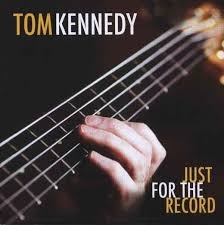
Tom Kennedy was born on August 21, 1960 in St. Louis, Missouri and is the son of a professional trumpet player. He began playing acoustic bass at the age of nine on a double-bass brought home by his older brother, jazz pianist Ray Kennedy. It wasn’t long before he began to perform with such as Freddie Hubbard, James Moody, Nat Adderly, Sonny Stitt and Stan Kenton passing through the Midwest.
Specializing in acoustic jazz until he picked up the electric bass at the age of 17. Soon he was dividing his time between mainstream and progressive jazz fusion. Tom gained a reputation beyond St. Louis and he relocated to New York City, where he quickly found work with multiple groups. He recorded with guitarist Bill Connors and toured with Michael Brecker in the jazz-fusion group Steps Ahead. He went on to have tours and recordings with Tania Maria and Al DiMeola.
In 1998, Kennedy became an integral part of Dave Weckl’s band, a group he toured, composed and recorded with for over nine years. They have continued to perform and record together on various projects for other artists, including Mike Stern, Didier Lockwood, Dave Grusin and Lee Ritenour.
He has recorded six albums as a leader and another twenty as a sideman with Dave Weckl, Bill Connors, Don Grolnick, Ray Kennedy, Al DiMeola, Planet X, Derek Sherinian, and Mike Stern.
Tom has also performed and recorded with top contemporary players Simon Phillips, Steve Gadd, Frank Gambale, Steve Lukather, David Sanborn, Jeff Lorber, Ricky Lawson, Joe Sample, Renee Rosnes and George Garzone and fusion band Planet X.
Double-bass and electric bassist Tom Kennedy, who moved to New York City in 1984 and immersed himself in the hard bop, fusion and swing genres, continues to perform and record.
More Posts: bandleader,bass,history,instrumental,jazz,music
Daily Dose Of Jazz…
Terence Michael “Terry” Clarke was born August 20, 1944 in Vancouver, Canada. He studied percussion with Jim Blackley and played with Chris Gage and Dave Robbins early in his career. From 1965 to 1967 he toured in a quintet with John Handy, and joined The Fifth Dimension in 1967, remaining until 1969.
In 1970, he moved to Toronto, Canada where he began a longstanding association with Rob McConnell’s group, Boss Brass. He also played with Ed Bickert, Ruby Braff, Jim Galloway, Sonny Greenwich, Jay McShann, Emily Remler, and Frank Rosolino. In 1976, he toured with Jim Hall for the first time and in 1981 did an international tour with Oscar Peterson.
Relocating to New York City in 1985 he played or recorded with Toshiko Akiyoshi, Eddie Daniels, Oliver Jones, Roger Kellaway, Helen Merrill, Ken Peplowski, and Joe Roccisano, among others. He played with the Free Trade ensemble in 1994, a quintet composed of Clarke, Ralph Bowen, Neil Swainson, Renee Rosnes, and Peter Leitch.
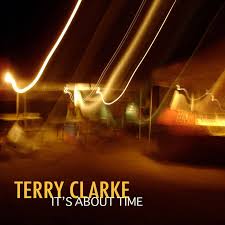
Returning to Toronto in 1999, he joined The Rob McConnell Tentet. His 2009 debut album It’s About Time won a Juno Award for Traditional Jazz Album of the Year. Drummer Terry Clarke, who recorded 29 albums as a sideman and was appointed a Member of the Order of Canada in 2002, continues to perform and record.
More Posts: bandleader,drums,history,instrumental,jazz,music
Daily Dose Of Jazz…
Ric Powell was born on August 19, 1942 in New Orleans, Louisiana. He attended and initially studied music at St. Augustine High School in New Orleans, before his family moved to the Bronx, New York where he went to Morris High School. Upon graduating he went on to study at New York School of Music in Manhattan, then in the U.S. Naval School of Music in Washington, D.C. and finally matriculated through Howard University in Washington, D.C.
He beganhis professional life as a member of the youth percussion ensemble Kalypso Kids, then became a member of the Apollo Theatre House Band under the direction of Ruben Philips. He toured with the Jimmy Castor Band before becoming a studio and freelance musician in New York City and Chicago, Illinois.
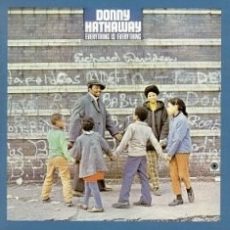
He formed a trio under his own name featuring Donny Hathaway, became a member of the CBS Staff Orchestra in Chicago, and then a record producer for Atlantic, Atco and Stax. Drummer Ric Powell, who formed Don-Ric Enterprises and is an Adjunct Professor of Percussion at Northwestern University, continues to perform.
More Posts: bandleader,drums,history,instrumental,jazz,music
Daily Dose Of Jazz…
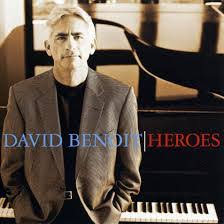
David Bryan Benoit was born in Bakersfield, California on August 18, 1953. He studied piano at age 13 with Marya Cressy Wright and continued his training with Abraham Fraser, who was the pianist for Arturo Toscanini. He attended Mira Costa High School and went on to focus on theory and composition at El Camino College, studying orchestration and later took film scoring classes at UCLA. He went on to study music conducting and worked with Jeffrey Schindler, Music Director for the UC Santa Barbara symphony orchestra.
He began his career as a musical director and conductor for Lainie Kazan in 1976, before moving on to similar roles with singer/actresses Ann-Margret and Connie Stevens. His GRP Records debut album, Freedom at Midnight in 1987, led his roster of top ten albums he has released. He has recorded tribute albums to pianist Bill Evans, Peanuts creator Charles Schulz and Leonard Bernstein’s West Side Story. Collaborators included the chorus group Take 6, guitarist Marc Antoine and trumpeter Chris Botti.
Benoit has arranged, conducted, and performed music for Russ Freeman and the Rippingtons, Kenny Loggins, Michael Franks, Patti Austin, Dave Koz, Kenny Rankin, Faith Hill, David Lanz, Cece Winans, David Pack, David Sanborn, The Walt Disney Company and Brian McKnight.
Pianist David Benoit, who has three Grammy nominations, has performed three times at the White House, and has a morning program on jazz radio station KKJZ in Long Beach, California, continues to perform and record..
More Posts: arranger,bandleader,composer,conductor,history,instrumental,jazz,music,piano