


Daily Dose Of Jazz…
Diego Maroto was born in Mexico City, Mexico on May 9, 1968. He started taking private saxophone lessons in 1985 from teachers Larry Roussell and Alfonso Martínez. Two years later he studied art history at the Universidad Iberoamericana and in 1988 he joined the jazz worksop at the Escuela Superior de Música (INBA), where he learned improvisation, arrangement and composition by Francisco Tellez. His continuing education took him to private lessons from Danny Matusack and Darryl Winsman.
In 1991, Diego became an active member of the International Association of Jazz Educators (IAJE). During this period he participated in worksops and courses with David Liebman, Ernie Watts, Arturo Sandoval, Brian Bromberg, David Baker, Jerry Bergonzi, Ran Blake, Mike Campbell, Bill Dobbins, Andy Laverne, Don Sickler and Chris Vandala.
He has recorded and performed on projects with some of Mexico’s top jazz musicians like Eugenio Toussaint, Agustin Bernal, Enrique Neri, Fernando Toussaint, Cristobal López, Chilo Moran, Miguel Salas, Francisco Téllez, Iraida Noriega, and Big Band Arte 01, to name a few. In 2004, Maroto recorded his debut solo album Mundo Paralelo. He has performed at Dizzy’s in New York, and has shared stages with Antonio Sanchez, George Duke and Stanley Clarke. He has since formed the Diego Moaroto Asian Trio, and recorded a live album in Kuala Lumpur, Malaysia at the No Black Tie jazz club.
As an educator, Diego has given lessons, clinics and seminars in important schools and institutions in Mexico. Tenor saxophonist Diego Maroto continues to perform, record, tour and teach.

More Posts: bandleader,history,instrumental,jazz,music,saxophone

Daily Dose Of Jazz…
Leah Souza was born in Plymouth, Massachusetts on May 8, 1982 and began singing at a very early age. She started performing at functions and outdoor concerts when she was thirteen. At 16, she was the lead vocalist of a seven piece band that was selected in a national talent search to perform in California. In high school she was the jazz band’s featured vocalist and played the tenor saxophone in multiple bands. She got her big break nationally singing on a song with her flugelhornist father, appropriately titled A Song for My Father.
Leah studied with jazz singer and vocal coach Rebecca Parris while in high school. For several years she regularly attended a Jazz All-Stars show at “Ricky T’s Jazz Club” on the South Shore. There she listened to the top jazz musicians in New England on a weekly basis and eventually began sitting in with the different All-Star bands. Studying these musicians helped her develop as a musician herself, as well as, the opportunity to meet and perform with many wonderful and often legendary performers.
She crafts her duo, trio, quartet or quintet to the venue she is playing with performances that may be lively and exciting, or romantic and full of standard ballads. Souza has performed at the cream-of-the- crop venues in Boston, Massachusetts and throughout New England.
Vocalist Leah Souza continues to pursue her burgeoning career as she expands her reach.
More Posts: bandleader,history,instrumental,jazz,music,vocal
Daily Dose Of Jazz…
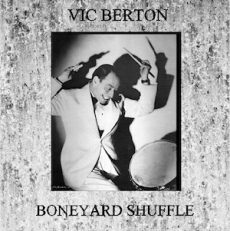
Vic Berton was born Victor Cohen on May 7, 1896 in Chicago, Illinois. His father was a violinist who began his son on string instruments around age five. He was hired as a percussionist at the Alhambra Theater in Milwaukee, Wisconsin in 1903 when he was only seven years old. By 16, he was playing with the Milwaukee Symphony Orchestra and the Chicago Symphony Orchestra. While serving in World War I he played drums for John Philip Sousa’s Navy band.
In the early 1920s, Berton played in the Chicago bands of Art Kahn, Paul Beise, and Arnold Johnson. He led his own ensemble which played at the Merry Gardens club. 1924 saw him become the manager of The Wolverines, and occasionally played alongside Bix Beiderbecke in the ensemble. Later in the decade, he played with Roger Wolfe Kahn, Don Voorhees, Red Nichols and Paul Whiteman. He worked extensively as a session musicianbefore moving to Los Angeles, California in 1927.
During his time in Los Angeles he played with Abe Lyman and recorded in studios for film soundtracks. Vic served as director of Paramount Films’s music division for a period and worked in the Los Angeles Philharmonic Orchestra. In the 1940s, he worked as a percussionist in the studios for 20th Century Fox.
Drummer Vic Berton died on December 26, 1951 in Hollywood, California from lung cancer.
More Posts: bandleader,drums,history,instrumental,jazz,music

Daily Dose Of Jazz…
Duke Jones was born Albert Jones on May 6th in White Plains, New York. The nickname was given to him by his favorite aunt due to his love of music at an early age. He began learning trumpet at the age of nine and played in elementary school through high school. He formed a band with The Lewis Brothers and Sharon Bryant that ultimately became Atlantic Starr.
Jones attended Northwestern University in Evanston, Illinois, studying music and film. He worked the New York club circuit and continued his studies with traditional island rhythms, calypso and soca at the University of Virgin Islands. He was influenced by Kenny Dorham, Woody Shaw, Lee Morgan, Benny Bailey and Miles Davis.
He would go on to tour Japan, Europe and Africa, working with The Temptations, Angela Bofill, Larry Coryell and Marion Meadows. He has collaborated and recorded with August Darnell, and drummer Norman Connors. Duke served as Vice President of Creole Records, a label started with then band mate August Darnell (Kid Creole). In 2005, he formed Café Soul All-Stars, recording their debut album Love Pages which featured George Benson, Roy Ayers and Kenny Garrett among others.
Trumpeter and flugelhornist Duke Jones continues to perform, record and collaborate with his music.
More Posts: bandleader,flugelhorn,history,instrumental,jazz,music,trumpet
Daily Dose Of Jazz…
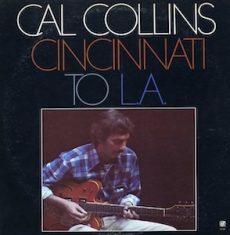
Cal Collins was born on May 5, 1933 in Medora, Indiana and first played the mandolin professionally as a bluegrass musician in the early 1950s. After his Army service he moved to Cincinnati, Ohio he switched to jazz guitar after hearing swing guitarists Charlie Christian, Irving Ashby and Oscar Moore. He played in Cincinnati for twenty years.
In 1976 Benny Goodman hired him at the age of 43 and had a three year stint with the orchestra. Cal then spent three years making albums for Concord Jazz. As a leader and sideman, he worked with Scott Hamilton, Warren Vache, Rosemary Clooney, Ross Tompkins, Woody Herman, John Bunch, and Marshal Royal.
Returning to Cincinnati in the early Eighties, Collins slowed down his career. He joined the Masters of the Steel String Guitar Tour in 1993 with Jerry Douglas and Doc Watson. Over the course of his career he recorded a dozen albums as a leader with his debut recording being Cal Collins In San Francisco in 1978 on the Concord label.
He recorded twenty-eight albums with John Bunch, Rosemary Clooney, Concord Jazz All Stars, Concord Super Band, Benny Goodman, Woody Herman, Eiji Kitamura, Marshal Royal, Warren Vache, Bob Barnard, Michael Moore, Jimmy Madison, Kenny Poole, Scott Hamilton and Buddy Tate, Hank Marr, and Ross Tompkins.
In 2001, guitarist Cal Collins, who recorded his last album in 1998, died of liver failure on August 27th in Dillsboro, Indiana.
More Posts: bandleader,guitar,history,instrumental,jazz,music