

Daily Dose Of Jazz…
Michael DiPasqua was born May 4, 1953 born in Orlando, Florida into a highly musical family. He began his professional career very early, gigging as a drummer with a band co-led by Zoot Sims and Al Cohn while still in his mid-teens.
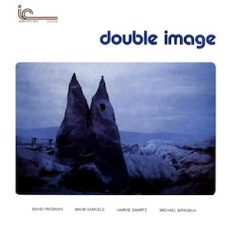
During the next few years DiPasqua played with Don Elliott and Gerry Mulligan, and also accompanied singers Jackie Cain and Roy Kral. Towards the end of the 70s, the drummer was for a number of years co-leader of Double Image, a vibraharp, marimba and bass quartet that toured internationally.
Michael then co-led Gallery and followed that with a spell in Later That Evening, a band led by Eberhard Weber, before joining Jan Garbarek. He was a consistently inventive percussionist with the ability to comfortably co-exist in a range of musical styles, from the modern end of the mainstream through jazz rock to the cutting edge of improvisational music.
He recorded three albums as a leader with his debut on the Inner City label in 1977. He went on to record as a sideman with Jan Garbarek for two albums, three with Eberhard Weber, and one each with Adelhard Roidinger and Robert Towner all for ECM. On a variety of other labels he recorded with Siegfried Fietz, Volker Kriegel, Marian McPartland, and Gerry Mulligan.
Beyond jazz, Michael was locally known for his role in helping to develop over 300 Subway Sandwich Shops in Central Florida, as well as co-founding PCMD Management Company, which owns and operates over 40 Subway franchises.
Cool jazz drummer and percussionist Michael DiPasqua lost his battle with cancer on August 29, 2016. He was 63.

More Posts: bandleader,drums,history,instrumental,jazz,music,percussion
Daily Dose Of Jazz…
Matt Bauder was born and raised in Ann Arbor, Michigan on May 3, 1976 and attended the University of North Texas in Denton, Texas and earned a bachelor of fine arts in jazz and contemporary improvisation at the University of Michigan in Ann Arbor.
From 1999 to 2001 he lived in Chicago, Illinois where he was a part of the city’s modern jazz and improvised music scene. Matt attended graduate school at Wesleyan University in Middletown, Connecticut studying under Anthony Braxton and received a master’s degree in composition. He lived in Berlin, Germany for a year, then moved to New York City in 2005.
In 2003, Bauder released his debut album, Weary Already of the Way, on 482 Music. His sophomore album in 2007 was the first album from his long-form improvisational jazz trio Memorize the Sky, featuring Bauder on saxophone, clarinet, bass clarinet and percussion, Zach Wallace on bass, vibraphone and percussion, and Aaron Siegel on drums and percussion. The band released two more albums in 2008 and 2010.
His next trio, Hearing Things, had the saxophonist leading JP Schlegelmilch on organ and Vinnie Sperrazza on drums. Never limiting himself to one genre, Bauder’s next venture formed the doo-wop jazz group White Blue Yellow & Clouds, covering songs by the Beach Boys, The Flaminogos and The Mystics.
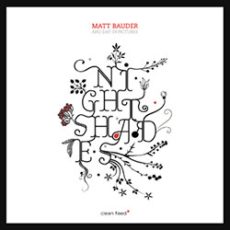
His Brooklyn-based jazz quintet Day in Pictures released two albums on Clean Feed Records, in which heplayed tenor saxophone and composed the songs on both albums. Matt has since performed as part of the Arcade Fire’s touring lineup, played saxophone and clarinet on Will Butler’s debut album Policy, and has played in the Broadway production of Fela!
Ever busy, saxophonist Matt Bauder continues to perform, compose and collaborate on numerous projects across genres.
More Posts: bandleader,clarinet,drums,guitar,history,instrumental,jazz,music,saxophone,vocal
Daily Dose Of Jazz…
Meeco was born on May 2, 1976 in Berlin, Germany. As a young child he was heavily influenced by his father who played classical piano and his poet/artist mother, thereby making it completely natural to follow their footsteps. Beginning piano lessons at six years old, and after several years of studying classical music, he sought other musical outlets. After a friend introduced vintage Ella Fitzgerald, Horace Silver and McCoy Tyner records, he became enamored with Black American music.
Mentored by his close friend, the late New York pianist/singer Bob Lenox, he realized that the only important thing in music was creating the right feeling. He would go on to work with German producer Marco Meister, founding member of the group Terranova, Meeco gained invaluable studio experience producing his own music.
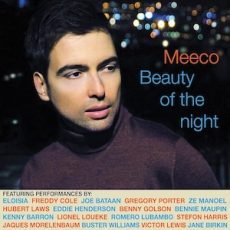
Over the course of his career Meeco has recorded with Benny Golson, Gregory Porter, Ron Carter, John Scofield, Hubert Laws, Kenny Barron, Buster Williams, Kirk Whalum, Richard Bona, Casey Benjamin, Mary Stallings, Freddy Cole, Kevin Mahogany, Bennie Maupin, James Moody, Eddie Henderson, Shedrick Mitchell, David “Fathead” Newman, Eric Reed, Vincent Herring, Victor Lewis, Stefon Harris, Lionel Loueke, Cedar Walton, Charlie Mariano, David Friedman, just to name a few.
Not limiting himself to jazz, Meeco has also produced hip hop and soul legends Talib Kweli, Masta Ace, Smif n Wessun, Lil Fame of M.O.P., Yahzarah, Jean Baylor, DJ Stylewarz, along with Latin and pop genres Joe Bataan, Jane Birkin, Jaques Morelenbaum and Romero Lubambo.
Pianist, composer, producer, deejay and photographer Meeco, who has released seven albums to date, remains based between Berlin and Paris, France as he continues to expand his musical horizons.
More Posts: bandleader,composer,deejay,history,instrumental,jazz,music,piano,producer
Daily Dose Of Jazz…
Kevin Hays was born in New York City on May 1, 1968 and was the youngest of four children. Raised in Greenwich, Connecticut, he began studying the piano at the age of six after hearing his amateur father play. He was initially interested in rock music and other things that he heard on the radio, and became more interested in jazz in his early teens. Initially self-taught, he later took lessons with Lou Stein, and attended several Interlochen Music Camps.
Hays played locally from 1982. He began playing in New York City in 1985 while still in high school, then had a period in Nick Brignola’s band. He attended the Manhattan School of Music for a semester in 1986 before dropping out to concentrate on performing. His debut recording as a leader came in 1990 with the album El Matador on the Japanese label Jazz City.
He played regularly with a number of Bob Belden’s ensembles from the late 1980s, and in the 1990s he toured Japan and recorded with the Harper Brothers and worked with Steve Wilson, Benny Golson, Joshua Redman, Seamus Blake, and Eddie Henderson.
Between 1991 to 1993 he recorded three albums for SteepleChase Records. After SteepleChase, Kevin signed an album deal with Blue Note Records who initially released three of his albums as a leader. In 1995 he toured with saxophonist Sonny Rollins.
His trio with bassist Doug Weiss and drummer Bill Stewart have played together for 15 years. Hays also recorded under Stewart’s leadership, performed and recorded duets with pianist Brad Mehldau, released a duo album with Lionel Loueke and he has released a solo album. His New Day Trio, with Rob Jost on bass and Greg Joseph on drums, also finds Kevin singing on their first release, New Day.
Pianist Kevin Hays, who has more than twenty albums to his credit as leader or co-leader, continues to perform and record.
More Posts: bandleader,history,instrumental,jazz,music,piano
Daily Dose Of Jazz…
August Rosenbaum was born on April 30, 1987 in Copenhagen, Denmark into a family of artists. He has had an eclectic and passionate vision since he first started learning to play the piano. As the only one at elementary school recitals who would perform Thelonious Monk, Wu Tang Clan and Erik Satie, the piano prodigy shows with equal conviction many sides of his talent.
Rosenbaum has won two Danish Music Awards for his composing, performed at the acclaimed Sónar Festival, and has been shortlisted for both the Nordic Music Prize and the National Danish Critics’ Award. He has wona Grammy for Best Alternative Album at the 2018 Danish Music Awards.
He is also known for collaborations with artists like Quadron, Rhye and MØ, Sonic Youth’s Kim Gordon and visual artist Jesper Just. He has been commissioned for works in film, theatre and performances at a.o. Palais De Tokyo, The Metropolitan Museum of Art, Brooklyn Academy of Music and The Royal Danish Ballet.
Pianist, composer and record producer August Rosenbaum continues to explore and record music.
More Posts: bandleader,composer,history,instrumental,jazz,music,piano,record producer