

Daily Dose Of Jazz…
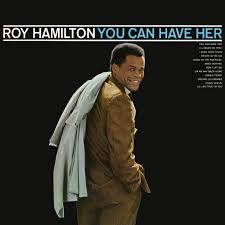
Roy Hamilton was born on April 16, 1929 in Leesburg, Georgia to Evelyn and Albert Hamilton, where he began singing in church choirs at the age of six. The summer of 1943 he was fourteen and the family migrated north to Jersey City, New Jersey in search of a better life. There he sang with the Central Baptist Church Choir, and attended Lincoln High School where he studied commercial art. Being gifted, his paintings were placed with a number of New York City galleries.
In 1947 the seventeen-year-old Hamilton took his first big step into secular music, winning a talent contest at the Apollo Theater. But nothing came of it, so to support himself he worked as an electronics technician during the day, and an amateur heavyweight boxer at night, with a record of six wins and one defeat. The following year he joined the Searchlight Gospel Singers, studied light opera, and continued to perform gospel until 1953 when the group broke up. Then he headed back into pop music with something different to offer.
1953 saw Roy discovered by Bill Cook, the first Black radio disc jockey and television personality on the East Coast. As his manager, Cook made a demo tape, brought it to the attention of Columbia Records and got him signed to Okeh Records. His first session produced Rodgers and Hammerstein’s You’ll Never Walk Alone from the musical Carousel. However Columbia released it on their pop label Epic and it topped the Billboard charts for eight weeks. He would go on to have hits with If I Love You, Ebb Tide and Unchained Melody and in 1955 was named Vocalist of the Year by Down Beat magazine. He would go on to record Great American Songbook singles Without a Song, Cuban Love Song, Everybody’s Got a Home But Me, and Somebody Somewhere.
Hamilton’s last hit record, You Can Have Her, came in 1961, and the Epic label treated him as a major star and issued sixteen albums by him. By the middle of the decade his career declined while recording with MGM and then RCA. In 1969 in Memphis, Tennessee, he made the final recordings of his career.
In early July 1969, he suffered a massive cerebral hemorrhage at his home in New Rochelle, New York. He was taken to New Rochelle General Hospital where he lay in a coma for more than a week. On July 20, 1969 vocalist Roy Hamilton, who was inducted into the Georgia Music Hall of Fame, was Epic Records first star, inspired Sam Cooke, and influenced Elvis Presley and the Righteous Brothers, died after being removed from life support. He was 40 years old.
More Posts: bandleader,history,instrumental,jazz,music,vocal
Daily Dose Of Jazz…
Susanne Alt was born April 15, 1978 in Würzburg, Germany to Hans-Joachim and Maria Alt. Her father is a composer, poet and piano teacher, and mother a guitar teacher. After studying classical piano and guitar with her parents, she began playing the saxophone at thirteen and successfully participated in several saxophone competitions.
While still in high-school she started taking lessons in classical saxophone at the Meistersingerkonservatorium Nuremberg between 1993 and 1995, becoming a full-time student there in the 1995–96 academic year. During this period Susanne began practicing jazz and after winning the Siemens-Jazz-Förderpreis, she moved to the Netherlands to continue her studies at the Hilversums Conservatorium. Returning to Germany for postgraduate studies, she enrolled in the Berlin University of the Arts in 2000.
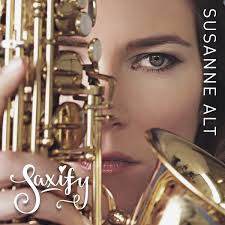
Forming the Susanne Alt Quartet in 2003, in the following year she released her debut album, Nocturne at Bimhuis, Amsterdam, Netherlands. Five jazz albums later, she released the funk album Saxify in 2016, preceded by the 7-inch single Saxify. The album features 36 musicians, amongst them are Fred Wesley, Michael “Clip” Payne, Michael Hampton, Rodney “Skeet” Curtis, and Roger Smith of Tower Of Power.
Alt has collaborated with a number of notable musicians and ensembles and has also toured worldwide. Saxophonist and composer Susanne Alt is based in Amsterdam, and continues to pursue her desire for new musical experiences.
More Posts: bandleader,composer,history,instrumental,jazz,music,saxophone

Daily Dose Of Jazz…
Frank Meester was born in Amsterdam, Netherlands on April 14, 1970 and studied philosophy and general literature at the University of Amsterdam and Erasmus University in Rotterdam, Netherlands. From 2010 to 2016 he was assistant lecturer in Philosophy and Professional Practice at The Hague University of Applied Sciences .
He went on to become the youngest of the writing duo Gebroeders Meester and wrote columns in Filosofie Magazine and de Volkskrant, among others. With Stine Jensen, they also wrote two books together about parenting and toured the country in 2018 and 2019 with the theater performance Het opvoedcircus.
Meester also plays in the Hot Club de Frank, founded in 1990 when he was just 20 years old. Two years later they expanded to a quartet and played in local cafes. In 1994 personnel changes took a turn at vocal swing and became a permanent salon band at the Amstel Hotel and the Amerstadam Bamboo Bar. They dropped their debut cd in 1996, De Heren van het Circus, to critical acclaim, and expanded once again to a quintet. Their sophomore release in 1999 hit success again being broadcast across the radio waves.
Another personnel transition has the band currently consisting of Meester, solo guitarist Harold Berghuis, violinist Jelle van Tongeren and saxophonist Wim Lammen. The band creates a new sound within gypsy jazz with different rhythms, other instruments and special arrangements. They have played festivals and European tours.
Double bassist Frank Meester, who has been published thirteen times, continues to perform with his sons Midas and Gilles in The Maestros.
More Posts: bandleader,bass,guitar,history,instrumental,jazz,music,vocal
Daily dose Of Jazz…
David Kane was born in Glasgow, Scotland on April 13, 1955 and moved to the United States with his family in 1965. He began playing piano and composing music at the age of eight and went on to attend North Texas State University in 1972. Moving to Washington, D.C. in 1975, he studied with Doctor Asher Zlotnik for five years. In addition, he studied with Ludmila Ulehla, Alan Mandel, and Clare Fischer.
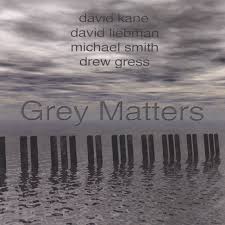
He has performed with Woody Shaw, David Liebman, Marlene VerPlanck, Charlie Byrd, Jim Snidero, Mark Murphy, Eddie Daniels, Dizzy Gillespie, Pam Bricker, Maxine Sullivan, Tom Keenlyside, and Michelle Hendricks. In addition, he has led his jazz quartet featuring drummer Michael S. Smith, saxophonist Glenn Cashman, and bassist Drew Gress.
Kane has accompanied many classical artists including the Twentieth Century Consort, the National Symphony Orchestra, Baltimore Symphony Orchestra, Charlotte Church, Joshua Bell, Renée Fleming, Denyce Graves, and James Galway.
Having composed a variety of chamber works, David is also a prolific composer for film and television for over 30 years with over 250 credits to his name. Most notably, he composed music for the National Geographic Channel, the Smithsonian Channel and for Public Radio International.
From 2006 to 2015, he put on his music critic cap and wrote for Cadence Magazine. In 2021 Jamey Aebersold Jazz published his treatise on improvisation, Playing Outside the Chord. Pianist, composer, arranger, author and music critic David Kane continues to expand his endeavors in music.
More Posts: arranger,bandleader,composer,critic,history,instrumental,jazz,music,piano
Daily Dose Of Jazz…
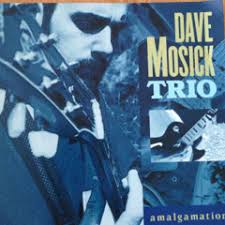
Dave Mosick was born on April 12, 1967 and raised on Long Island, New York. He got into rock music very young, and went on to play in bands all through high school and college. While attending American University he was deeply inspired by a jazz history class taught by the great jazz historian Rusty Hassan, and was bitten by the bug.
Eventually Mosick settled into the Washington D.C. jazz scene where he studied with guitarists Paul Bollenback and Paul Wingo. He also studied ear training with Asher Zlotnik.
2002 saw Dave releasing his debut album Amalgamation to widespread critical acclaim. The next year he was the featured jazz guitar clinician at The Washington Jazz Academy. His unique concepts in Jazz Improvisation have been published in Just Jazz Guitar Magazine.
Guitarist Dave Mosick maintains a busy performance schedule as both a leader and sideman, as well as being an in demand jazz educator, regularly hosting clinics and giving private lessons.
More Posts: bandleader,educator,guitar,history,instrumental,jazz,music