


Daily Dose Of Jazz…
Mike Stern was born Michael Sedgwick on January 10, 1953 in Boston, Massachusetts and grew up in Washington, D.C. He attended the Berklee College of Music in Boston and when he was twenty-two, he became a member of Blood, Sweat & Tears, spending three years with the band. During this stint he appeared on the albums More Than Ever and Brand New Day.
1979 saw him joining Billy Cobham’s fusion band. Two years later he joined Miles Davis, making his public debut in 1981, a performance recorded on the album We Want Miles. He remained with Davis through 1983 until he was replaced by guitarist John Scofield. From 1983 to 1984 he toured with Jaco Pastorius and in 1985 returned to tour with Davis.
Stern’s solo debut, Upside Downside, with Jaco Pastorius, David Sanborn, and Bob Berg, was released on Atlantic Records in 1986. For the next two years he was a member of Michael Brecker’s quintet, appearing on Don’t Try This At Home. His second Atlantic album, dropped in 1988, was Time in Place, and he would go on to release more than a dozen albums.
He formed a touring group in 1989 with Bob Berg, Dennis Chambers and Lincoln Goines. His acclaimed 1993 album, Standards (and Other Songs), led to his being named Best Jazz Guitarist of the Year by the readers and critics of Guitar Player. He was nominated for two Grammy awards, received another Best Jazz Guitarist award, and in 2009 in the first of a series of articles celebrating Down Beat‘s 75th anniversary, Stern was named one of the 75 Great Guitarists of all time.
Serious injuries to his shoulders and right arm after tripping and falling led to the ending of his 2016 European tour. Modifying his playing technique in the summer of 2017 he returned to Europe on tour with a new formation called Mike Stern/Randy Brecker Band, featuring Randy Brecker, Teymur Phell and Lenny White.
Guitarist Mike Stern, who received a Certified Legend Award from Guitar Player magazine, continues to perform, record and tour.

More Posts: bandleader,guitar,history,instrumental,jazz,music

Daily Dose Of Jazz…
Bobby Battle was born on January 8, 1944 and grew up in Detroit, Michigan. He moved to New York City in 1968, playing with Roland Kirk and Pharoah Sanders shortly after his arrival.
He studied at New York University from 1972 to 1975. He played with Don Pullen and Sam Rivers through the late 1970s, and worked often with Arthur Blythe in the 1980s and 1990s. He also worked with Kenny Dorham, Sonny Stitt, and Sonny Fortune. He worked as a duo with Jimmy Ponder in 1987.
Battle’s only release as a leader is The Offering, issued in 1990 on Mapleshade, on which Battle leads a quartet with David Murray, Larry Willis, and Santi Debriano. As a sideman he recorded four albums with Arthur Blythe and four with Don Pullen.
Drummer Bobby Battle, who occasionally played saxophone, died on December 6, 2019 in his hometown.
More Posts: bandleader,drums,history,instrumental,jazz,music
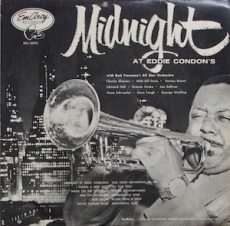
Daily Dose Of Jazz…
Vernon Brown was born on January 6, 1907 in Venice, Illinois. He began his career as a jazz trombonist playing in St. Louis, Missouri with Frankie Trumbauer in 1925, and then moved through a variety of groups at the end of the 1920s and into the 1930s, including those of Jean Goldkette, Benny Meroff, and Mezz Mezzrow.
In 1937 Brown joined Benny Goodman’s orchestra, remaining there until 1940. While only soloing occasionally with Goodman, this association got him well known. The Forties saw him performing with Artie Shaw, Jan Savitt, Muggsy Spanier, and the Casa Loma Orchestra. In the 1940s, Brown switched focus from swing to Dixieland, playing often in studio recordings and working with Sidney Bechet.
Brown performed with Louis Armstrong and his All Stars for the ninth Cavalcade of Jazz concert in 1953 at Wrigley Field in Los Angeles, California. The concert also featured that day were Roy Brown and his Orchestra, Don Tosti and His Mexican Jazzmen, Earl Bostic, Nat “King” Cole, and Shorty Rogers and his Orchestra.
He led his own band in the Pacific Northwest in 1950 and did reunion tours with Goodman in that decade. He worked with Tony Parenti in 1963, and remained a studio musician into the early-1970s
Trombonist Vernon Brown, who later in his life lived in Roslyn Heights, New York, died in Los Angeles on May 18, 1979.
More Posts: bandleader,history,instrumental,jazz,music,trombone

Daily Dose Of Jazz…
Eugene Chadbourne was born January 4, 1954 in Mount Vernon, New York but grew up in Boulder, Colorado. He started playing guitar when he was eleven or twelve, inspired by the Beatles and hoping to get the attention of girls. Although he was initially drawn to Jimi Hendrix and played in a garage band, he found rock and pop music too conventional. Gravitating to the avant-garde jazz of Anthony Braxton and Derek Bailey, it was the former musician who persuaded him to abandon his journalism endeavors and pursue music.
During the early 1970s, he lived in Canada to avoid military service in the Vietnam War. Returning to the United States, he moved to New York City and played free improvisation with Henry Kaiser and John Zorn. Around this time, he released his first album, Solo Acoustic Guitar. In the early 1980s, he led the avant-rock band Shockabilly with Mark Kramer and David Licht.
He explored other genres, playing with a Cajun band, a Russian folk band and mixed country, western, and improvisation in the band LSD C&W. For many years Eugene was in a duo, and then worked with Han Bennink, Fred Frith, Elliott Sharp, and Charles Tyler..
Chadbourne invented an instrument known as the electric rake by attaching an electric guitar pickup to a rake. He played a duet of electric rake and classical piano with Bob Wiseman on his 1991 album Presented by Lake Michigan Soda. He also played the instrument on a Sun Ra tribute album.
Banjoist, guitarist and music critic Eugene Chadbourne, who has recorded 39 albums as a leader, continues to perform and record.
More Posts: bandleader,banjo,critic,guitar,history,instrumental,jazz,music

Daily Dose Of Jazz…
Joe Haider was born January 3, 1936 in Darmstadt, Germany and performed as an amateur musician in the region Stuttgart, Germany between 1954 and 1959. He studied at Richard Strauss Conservatory in Munich, Germany from 1960 to 1965. During this period he also played in the Fritz Münzer Quintet and recorded Live in HR 1962 and Jazz For Young People.
From 1965 to 1968, he worked as a pianist and led a trio in jazz club Domicile in Munich. During his residency Joe performed with many European and American jazz musician such as Benny Bailey, Duško Gojković, Nathan Davis, Booker Ervin, Klaus Doldinger, Hans Koller, Leo Wright, Attila Zoller, George Mraz, Peter Trunk, Philly Joe Jones, Joe Nay, Kurt Bong, Klaus Weiss and Pierre Favre.
After leading the Radio Jazz Ensemble of the Bayerischer Rundfunk, he worked from 1970 with the quartet Four for Jazz with alto saxophonist Heinz Bigler, bassist Isla Eckinger and Peter Giger on percussion. He founded his own trio with Eckinger and Favre and put together a combo with Duško Gojković and led a big band together with Slide Hampton, in which Dexter Gordon also performed.
1979 saw Haider establishing his own label EGO in order to release his own records and those of his German colleagues. He recorded with his orchestra and Mel Lewis, toured with Woody Shaw, and various soloists such as Andy Scherrer, Roman Schwaller, Sandy Patton or Don Menza. From 1984 to 1995, he was the director of the Swiss Jazz School in Bern, Switzerland. In 1994, the Canton of Bern’s government awarded him the Great Cultural Prize for his contribution in the field of music.
The turn of the century had him working for the next eleven years with Brigitte Dietrich and a double quartet with bowed string instruments. In 2016, he published the album Keep It Dark. Pianist Joe Haider, at 87, is not very active in music.
More Posts: bandleader,history,instrumental,jazz,music,piano