

Daily Dose Of Jazz…
Günter Lenz was born July 25, 1938 in Frankfurt am Main. He first taught himself guitar and studied with Carlo Bohländer, playing jazz in the clubs of the U.S. Army from 1954 onwards. During national service in 1959/1960 he switched to the bass.
In 1961 Albert Mangelsdorff picked him up as a member of the Albert Mangelsdorff Quintet. Since then Lenz has also become a member of the hr-jazz ensemble, for which he arranged and composed. 1965 saw him working in the Krzysztof Komeda Quintet, recording the album Astigmatic. Three years later he was playing with Joachim Kühn and Aldo Romano in a band led by Barney Wilen at the Berlin Jazz Days. With The German All Stars he toured internationally in 1969 and 1971.
He played with the George Russell Sextet, and with a band led by Leon Thomas. This allowed him to collect big band experience. During the 1970s he was a member of the Kurt Edelhagen Big Band and with Peter Herbolzheimer Rhythm Combination & Brass. He would go on to be engaged for their concert tours and record productions by Chet Baker, Coleman Hawkins, Oliver Nelson and Benny Bailey, as well as German musicians such as Eugen Cicero, Horst Jankowski and Volker Kriegel.
Dipping into the blues field in 1972 Günter played with Lightning Hopkins. The mid-1970s saw Lenz joining drummer Peter Giger in Clarinet Contrast, an avant garde band around the clarinetists Perry Robinson, Theo Jörgensmann, Bernd Konrad and Michel Pilz. As a member of the Manfred Schoof Quintet he recorded for ECM/Japo.
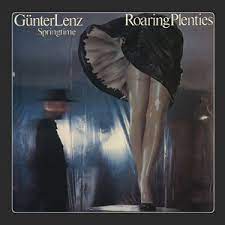
In the late 1970s Günter founded his combo, Günter Lenz Springtime, an international jazz-fusion band with members as Bob Degen, Claus Stötter, Frank St. Peter, Johannes Faber, Leszek Zadlo and Joe Nay. He recorded as part of the Berlin Contemporary Jazz Orchestra. In 1991 he recorded “Life at the Montreux Music Festival” in trio-formation with Uli Lenz and Allen Blairman
Lenz created orchestral arrangements for Plácido Domingo, and from 2001 to 2006 as a professor he taught bass at the Musikhochschule Stuttgart. During that period of education he received the Hesse state Jazz prize awarded by the State Minister for Higher Education, Research and the Arts Udo Corts.
Bassist Günter Lenz continues to perform, compose, arrange and educate.

More Posts: arranger,bandleader,bass,composer,history,instrumental,jazz,music
Daily Dose Of Jazz…
Charlie LaVere was born Charles LaVere Johnson on July 18, 1910 in Salina, Kansas to a Union Pacific Railroad blacksmith and where he first acquired an interest in music. His first musical instrument was a cornet, then later acquired an upright baritone horn, on which he learned to play many popular songs of the day. Studying piano in the 4th grade was the turning point in his decision to make it his instrument of choice.
At age twelve, after attending a Willard Robison and his Deep River Orchestra he gained an interest in jazz. He studied piano throughout high school and performed in various recitals and assemblies. At the age of eighteen he visited Oklahoma City, Oklahoma where he was introduced to Jack Teagarden, his brother Charlie Teagarden and where he studied Music at the University of Oklahoma at Norman. He performed with Frank William’s Oklahomans on campus and in local venues. He would go on to tour in 1929 during the Wall Street Crash, with brief stints in various bands including Louis Armstrong.
Relocating to Chicago, Illinois in 1932 he shared an apartment with the Teagarden’s and their spouses. He began playing regularly with Joe and Marty Marsala, Floyd Towne, Jim Barnes, Ray Biondi, Shorty Cherock, Larry Russel, Clark Galehouse, Carl Bean and Wingy Manone. He would perform his first recorded sessions supporting Wingy Manone and Teagarden in addition to leading his own bands.
After touring Texas and the mid-west with Eddie Neibauer and Dell Coon in 1934, he returned to local Chicago venues, working regularly with Joe Marsala. He assembled a multiracial group of musicians, befriended writer and jazz critic Helen Oakley, and recorded for Brunswick Records and Columbia Records. LaVere then found steady work in radio, performing on the Fibber McGee and Molly show for NBC. He also sang and arranged songs for a vocal group. Charlie briefly relocated to Fort Worth, Texas to perform in Paul Whiteman’s group and later touring throughout Texas, Oklahoma, and Kansas, before heading West.
He worked as a recording artist for Decca Records at their studios on Melrose Avenue with The Andrew Sisters, Victor Young, John Scott Trotter, and Gordon Jenkins, and under his own name.
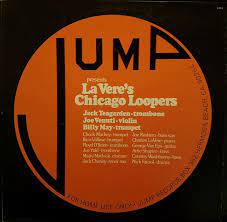
In 1944 he formed the LaVere’s Chicago Loopers featuring Billy May, Artie Shapiro, Floyd O’Brien, Joe Venuti, Matty Matlock, Nick Fatool, and George Van Eps. He would go on to perform for Walt Disney, Gordon Jenkins, George Burns, Bobby Darin, Bob Crosby and Wingy Manone.
As rock music became more popular his work became more sporadic and in 1964 LaVere accepted a position as assistant conductor at the Melodyland Theater. He performed piano and accordion on cruise ships, arranged and performed with Russ Morgan in Las Vegas, Nevada and continued to work with Gordon Jenkins, performing on Harry Nilsson’s album of jazz standards. From the 1960s onward he ran his own piano repair shop in the San Diego, California area, in addition to performing solo residencies at resorts in California, Oregon, and Colorado.
Pianist, vocalist, bandleader, and composer Charlie LaVere transitioned on April 28, 1983 in Ramona, California.
More Posts: bandleader,composer,history,instrumental,jazz,music,piano,vocal

Daily Dose Of Jazz…
George “Geordie” Hormel was born on July 17, 1928 in Austin, Minnesota. He was the grandson of George A. Hormel, the founder of Hormel Foods. He claimed to have invented the corn dog when he was a teenager growing up in Minnesota.
In the 1950s and 1960s, Hormel composed music for numerous television shows including The Fugitive, Lassie, Naked City and The Adventures of Rin Tin Tin. He also sang as part of The Utility Muffin Research Kitchen Chorus on Frank Zappa’s triple album Joe’s Garage in 1979. He’s also done music for Capitol Records, most importantly the Hi-Q production music library.
In 1968 Geordie bought the Masonic Temple for $125,000 and founded a major independent studio, The Village Recording Studio, in Los Angeles, California of which he was proprietor until his death. It was one of, if not the first 24 track studio and Dolby Sound. He owned the Wrigley Mansion in Phoenix, Arizona and the Wrigley Mansion Club housed within it.
Geordie Hormel, who was a pianist, composer, record company owner, equipment dealer and always, ahead of his time,. transitioned on February 12, 2006 in Paradise Valley, Arizona at 77 years old.

More Posts: bandleader,history,instrumental,jazz,music,piano
Daily Dose Of Jazz…
Dee Bell was born in Fort Wayne, Indiana on July 16, 1950 and grew up in a musical family and began playing music at home. She played clarinet in the Plainfield High School band and performed in an a cappella trio from age ten through her last year of high school. She went on to enroll and graduate from Indiana University in 1972, lived on the edge of the Hoosier National Forest in a two-room cabin with a wood stove for heat, and was co-founder and head chef of the Earth Kitchen vegetarian restaurant in Bloomington, Indiana.
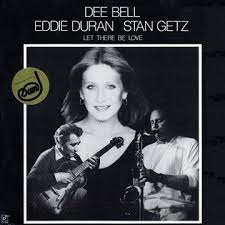
The late 1970s saw Bell moving to California and working at a restaurant in Sausalito. While singing Happy Birthday to a customer, she was heard by jazz guitarist Eddie Duran who invited her to sing with his band. They made a demo tape which became her first album, Let There Be Love on the Concord Jazz label, that included saxophonist Stan Getz. Their sophomore album for Concord Jazz brought in trumpeter Tom Harrell.
Bell recorded a third album, Sagacious Grace in 1990 with Houston Person and John Stowell, but was never released due to technical problems until 2011 when audio engineers fixed the problem. It reached No. 31 on the JazzWeek radio chart.
Bell left the music business and became a grade school music teacher in Mill Valley. After the death of her musical director, Al Plank, she met Marcos Silva backstage at a tribute to Merrilee Trost. This became a collaboration, merging her swing style with his Brazilian rhythms, resulting in the recording of three CDs by them.
With permission and copyrights Bell has written lyrics to Billy Strayhorn’s Isfahan, Jimmy Rowles The Peacocks, Don Sebesky’s You Can’t Go Home Again, and Ivan Lins’ Acaso (By Chance), Depois dos Temporais (After the Storm), and Choros das Aguas (Crying of the Waters).
Vocalist Dee Bell, who has released six albums and has been nominated for several awards by Down Beat, Billboard and BAM, continues to perform.
More Posts: bandleader,history,instrumental,jazz,lyricist,music,vocal
Daily Dose Of Jazz…
Dan Peter Sundland was born in Oslo, Norway on July 15, 1986 and grew up in Børsa, a village outside Trondheim, Norway. He started playing bass at age 14 and studied with bass players Andreas Bergsland and Mattis Kleppen. He was a member of Middle-Norwegian Youth Big Band and went on to become a member of the S. Møller big band.
Attending Sund Folk College from 2005 to 2006 he then attained a bachelor’s degree in jazz performance at NTNU Music Institute in Trondheim in 2010. He went on to get his European Jazz Masters degree (EUJAM) at NTNU Music Institute with exchange to Berlin Jazz Institute in 2012 and Rytmisk Musikkonservatorium in Copenhagen, Denmark in 2013.
Active in the jazz and improvisation scenes in Norway and Berlin, Germany he has set himself apart by his expressive, wide ranging playing techniques, including cello-like bowing and a varied palette of percussive colours. Has been featured with musicians including Jim Black, John Hollenbeck, Axel Dörner, Tobias Delius, Hans Hulbækmo, Hanna Paulsberg, Eirik Hegdal, John Pål Inderberg and Tor Haugerud.
His discography includes compositional work for his own eleven-piece Elevenette, the Berlin based improvising quartet Home Stretch and sideman work and collective groups including Lina Allemano’s Ohrenschmaus, Simon Kanzler’s hardcore opera and singer-songwriter Port Almond.
Electric bassist and composer Dan Peter Sundland, who has led Trondheim Improvisation Orchestra together with Peder Simonsen, continues to compose, perform and record.
More Posts: bandleader,bass,composer,history,instrumental,jazz,music