


Daily Dose Of Jazz…
James R. Coe was born in Tompkinsville, Kentucky on March 20, 1921 and moved to Indianapolis, Indiana with his family as a child. He first played in a band with Erroll “Groundhog” Grandy, who mentored J. J. Johnson and Wes Montgomery.
From 1938 to 1940, Coe performed with Buddy Bryant’s band and by the age of 20, was already touring with the Jay McShann band, which included Charlie Parker, Al Hibbler, Walter Brown, Bernard Anderson, Gene Ramey and Doc West.
In the 1950s Jimmy recorded for King Records as a member of Tiny Bradshaw’s band, then made a session with his own combo, though the company oddly insisted on billing him as Jimmy Cole. 1953 saw States recording his Gay Cats of Rhythm. By the late 1950s, he led the house band for the small Indianapolis-based label Note Records. Some of the material was licensed to Checker, which had better distribution.
Coe backed performers Wes Montgomery, Slide Hampton, David Baker, Freddie Hubbard, Carl Perkins, Larry Ridley, Leroy Vinnegar, as well as Aretha Franklin, Roy Hamilton, Gladys Knight & the Pips. and doo-wop performers, The Students.
Saxophonist Jimmy Coe transitioned in Indianapolis on February 26, 2004 at the age of 82.

More Posts: bandleader,history,instrumental,jazz,music,saxophone

Daily Dose Of Jazz
Keith John Smith was born on March 19, 1940 in Isleworth, Middlesex, England. Originally intent on pursuing studies in engineering, he began playing trumpet at the age of 15. Soon after he began playing in local amateur ensembles, including Norrie Cox’s band and the New Teao Brass Band, the latter including Chris Barber and Ken Colyer.
His first professional gig came in 1960 as a member of Mickey Ashman’s Ragtime Jazz Band. In 1962, he started the Climax Jazz Band and began recording. In 1964, Smith visited New Orleans for the first time, where he played with George Lewis. Intending to move to the U.S. permanently, he worked briefly in New Orleans, Louisiana before spending time in California and New York. In 1966, he organized an all-star band to tour Canada and Europe, which included Pops Foster, Jimmy Archey, and Alvin Alcorn.
Moving to Denmark in 1972 he remained there until 1975, playing with Papa Bue in his Viking Jazz Band. Afterwards he returned to England, where he founded a new band, Hefty Jazz. This group lasted over a decade, toured internationally and over the years featured George Chisholm, Mick Pyne, Peanuts Hucko, Nat Pierce, Johnny Mince, and Barrett Deems. Concurrently, he was named leader of the Louis Armstrong All-Stars in 1981, and in 1984 served as producer for Stardust Road, a televised film made as a tribute to Hoagy Carmichael. Late in his life he lived in Germany, still active as a performer.
Trumpeter Keith Smith, principally active on the trad jazz and Dixieland revival scenes, transitioned on January 4, 2008 in London, England from a heart attack at the age of 67.
More Posts: bandleader,history,instrumental,jazz,music,trumpet
Daily Dose Of Jazz…
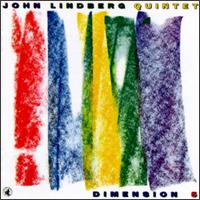
John Lindberg was born March 16, 1959 in Royal Oak, Michigan. He began his professional career at the age of 16, eventually moving to New York City in 1977. After moving to New York, he played with the Human Arts Ensemble alongside Joseph Bowie and Bobo Shaw. In 1977, with James Emery and Billy Bang. He co-founded the String Trio of New York.
In 1980 he formed a trio with Jimmy Lyons and Sunny Murray. From 1980 to 1983 he lived in Paris, playing there solo and with Murray and John Tchicai. He has recorded extensively as a leader. He studied bass with the bassist from the Battle Creek, Michigan symphony orchestra and jazz musician Roscoe Mitchell.
He has to date recorded twenty-five albums as a leader, eight with the String Tio of New York, and twenty with Anthony Braxton, Human Arts Ensemble, Susie Ibarra, Jimmy Lyons and Sunny Murray, Kevin Norton, Wadada Leo Smith and ten with Blob.
Double bassist John Lindberg continues to perform and record.
More Posts: bandleader,bass,history,instrumental,jazz,music
Daily Dose Of Jazz…
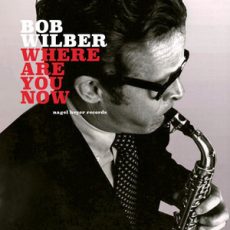
Robert Sage Wilber was born on March 15, 1928 in New York City. He became interested in jazz at the age of three when his father brought home a recording of Duke Ellington’s song Mood Indigo. In 1935, the family moved to the affluent suburb of Scarsdale, New York. At the age of thirteen he began formal clarinet study under his first teacher, Willard Briggs. He began listening to jazz from New Orleans, Kansas City, and Chicago by Duke Ellington, Louis Armstrong, Jelly Roll Morton, Eddie Condon, and Frank Teschemacher. He played jazz in high school and with his friends formed a hot club, listening and jamming to records and graduated from high school in 1945.
Set on becoming a musician he attended the Eastman School of Music in Rochester, New York in 1945. After one term however, Bob dropped out and moved back to New York City to hang out on 52 Street and in Greenwich Village. He formed the Wildcats, with pianist Dick Wellstood and trombonist Eddie Hubble and they became the first jazz group in New York to do what Lu Watters and Turk Murphy had been doing on the Coast. They played the music of the Hot Five, the Red Hot Peppers and the Creole Jazz Band. The group performed regularly at Jimmy Ryan’s club over the next two years and was recorded in 1947 by Ramp-art Records.
Wilber worked with some of the best traditional jazz musicians of the era, including Muggsy Spanier, Baby Dodds, Danny Barker, Bud Freeman, Pee Wee Russell, George Wettling, Jimmy McPartland, Wild Bill Davison, and James P. Johnson. Fascinated with Sidney Bechet, in 1944 at sixteen, he met Bechet through Mezz Mezzrow and became Bechet’s pupil. He began studying both clarinet and soprano saxophone under his tutelage and eventually lived with him for several months.
Bob recorded for Columbia Records, Commodore, and Circle with Bechet and with his own group in the late 1940s. 1948 saw him forming a trio and playing Dixieland at intermissions at the Savoy Café in Boston, Massachusetts. Eventually, he expanded the band to a sextet and gained a strong following in the city, leading to opportunities in New York City.
Clarinet and soprano saxophonist Bob Wilber, who continued playing right up until 2017, transitioned on August 4, 2019 at age 91 in Chipping Campden, England.
More Posts: bandleader,clarinet,history,instrumental,jazz,music,saxophone
Daily Dose Of Jazz…
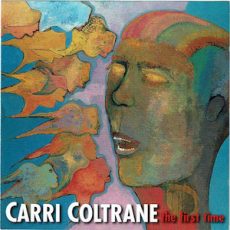
Carri Coltrane was born Carrie Thompson in Phoenix, Arizona on March 14, 1953. Singing professionally since childhood, she was only nine when she joined Wallace & Ladmo, a children’s program that was founded by her father. The program aired in the Phoenix Area from 1954 to 1989 and she remained with the show until she reached adolescence and outgrew her role as a little girl singer.
She moved to Seattle, Washington in 1979 and went on to sing with various rock and pop bands as an adult, and did quite a few jingles for commercials along the way. While living in Seattle she met Eugene McDaniels who really encouraged her to explore straight-ahead jazz. Carri eventually became friends and partners with McDaniels and formed Numoon Publishing with him. They have put out several allbums on the Numoon label that included jazz, contemporary pop and Christmas music.
Carri released her self-titled debut album in 1980 under her birth name. It wasn’t until 1986 that she started going by Carri Coltrane as an homage to the tenor saxophonist. She moved to New England in 1987.
Vocalist Carri Coltrane, whose subtle waifish introspection continues to perform, record and publish her music.
More Posts: bandleader,history,instrumental,jazz,music,publisher,vocal