

Daily Dose Of Jazz…
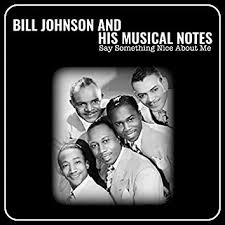
William Luther Johnson was born on September 30, 1912 in Jacksonville, Florida and studied piano as a child and began playing the alto saxophone at the age of 16. After working with lesser-known bands he studied in conservatories in Wisconsin and Illinois before attending Marquette University.
While in Milwaukee, Wisconsin he played with Jabbo Smith and others. He worked with Baron Lee and Tiny Bradshaw, and in 1936 joined Erskine Hawkins, with whom he performed into the early 1940s, recording with him from 1939 to 1942. He composed Tuxedo Junction with Hawkins and appeared with the band in the short film Deviled Hams in 1937.
Around mid-1946 he recorded under Bill Johnson and Orchestra, with several of the members becoming the Musical Notes. Bill Johnson and the Musical Notes recorded for Harlem, RCA, King, Regal, Tru-Blue.He recorded for Ronnex as the Bill Johnson Quartet, and the Bill Johnson Quintet for Baton. Over the years, there were many personnel changes, but Bill and Gus Gordon were on all the recordings.
In the Fifties failing health caused the breakup of the group, although he re-formed it on a couple of occasions. Alto saxophonist, clarinetist, and arranger Bill Johnson, who was diagnosed with lung cancer in 1957, transitioned on July 5, 1960 at 47 years old in New York City.

More Posts: arranger,bandleader,clarinet,history,instrumental,jazz,music,saxophone

Daily Dose Of Jazz…
Bob Reynolds was born in Morristown, New Jersey on September 29, 1977. His family moved to Jacksonville, Florida where he started playing saxophone at age 13. Attending high school at Douglas Anderson School of the Arts he became part of the well-known jazz band. After graduating, he attended Berklee College of Music where he studied with George Garzone and Hal Crook.
He played with John Mayer’s band for five years, then worked with Brian Blade, Aaron Goldberg, Gregory Hutchinson, and Tom Harrell. A solo recording artist since the turn of the century, his 2006 album Can’t Wait for Perfect was voted Best Debut in the Village Voice jazz poll.
As a member of the popular genre-bending instrumental group Snarky Puppy since 2014, he has won Grammy Awards with the band for the albums Culcha Vulcha and Live at the Royal Albert Hall.
Tenor saxophonist Bob Reynolds has received four ASCAP Young Jazz Composer awards, and Berklee’s Billboard Magazine Endowed Scholarship, and continues to performa and record.
More Posts: bandleader,history,instrumental,jazz,music,saxophone
Daily Dose Of Jazz…
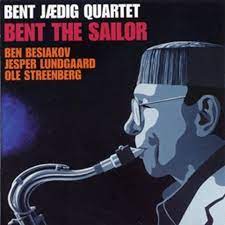
Bent Jædig, born September 28, 1935 in Copenhagen, Denmark. He first studied clarinet before playing saxophone. In the 1950s, he settled in Germany and led a band with trombonist Rudi Fuesers, later joining another band with trombonist Peter Herbolzheimer in Munich, Germany.
By the 1960s, he returned to Denmark and worked with trumpeter Allan Botschinsky and pianist Bent Axen, with whom he recorded for Denmark’s Debut label. Bent would go on to play with the Dollar Brand Quintet which included Don Cherry. As a side-man he was constantly in demand and worked with Tete Montoliu, Jimmy Woode, Philly Joe Jones/Dizzy Reece, and Louis Hjulmand.
Jædig recorded his first album as a leader in 1967 titled, Danish Jazzman, with Axen, Botschinsky, Dusko Goykovich, Niels-Henning Ørsted Pedersen and Alex Riel. He would later form a trio, played in a duo and recorded live shows in 2002 which were compiled for a release from Timeless Records.
In the Seventies and 1980s he worked with Wild Bill Davison, Art Farmer, Stan Getz, the Thad Jones Big Band, Duke Jordan, Horace Parlan, Sahib Shihab, and Ernie Wilkins Almost Big Band. He was also a member of the Erling Kroner Tentet, played in the Danish Radio Big Band, and recorded on the Miles Davis album Aura. In 1987, Jædig was a member of Pierre Dørge’s New Jungle Orchestra.
At the end of the 1990s he was performing in a quintet. Tenor saxophonist and flutist Bent Jædig transitioned on June 9, 2004. Saxophonist Charles Davis recorded the album Charles Davis Plays the Music of Bent Jædig in 2006.
More Posts: bandleader,flute,history,instrumental,jazz,music,saxophone
Daily Dose Of Jazz…
Samuel Benskin was born in The Bronx, New York on September 27, 1922 and made his professional debut around 1940 as piano accompanist to singer and guitarist Bardu Ali. He worked throughout the 1940s with among other jazz musicians Stuff Smith, Benny Morton and Don Redman. The 1950s witnessed Sammy leading his own piano trio, appearing as a soloist and accompanying singers Roy Hamilton, Dinah Washington and Al Hibbler. In 1954 he also joined a group, The Three Flames, which also featured Tiger Haynes.
By the end of the decade with a band credited as The Spacemen, Sammy recorded an instrumental, The Clouds, written and produced by Julius Dixson for his Alton record label. A departure from jazz, the song’s original vocals were removed and presented as an instrumental. It went to No. 1 on the Billboard R&B chart, and No. 41 on the pop chart. The song was the first number one on any chart released by an African-American owned independent record label, predating Motown’s first No. 1 by a year.
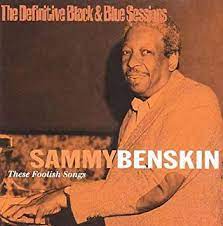
From the 1960s Benskin worked primarily as a vocal coach, arranger and producer. In 1986, he recorded an album in Paris, France for Black & Blue Records, These Foolish Songs. Pianist Sammy Benskin transitioned in Teaneck, New Jersey on August 26, 1992 at 69.
More Posts: arranger,bandleader,history,instrumental,jazz,music,piano,producer
Daily Dose Of Jazz…
Romano Bruno Mussolini was born on September 26, 1927 in Villa Carpena, Forlì,Italy. He was the fourth child and youngest son of Il Duce, Benito Mussolini. He studied music as a child, playing classical pieces with his father on the violin. After World War II, he started playing jazz under the alias Romano Full.
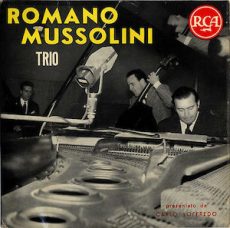
By the mid-1950s, he formed a trio and in 1956 released a self-titled record featuring Lilian Terry on vocals and trumpeter Nunzio Rotondo on RCA Records. The Sixties saw him form the Romano Mussolini All Stars, which became one of Italy’s foremost jazz bands.
The All Stars recorded a well-received record Jazz Allo Studio 7 in 1963 with At the Santa Tecla following a year later. Romano’s band toured internationally with Dizzy Gillespie, Duke Ellington, Helen Merrill and Chet Baker, among others. In the 1990s he recorded two more albums, Perfect Alibi and Soft and Swing.
His playing style has been described as “like a slightly melancholic Oscar Peterson. Occasionally inspired, he was always efficient; he made the refrains run on time.
Pianist Romano Mussolini, who was also a painter and film producer, transitioned on February 3, 2006, at the age of 78, in a hospital in Rome, Italy from heart problems.
More Posts: bandleader,history,instrumental,jazz,music,piano