

Daily Dose Of Jazz…
Pete Paul George Jacobsen was born on May 16, 1950 in Newcastle upon Tyne, England. Having lost his sight as a baby, due to a growth behind the optic nerve, he studied at the Worcester School for the Blind before forming his own trio, which was good enough to attract local television coverage. In 1969, he moved to London, England to study at the Royal Academy of Music. With a keen memory and perfect pitch, hi’s lack of sight was no obstacle.
In London, Jacobsen played with saxophonists Barbara Thompson, Isotope’s Gary Boyle, and Don Weller. He became a member of the jazz-fusion band Morrissey–Mullen, but it was not until 1985 that he recorded with them on This Must Be The Place and Happy Hour in 1988. Recommended by trumpeter Kenny Wheeler, he landed the piano chair in the Bobby Wellins Quartet and recorded four albums with the group from 1978 to 1989, Live… Jubilation, Dreams Are Free, ERCO Makes Light Work, and Birds of Brazil.
Pete regularly collaborated with Chris Biscoe and recorded tw albums with him and often performed as a duo, recording several BBC Jazz Club performances. He played and recorded with trombonist Jimmy Knepper, and contributed Song For Keith for the recording of the 1980 album Primrose Path. He would also write the song “Black Book” for the album Highly Committed Media Players.
During this time, Jacobsen was part of the resident rhythm section at the Cambridge Modern Jazz Club. He would go on to play with Robin Kenyatta, Alan Skidmore, Peter King, Eberhard Weber, Paul Carmichael, and Chris Fletcher. He gave memorable solo recitals, toured and played on three of their albums with the Celtic-jazz band Cármina.
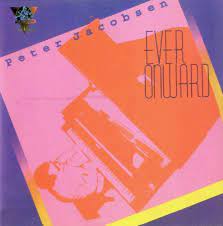
In 1994, Jacobsen released his only solo album Ever Onward. Through the rest of the decade he performed with his own trio and with the Tim Whitehead quartet or trio. He spent much of his time in the East End of London playing obscure clubs with unknown or struggling musicians. Pianist Pete Jacobsen fell ill after a series of rural art center gigs and transitioned on April 29, 2002 at age 51.

More Posts: bandleader,composer,history,instrumental,jazz,music,piano
Daily Dose Of Jazz…
Karin Krog was born May 15, 1937 in Oslo, Norway and started singing jazz as a teenager, attracting attention while performing in jam sessions in her hometown. By 1955, she was hired by the pianist Kjell Karlsen to sing in his sextet.
1962 saw Karin forming her first band and becoming a student of the Norwegian-American singer Anne Brown, studying with her until 1969. Throughout the Sixties she performed with the rhythm and blues band Public Enemies, releasing the hit singles Sunny and Watermelon Man.
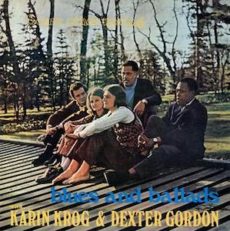
She has worked with Vigleik Storaas, Jacob Young, Terje Rypdal, Arild Andersen, Jan Garbarek, Dexter Gordon, Kenny Drew, Don Ellis, Steve Kuhn, Archie Shepp, Paul Bley, John Surman, Niels-Henning Ørsted Pedersen, Red Mitchell, and Bengt Hallberg. During 1994, she became the first Norwegian musician to have an album released by Verve Records. The album Jubilee was a compilation of songs from her thirty-year career.
She has released thirty-seven albums as a leader with her latest live album Infinite Paths in 2016, as well as three as a guest. Vocalist Karin Krog, who has been bestowed with fifteen awards, including being knighted in 2005 into the Royal Norwegian Order of St. Olavz, continues to compose and perform.
More Posts: bandleader,history,instrumental,jazz,music,vocal
Daily Dose Of Jazz…
Skip Martin was born Lloyd Vernon Martin on May 14, 1916 in Robinson, Illinois. He was an active arranger during the swing jazz band era of the 1930s and 1940s. working with Count Basie, Charlie Barnet, Benny Goodman and Glenn Miller. He doubled as a reedist with the latter three, and recorded with trumpeter Cootie Williams in the early 1940s as well.
Later in the 1940s Skip worked with Les Brown before moving to Los Angeles, California in the 1950s, where he did extensive work as a staff and freelance orchestrator, studio conductor and popular song arranger Tony Martin, The Pied Pipers, the Andrews and De Castro sister groups, and Barbara Ruick.
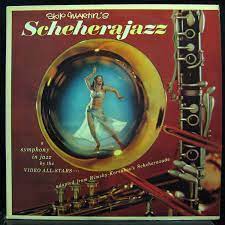
Martin recorded three albums as a leader and produced material for West Coast jazz and swing concept albums such as Scheherajazz in 1959 for Somerset Records. In 1963 he joined Nelson Riddle on a dream team of arrangers working on the Sinatra-Burke compilation albums for the ambitious Reprise Musical Repertory Theatre project, featuring the singing members of the Rat Pack, plus Bing Crosby, Rosemary Clooney and Jo Stafford.
In Hollywood, Skip was one of the team of orchestrators contributing to Singin’ in the Rain, Guys and Dolls, and shared arrangement credits with Conrad Salinger on Summer Stock, Kiss Me Kate and Funny Face, where a few songs of the Great American Songbook came from. He retained sole credit as orchestrator for Judy Garland’s comeback vehicle A Star Is Born, which gave us The Man That Got Away and It’s A New World.
Saxophonist, clarinetist, and music arranger Skip Martin transitioned on February 12, 1976, in Los Angeles, California.
More Posts: bandleader,clarinet,history,instrumental,jazz,music,saxophone
Daily Dose Of Jazz…
Harold Rubin was born on May 13, 1932 in Johannesburg, South Africa of Israeli descent. Attending Jeppe High School for Boys he received private instruction in the fine arts and classical clarinet as a teenager. He developed a fascination with jazz and began playing at the Skyline Night Club at eighteen. He went on to enroll as an architecture student at the University of the Witwatersrand and completed his professional studies in London, England.
Rubin’s creative endeavours in South African society during the 1950s and 1960s dissented against the apartheid-era Afrikaner establishment by defying the country’s racist social norms. Rubin organised his own jazz group in the 1950s, snuck into black townships, and played alongside black musicians.
Openly protesting the repressive political environment, Harold left the country for Israel, where he quickly established himself in Tel Aviv, and was employed as an architect and taught at an academy of architecture and design from the 1960s until his retirement in 1986. He returned to playing jazz in late 1979, having previously given up performance for more than a decade after his emigration from Africa. He became a founding member of the 1980s Zaviot Jazz Quartet, who throught he decade performed and recorded on Jazzis Records.
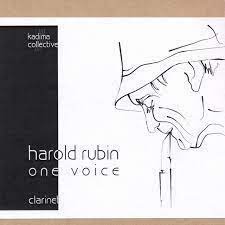
He was awarded the Landau Award in tribute to his contributions to jazz music in 2008, he continued to play jazz with musicians of the younger generations in Tel Aviv. Clarinetist Harold Rubin, who concentrated in the free jazz genre, transitioned on April 1, 2020 at the age of 87.
More Posts: bandleader,clarinet,history,instrumental,jazz,music
Daily Dose Of Jazz…
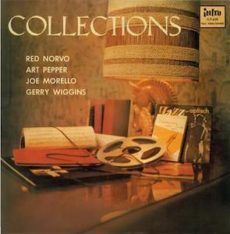
Gerald Wiggins was born on May 12, 1922 in New York City. He started classical piano lessons when he was four but by his teenage years became interested in jazz. He doubled on bass while attending High School & Art and for a period in the 40s accompanied Stepin’ Fetchit. Following this he worked and toured with the big bands of Les Hite, Louis Armstrong and Benny Carter. Stationed in Seattle while in the military he played in the local jazz clubs.
By the mid 40s Wiggins relocated to Los Angeles and played music for television and film. He has worked with Lena Horne, Kay Starr, Nat King Cole, Lou Rawls, Jimmy Witherspoon Helen Humes, Joe Williams, Ernie Andrews and Eartha Kitt to name a few. He also worked at the Hollywood studios as a vocal coach and worked with Marilyn Monroe and others.
Always a highly flexible pianist, Wiggins was comfortable in swing and bop settings with a consistently witty style filled with catchy riffs became his distinctive signature. His best-known recording as an organist was Wiggin’ Out but it was Wiggins’ trio work with Andy Simpkins and Paul Humphreys that is legendary. Pianist Gerald Wiggins passed away at the age of 86 on July 13, 2008.
More Posts: bandleader,history,instrumental,jazz,music,organ,piano