


Daily Dose Of Jazz…
Lajos Dudas was born February 18, 1941 in Budapest, Hungary and studied at the Béla Bartók Conservatory and the Franz Liszt Academy of Music in his home city. He then appeared on concert tours throughout in Europe, not only as a jazz and rock musician but also as a soloist in works such as Carl Maria von Weber’s Clarinet Quintet, Igor Stravinsky’s Solo Pieces for Clarinet and Alexander Glazunov’s Concerto for Alto Saxophone. He won international recognition with his successful composition Urban Blues at the 11th International Jazz Competition in Monaco in 1982.
In the 1980s he was ranked high year after year in the Top People Poll of the International Jazz Forum. After his period as a freelance musician from 1963 to 1973, Dudas has been a lecturer at the School of Music in Neuss/GER and also taught from 1975 to 1985 at the Rheinland College of Education. In addition, since 1976, after a spell concentrating on classical music, he was recorded, worked radio productions and tours with Karl Berger, Gerd Dudek, Albert Mangelsdorff, Tom van der Geld, Charles Tolliver, Howard Johnson, Attila Zoller, Philipp van Endert, Leonard Jones, Theo Jörgensmann, Tommy Vig…
Over the course of his career Lajos has composed works commissioned by among several others, Frankfurt Radio Jazz Group, West German Radio & Television/Cologne, and Bavarian Radio Munich, and has performed at major European festivals.
Between 1996 and 2006 he was Artistic Director for the Concert Series in Neuss/GER. He also composed works for clarinet, woodwind chamber music and a Clarinet Method in 2 volumes. Clarinetist Lajos Dudas continues to explore jazz and other genres of music.

More Posts: bandleader,clarinet,composer,history,instrumental,jazz,music
Daily Dose Of Jazz…
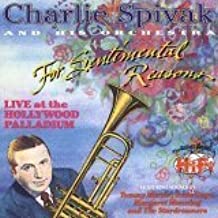
Charlie Spivak was born on February 17, 1905 in Kyiv, Ukraine and learned to play trumpet when he was ten years old. He played in his high school band, going on to work with local groups before joining the Johnny Cavallaro Orchestra.
He went on to play with Paul Specht’s band for most of 1924 to 1930, then spent time with Ben Pollack early Thirties, and the Doresy Brothers to the middle of the decade. Ray Noble was his next stop prior to the Glenn Miller Orchestra in 1935. He spent the next two years working mostly as a studio musician with Gus Arnheim, Glenn Miller, Raymond Scott’s radio orchestra, and others, followed by periods with Bob Crosby, Tommy Dorsey, and Jack Teagarden to the end of the Thirties.
Finally, with the encouragement and financial backing of Glenn Miller, he formed his own band in late 1939. His first attempt was a failure within a year, but his second proved successful, one of the most successful bands in the 1940s, and survived until 1959. He scouted top trumpeter Paul Fredricks (formerly of Alvino Rey’s Orchestra) just as Fredricks left the service at the end of World War II, in 1946. Trumpeter Paul Fredricks was recruited after WWII service and became instrumental in the band’s success in the coming years as it reached its peak.
Spivak’s experience playing with jazz musicians had little effect on his own band’s style, which was straight dance music, made up mainly of ballads and popular tunes. Trombonist Nelson Riddle, saxophonist Manny Albam and Sonny Burke arranged for the band. When the orchestra broke up he went to live in Florida, where he continued to lead a band until illness led to his temporary retirement in 1963. On his recovery, he continued to lead large and small bands, first in Las Vegas, Nevada and then moved to Greenville, South Carolina in 1967, where he led a small group featuring his wife as vocalist.
Trumpeter and bandleader Chalie Spivak, known during his heyday as The Man Who Plays The Sweetest Trumpet In The World, continued to play and record until his transition on March 1, 1982 in Greenville.
More Posts: bandleader,history,instrumental,jazz,music,trumpet

Daily Dose Of Jazz…
Buddy Deppenschmidt was born William Henry Deppenschmidt on February 16, 1936 in Philadelphia, Pennsylvania. His father was a saxophonist and bandleader under the name Buddy Williams, but his mother moved him to Richmond, Virginia when he was four.
Self-taught, he started playing drums professionally while in his teens and then went on the road in the western U.S. with the territory band Ronnie Bartley Orchestra. Returning home, he played with local bands and became the drummer for the Newton Thomas Trio through the mid to late Fifties, which was also the touring rhythm section for the Billy Butterfield Quintet. When the Newton Thomas Trio played the Virginia Beach Jazz Festival, it received rave reviews on a bill that included the Dave Brubeck Quartet and the Charlie Byrd Trio. Two nights later, Charlie Byrd came into the Jolly Roger jazz club where Buddy was playing, and offered him the job as drummer with his trio. He played with the trio at the Showboat Lounge in Washington, D.C. from 1959–62.
In February 1961, while on a goodwill tour sponsored by the U.S. State Department, the Charlie Byrd Trio with Byrd on guitar, Keter Betts on bass, and Buddy on drums, they visited 18 countries throughout South and Central Americas, and Mexico. While in Brazil, he spent his free time with local musicians, teaching them jazz and learning bossa nova. It was his idea to record an album combining jazz and bossa nova with Stan Getz.
After Byrd, Deppenschmidt joined the Tee Carson Trio in the early Sixties, then moved to Pennsylvania and formed the Jazz Renaissance, was also the drummer with the John Coates Trio, toured the midwest and west coast with the Bernard Peiffer Trio and studied with drummer Joe Morello.
He’s worked on A Thousand Clowns, Wall Street, Bossa Nova, The Lake House, and Whatever Works movie soundtracks. He’s played with a who’s who list of jazz musicians from Mose Allison and Chet Baker to Coleman Hawkins and Shirley Horn, Phil Woods and more.
Drummer Buddy Deppenschmidt, biographies are in The Encyclopedia of Jazz in the Sixties and The New Grove Dictionary of Jazz, transitioned on March 20, 2021 in Pennsylvania from complications of COVID-19. He was 85 years old.
More Posts: bandleader,drums,history,instrumental,jazz,music
Daily Dose Of Jazz…
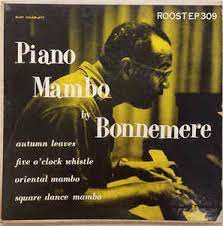
Edward Valentine Bonnemère was born on February 15, 1921 in Harlem, New York and during his school days was a church pianist. After military service in World War II he played with Claude Hopkins, and received his master’s degree from New York University.
In 1953 Eddie led a combo with Ray Barretto in the Savoy Ballroom. In 1955, he had a Mambo band, then in 1956 moved to Detroit, Michigan and became part of the house band at Baker’s Keyboard Lounge. He released a 10-inch album Ti-Pi-Tin / Five O’Clock Whistle on the Royal Roost label. He followed in 1959 with his trio recording Piano Bon-Bons and in 1960 The Sound of Memory. By 1964, with the participation of Kenny Burrell, he released his Jazz Orient-ed album on Prestige Records.
The mid-1960s, Bonnemère was one of the protagonists of an Africanization of the Catholic Mass spearheaded by Fr Clarence Rivers, as part of the Black Catholic Movement. Influenced by Mary Lou Williams he composed the Missa Hodierna for jazz ensemble and choir, which was first presented in 1966 during a service in Harlem’s St. Charles Borromeo Church. It was the first Jazz Mass ever in the United States. This mass was also performed in the Town Hall together with Howard McGhee’s instrumental composition Bless You.
In later years he worked as a church musician and composed the Missa Laetare and other liturgical works. He was also musical director of the Church of St. Thomas the Apostle in Manhattan, New York whose choir recorded his Mass for Every Season.
Pianist and composer Eddie Bonnemère transitioned on March 19, 1996 in New York City.
More Posts: bandleader,composer,history,instrumental,jazz,music,piano

Daily Dose Of Jazz…
Elliott Lawrence was born Elliott Lawrence Broza on February 14, 1925 in Philadelphia, Pennsylvania. His parents were radio and television variety show pioneers who created and produced the long running Horn and Hardart Children’s Hour.
Growing up in this show business environment, Lawrence began studying piano at the age of three. His first public performance was at age four conducting the orchestra on the Children’s Hour stage show. At six he wrote his first composition, Falling Down Stairs, and was stricken with polio, from which he recovered. By the age of 12, he had formed his first band, a 15-piece unit called The Band Busters, and began doing club dates on the weekends. Finishing high school at age 16 he entered the University of Pennsylvania. During his junior year his band, now named The Elliot Broza Orchestra, began playing college proms around the state. At Penn, majoring in symphonic conducting under Harl McDonald, he was offered the position as assistant conductor of the Philadelphia Orchestra upon graduation.
Changing his name to Elliot Lawrence when he became the music director of WCAU’S House Band in 1945, they premiered on the radio as The Elliot Lawrence Orchestra. From 1946 to 1954, the band toured around the United States year round, while recording for Decca, Columbia, RCA, Fantasy, and Vik records. In 1949, the band performed a three-week stint with the Nat King Cole Trio at the Paramount Theater in New York City, during which time it recorded Gerry Mulligan’s Elevation, later named “one of the top 50 best jazz recordings of the 20th century” by the Smithsonian Institution.
Landing in New York City in 1955 as the big band era came to a close, he began to do radio shows such as The Red Buttons show, the Jack Sterling Show and hosted Melody Street. He went to the Soviet Union with Ed Sullivan, met Gower Champion and became his musical director on his Bye Bye Birdie, which garnered him a Tony nomination. After 1960, Lawrence gave up jazz and began composing and arranging for television, film, and stage. He won the Tony Award for his second show, How to Succeed in Business Without Really Trying in 1962. This led to a 16-year career as a Broadway Conductor and musical director and later to his almost 50-year career as the “go to” conductor for big television events and specials.
As a composer, he scored the movies Network and The French Connection, won nine Emmy awards for musical direction, and was music director for the TonyAwards. Pianist, bandleader and conductor Elliott Lawrence transitioned on July 2, 2021 at the age of 96 in Manhattan, New York.