

Daily Dose Of Jazz…
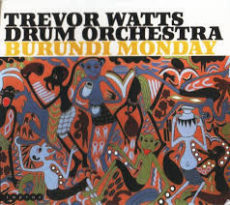
Trevor Charles Watts was born in York, England on February 26, 1939 and is largely self-taught, having taken up the cornet at age 12 then switched to saxophone at 18.
While stationed in Germany with the RAF from 1958 to 1963, he encountered the drummer John Stevens and trombonist Paul Rutherford. After his service he returned to London, England and in 1965, he and Stevens formed the Spontaneous Music Ensemble (SME), which became one of the crucibles of British free improvisation.
Leaving the band to form his own group Amalgam in 1967, Trevor returned to SME for another stretch that lasted until the mid-1970s. Collaborating with bassist Barry Guy and his London Jazz Composers’ Orchestra, they performed until their disbandment in the mid-1990s.
Though he was initially strongly identified with the avant-garde, Watts was versatile, working in everything from straight jazz contexts to rock and blues. His own projects blended jazz and African music, notably the Moiré Music ensemble which he led since 1982. He has collaborated with jazz musicians including Archie Shepp, Steve Lacy, Don Cherry, Jayne Cortez and Stephen Grew.
Free-improvising alto and soprano saxophonist Trevor Watts, who recorded 31 albums as a leader, and two as a sideman, continue to explore the music.

More Posts: bandleader,history,instrumental,jazz,music,saxophone

Daily Dose Of Jazz…
Åke Persson was born on February 25, 1932 in Hässleholm, Sweden and started his music career by playing valve trumper in school. Known as The Comet, he moved to Stockholm, Sweden in 1951, where he played in Simon Brehm’s quintet until 1954. During the Fifties he led several sessions for labels such as Metronome, Philips, and EmArcy.
Following this Persson worked through the Sixties and into the 1970s with Arne Domnérus, Hacke Björksten, Harry Arnold’s Radio Band, Quincy Jones, Lars Gullin, the RIAS Berlin Band, and the Kenny Clarke-Francy Boland Big Band.
Persson played with many American musicians, including George Wallington, Roy Haynes, Benny Bailey, Count Basie, Duke Ellington, and Dizzy Gillespie.
He drowned in the Djurgården canal as a result of him driving his car into the canal either accidentally or deliberately. A biography was written, Trombonist Åke Persson, authored by Bo Carlsson.
Trombonist Åke Persson, who flourished in the bebop and big band tradition, transitioned on February 5, 1975.
More Posts: bandleader,history,instrumental,jazz,music,trombone
Daily Dose Of Jazz…
James Reese Europe was born on February 22, 1881 in Mobile, Alabama and in 1891 his family moved to Washington, D.C. In 1904 he moved to New York City and six years later he organized the Clef Club, a society for Black Americans in the music industry. In 1912, the club, with its 125 members who played in various configurations, made history when they became the first band to play a proto-jazza concert at Carnegie Hall for the benefit of the Colored Music Settlement School.
The importance of this historic concert is that it took place 12 years before the Paul Whiteman and George Gershwin concert at Aeolian Hall, and 26 years before Benny Goodman’s famed concert at Carnegie. The Clef Club’s performances played music written solely by Black composers, including Harry T. Burleigh and Samuel Coleridge-Taylor.
In 1913 and 1914 Jim made a series of phonograph records for the Victor Talking Machine Company. These recordings are some of the best examples of the pre-jazz hot ragtime style of the U.S. Northeast of the 1910s, predating and protecting the idea that the Original Dixieland Jass Band recorded the first jazz pieces in 1917 for Victor.
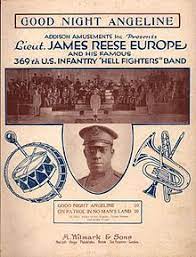
Europe was known for his outspoken personality and unwillingness to bend to musical conventions, particularly in his insistence on playing his own style of music. During World War I, Europe obtained a commission in the New York Army National Guard, where he fought as a lieutenant with the 369th Infantry Regiment otherwise known as the “Harlem Hellfighters” when it was assigned to the French Army. He went on to direct the regimental band to great acclaim. They made their first recordings in France for the Pathé Brothers.
Returning home in 1919 he made more records for Pathé with Noble Sissle and continued to lead his band. During a talk backstage with two of his drummers, Steve and Herbert Wright about their stage behavior, Herbert got agitated and stabbed Europe in the neck with a pen knife. The show went on, Jim went to the hospital but doctors were unable to stem the flow of blood.
Arranger, composer and bandleader Jim Europe, who also played piano and violin, and was the leading ragtime and early jazz figure on the Negro music scene of New York City in the 1910s, transitioned on May 9, 1919.
More Posts: arranger,bandleader,composer,history,instrumental,jazz,music,piano,violin
Daily Dose Of Jazz…
James Graham Collier OBE was born on February 21, 1937 in Tynemouth, Northumberland, England. After leaving school he joined the British Army as a musician, spending three years in Hong Kong, China. He subsequently won a Down Beat magazine scholarship to the Berklee School of Music, in Boston, Massachusetts studying with Herb Pomeroy.
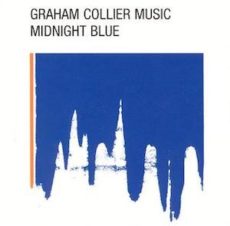
After graduating in 1963 he returned to Britain and founded the first version of an ensemble devoted to his own compositions, Graham Collier Music, which included Kenny Wheeler, Harry Beckett and John Surman. Later configurations included Karl Jenkins, Mike Gibbs, Art Themen and many other notable musicians.
As the first recipient of an Arts Council bursary for jazz, Graham was commissioned by festivals, groups and broadcasters across Europe, North America, Australia and the Far East. He recorded nineteen albums, worked on stage plays, musicals, documentary and fiction film, and radio drama productions.
Collier was an author and educator, writing seven books on jazz, giving lectures and workshops around the world. He launched the jazz degree course at London’s Royal Academy of Music and was its artistic director until he resigned in 1999, so he could concentrate on his own music.
Bassist, composer and bandleader Graham Collier, who along with a group of jazz educators formed the International Association of Schools of Jazz, transitioned from heart failure on September 9, 2011.
More Posts: bandleader,bass,composer,history,instrumental,jazz,music
Daily Dose Of Jazz…
Iain Ballamy was born Guildford, England on February 20, 1964. Taking piano lessons from age of 6 to 14, he received further education at George Abbot School from 1975 to 1980. He went on to study Musical Instrument Technology from 1980 to 1982 at Merton College.
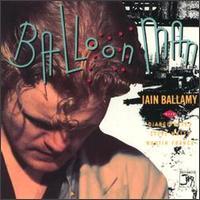
Discovering the saxophone in 1978 with three lessons, his first professional gig was in 1980, playing Ronnie Scotts as the Iain Ballamy Quartet at age 20. He was a founding member of Loose Tubes in 1984. His first recording was with Billy Jenkinsthe following year, and his first solo album, Balloon Man, was released in 1988.
During his career, his performances and recording sessions reads like a who’s who list, including but not limited to Gil Evans, Hermeto Pascoal, Carla Bley, Dewey Redman, George Coleman, London Sinfonietta, Françios Jeanneau, Randy Weston, Clare Martin, Charlie Watts Orchestra, Jeremy Stacey, Jane Chapman, Bryan Ferry, Everything But The Girl, Ian Shaw, Slim Gaillard, Ronnie Scott, Gordon Beck, and one of his closest musical collaborators, Django Bates.
In 1999, Ballamy founded the record label Feral Records, in partnership with graphic artist and filmmaker Dave McKean. He composed the musical score for the movie MirrorMask and the score for the film Luna, both directed by McKean.
Bellamy is currently a visiting professor at the Royal Academy of Music, Birmingham Conservatoire, Trinity College of Music, and the Royal Welsh College of Music & Drama. Modern saxophonist and composer Iain Ballamy continues to explore jazz.
More Posts: bandleader,composer,educator,history,instrumental,jazz,music,saxophone