

Daily Dose Of Jazz…
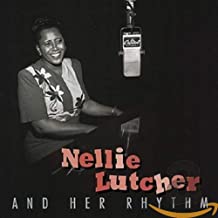
Nellie Rose Lutcher was born on October 15, 1912 in Lake Charles, Louisiana. The eldest daughter of the 15 children, her father was a bass player and her mother a church organist. She received piano lessons and her father formed a family band with her playing piano. At age 12, she played with Ma Rainey, when her regular pianist fell ill and had to be left behind in the previous town. Searching for a temporary replacement in Lake Charles, one of the neighbors told Rainey that there was a little girl who played in church who might be able to do it.
At 15, Lutcher joined her father in Clarence Hart’s Imperial Jazz Band and in her mid-teens also briefly married the band’s trumpet player. In 1933, she joined the Southern Rhythm Boys, writing their arrangements and touring widely. 1935 saw her moving to Los Angeles, California where she began to play swing piano, and also to sing, in small combos throughout the area. At this point she began developing her own style, influenced by Earl Hines, Duke Ellington and her friend Nat “King” Cole.
Not widely known until 1947 when she learned of the March of Dimes talent show at Hollywood High School, and performed. The show was broadcast on the radio and her performance caught the ear of Capitol Records scout Dave Dexter. Signing to the label she made several records, including The One I Love (Belongs to Somebody Else) and her first hit single, the risqué Hurry On Down.
In 1950, Lutcher duetted with Nat “King” Cole on For You My Love and Can I Come In For A Second. The same year, her records were released in the UK and were actively promoted by radio DJ Jack Jackson. She headlined a UK variety tour, emceed by Jackson, with great success, later returning there to tour on her own.
With an orchestra for the first time, Lutcher recorded The Birth of the Blues and I Want to Be Near You in 1951, but losing her appeal with the record-buying public and was dropped by Capitol the following year. She went on to record, much less successfully, for other labels including Okeh, Decca and Liberty, and gradually wound down her performance schedule.
In 1952, Lutcher was contacted to perform on a happy new years television special, however, after she finished her song it was revealed that she was on the set of and the honoree on a This Is Your Life episode.
Pianist and vocalist Nellie Lutcher, most recognizable for her diction and exaggerated pronunciation and was credited as an influence by Nina Simone among others, passed away in Los Angeles on June 8, 2007, aged 94.

More Posts: bandleader,history,instrumental,jazz,music,piano,vocal

Daily Dose Of Jazz…
Spencer Williams was born on October 14, 1889 in New Orleans, Louisiana and was educated at St. Charles University in his hometown. Performing in Chicago, Illinois by 1907, he moved to New York City about 1916 where he co-wrote several songs with Anton Lada of the Louisiana Five. Among those songs was Basin Street Blues, which became one of his most popular songs and is still recorded by musicians to this day.
Touring Europe with bands from 1925 to 1928, during this time he wrote for Josephine Baker at the Folies Bergère in Paris. Returning to New York City for a few years, at the end of the Roaring Twenties, Williams was tried but then acquitted on a charge of murder. In 1932, he was back in Europe where he spent many years in London, England before moving to Stockholm in 1951.
A prolific composer, some of Spencer’s compositions that became hit songs were Basin Street Blues, I Ain’t Got Nobody, Royal Garden Blues, Mahogany Hall Stomp, I’ve Found a New Baby, Tishomingo Blues and Everybody Loves My Baby, among numerous others.
Returning once again to New York City in 1957, pianist, composer, vocalist and bandleader Spencer Williams, was posthumously inducted into the Songwriters Hall of Fame. He passed away on July 14, 1965 in Flushing, New York.
More Posts: bandleader,composer,history,instrumental,jazz,music,piano,vocal
Daily Dose Of Jazz…
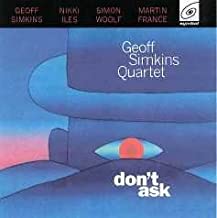
Geoff Simkins was born on October 13, 1948 in London Borough of Ealing, England. He started playing jazz in his early teens and his first instrument was drums, but he quickly changed to the alto saxophone.
In 1977 Geoff turned professional and his early work included time with the Harry Strutters Hot Rhythm Orchestra and the Temperance Seven. His principal stylistic influences have been the altoist Lee Konitz and tenor saxman Warne Marsh.
Simkins has played at concerts, clubs and festivals in all parts of the UK, in Europe and beyond. Often working with visiting American musicians his list has included Art Farmer, Bobby Shew, Al Cohn, Tal Farlow, Slide Hampton, Warren Vache, Al Grey, Howard Alden, Ruby Braff, Bill Coleman and Conte Candoli, among others. He has recorded with UK tenor saxophonist Danny Moss and US trumpeters Billy Butterfield and Yank Lawson. Since the 1980s he has worked regularly with UK guitarist Dave Cliff.
As an educator Geoff is a respected teacher, and runs improvisation courses in Brighton, UK. He has been a regular tutor at the famous Glamorgan Jazz Summer School in Wales before moving it to Trinity College of Music in London. Since 2012 he has taught at the Royal Welsh College of Music and Drama in Cardiff.
Alto saxophonist Geoff Simkins, who has recorded as a leader also eight albums as a sideman with Nikki Iies, Dave Cliff, Allan Ganley and Howard Alden, continues to perform, record and teach.
More Posts: bandleader,history,instrumental,jazz,music,saxophone
Daily Dose Of Jazz…
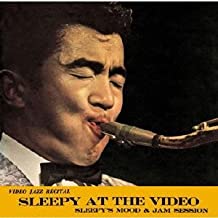
Hidehiko “Sleepy” Matsumoto (松本英彦) was born on October 12, 1926 in Okayama, Japan. He attended Fuchu High School where he learned the saxophone followed by matriculation through the University of Electro-Communications.
In the late 1940s he played bebop in Japan with the group CB Nine, then joined The Six Josés and The Big Four, a group which included George Kawaguchi, Hachidai Nakamura, and Mitsuru Ono.
In 1959 he became a member of Hideo Shiraki’s small ensemble, and played with Gerald Wilson at the 1963 Monterey Jazz Festival and Toshiko Akiyoshi in 1964. Starting in 1964 Hidehiko led his own ensembles, which included sidemen Takeshi Inomata, Akira Miyazawa, George Otsuka, and Isao Suzuki.
On July 22 and 24, 1966, he played with the John Coltrane quintet in Tokyo, Japan while the group toured Japan. Tenor saxophonist and bandleader Hidehiko “Sleepy” Matsumoto passed away on February 29, 2000 in Tokyo, Japan.
More Posts: bandleader,history,instrumental,jazz,music,saxophone
Daily Dose Of Jazz…
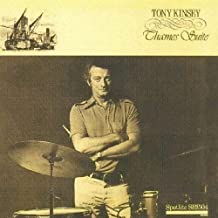
Tony Kinsey was born Cyril Anthony Kinsey on October 11, 1927 in Sutton Coldfield, Birmingham, England. Holding down jobs on trans-Atlantic ships during his youth, he studied while at port with Bill West in New York City and Birmingham with Tommy Webster. He had a close association with Ronnie Ball early in his life.
Kinsey led his own ensemble at the Flamingo Club in London, England through the 1950s, and recorded on more than 80 sessions between 1950 and 1977, including with Tubby Hayes, Bill Le Sage, Ronnie Scott, Johnny Dankworth, Tommy Whittle, Joe Harriott, Lena Horne, Frank Holder, Ella Fitzgerald, Ben Webster, Clark Terry, Harry Edison, Buddy DeFranco, Billie Holiday, Oscar Peterson, and Sarah Vaughan.
He performed at European jazz festivals both as a drummer and as a poet. He did some work as a session musician in the 1950s and 1960s, playing on records by Eddie Calvert, Cliff Richard, and Ronnie Aldrich. Kinsey was also a founder member of the group, The John Dankworth Seven in 1950.
He was a resident at the Florida Club, Leicester Square, in the 1950s and had his own trio in the mid~Sixties. By the mid 1980s Tony performed regularly with vibraphone player Lennie Best at venues in the London area including the South Hill Park Cellar Bar in Bracknell.
Kinsey also branched into composition; a string quartet composition of his is used in the short film On the Bridge, and he wrote arrangements for big bands in addition to music for over 100 commercials. Later in his life he wrote music for a musical based on the life of George Eliot.
In 2012, he appeared in the documentary film, No One But Me, discussing jazz vocalist Annie Ross. Drummer and composer Tony Kinsey continues to remain active as drummer.
More Posts: bandleader,drums,history,instrumental,jazz,music