

Daily Dose Of Jazz…
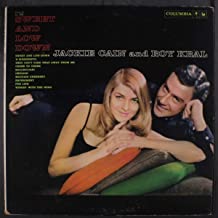
Roy Kral was born on October 10, 1921 in Cicero, Illinois. His sister was the renowned vocalist Irene Kral. Urged by his mother, he took classical piano lessons as a young boy but by the 1930s abandoned them to teach himself to play jazz piano by mimicking what he heard while listening to the radio under his blanket after bedtime.
During World War II, Kral served in the Army as an arranger for the Army band. After service he moved to Chicago, Illinois and joined the George Davis Quartet. As a pianist and singer for Charlie Ventura’s band, Bop for the People, in 1948 ç Kral agreed to write a new arrangement of the 1919 pop song I’m Forever Blowing Bubbles. He added a bebop sensibility and scat singing to a rather insipid pop standard, transforming it into a cool, jazzy tune and their first hit.
Meeting Jackie Cain at eighteen and just out of high school and his initial impression was not her singing until he heard her. Their voices were an octave apart and their partnership was cemented when they married in 1949 and became the duo Jackie and Roy, recording nearly 40 albums in 56 years. Coming to prominence during the bebop era they combined bebop singing with cabaret creating a very polished sound of pop, jazz and Latin music, all inflected with a jazz sensibility. The duo produced hits like Spring Can Really Hang You Up the Most, You Inspire Me, and It’s A Lovely Day Today.
Pianist and vocalist Roy Kral, one half of one of the most important vocal groups in jazz, passed away at 80 of congestive heart failure on August 2, 2002 in Montclair, New Jersey.

More Posts: bandleader,history,instrumental,jazz,music,piano,vocal
Daily Dose Of Jazz…
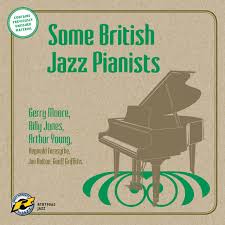
Gerald Asher Moore was born in London, England on October 8, 1903. He spent the years between 1922-1939 working freelance in London, playing at movie palaces and nightclubs.
Among the clubs he worked in the Twenties and Thirties were Sherry’s, the Empress Rooms, Chez Rex Evans, Bag o’ Nails, 43 Club, and Mema’s. His first live appearance on BBC radio in 1936 was heralded in The Radio Times with a listing as Britain’s King of Swing.At the end of the decade he worked with Buddy Featherstonhaugh, and inthe Forties with Adelaide Hall and with Vic Lewis.
Working in Europe late in the 1940s, he played in Germany with Max Geldray, at the Paris Jazz Fair with Carlo Krahmer, and at the Palm Beach Hotel in Cannes, France. Moore played with Harry Gold and Laurie Gold in 1954-57 and worked as a pianist on the Queen Mary and Caronia into the 1960s.
From the mid-1960s pianist Gerry Moore played in London clubs until he passed away on January 29, 1993 in Twickenham, southwest London.
More Posts: bandleader,history,instrumental,jazz,music,piano

Review: Tony Hightower | Legacy
Legacy. If you know Tony Hightower, you understand why he titled this treasury of songs. If you don’t, you will come to appreciate his talent. He was weaned on the classics and his selection of songs as well as his writing and arranging speak to his unique understanding of those who came before. He has accepted the torch and is crafting a distinctive voice to tell his stories. Taking his cues from decades of musical history, as you listen, you will hear the influences as he bares his soul to give you an unabashed glimpse into the pleasures and sorrows of his life.
The opening song, written by the legendary Skip Scarborough, was originally recorded in 1973 as You Can’t Hide Love by the California R&B group Creative Source. It would be two years before Maurice White would drop it down to a ballad for Earth, Wind & Fire and garner wider recognition. Now, nearly fifty years later, a new voice gives it a swing arrangement that shows his maturity to introduce a new generation to a classic song with a different beat. It sets the tone for what is to follow.
Swing is always a fun vehicle to begin an album and it speaks to a historical note of the music that a century ago drew dancers to the floor. Tony’s arrangement of Can’t Hide Love takes us in a new direction and gives us those big band horns, adding a sprinkle of background ladies with drum highlights and a bass line driving the music and you have a classic arrangement that sets the tone for what is to follow. The Doll further illuminates his storytelling acuity with this mid-tempo groove about an elegant lady who is in a league of her own. She turns heads, can stop a room, and is the dream of most men. I think at one time Duke and Billy called her Satin Doll. The Don Redman/And Razaf composition Gee Baby takes the third position sans fanfare, slowing down with an easy opening bass line and a bluesy piano as it begs the question, Ain’t I Good To You? Written at the end of the Roaring Twenties, Tony puts the bass again in the center spotlight to assist in setting the mood as he weaves this tale of a young man trying to understand why the expensive trappings combined with his love mean so little to this woman who is obviously looking for things he is incapable of giving.
Rendez Vous stretches Hightower’s voice in falsetto beyond his familiar tenor. It is a bossa nova getaway tribute to a young man’s love for a woman. She has captured his heart and this is where he can escape from the world and lose himself in her arms on the beach in Ipanema. All To The Good takes us to church but not in the tradition. He keeps a mid~tempo beat alive as he opens with a bit of scatting before delving into his homage to the beautiful spirit that was his mother. Taking wing for that celestial residence is only softened by those left behind with memories of times well spent together. It’s ballad time and Plain Jane takes a deep look inside dreams, aspirations and realities that keep one humble and looking towards the future. It’s acceptable to remove the masks we wear and be the plain people whistling along the boulevard. Need You lightens the mood again with an easy beat as a young man does his best to let the lady in his life know how he feels. One can only envision her smiling.
The Gift is a love song of lament. The orchestration brings to mind theme songs and interlude music of many film noir or those black and white television shows of the Fifties and Sixties. The strings add an eerie but comforting ambience as he unfolds his choices and the subsequent outcome. Love & Happy raises the temperature with this remake of the quintessential Al Green/Teenie Hodges composition Love And Happiness that was first released in the UK in 1973, however, America didn’t get the single until 1977. Tony gives us a funky blues swing tempo with those horns blazing that pays tribute to its raw grittiness that was originally expressed.
There are many songs that one should not tackle unless they have truly done their homework. Here’s To Life is one of those seminal songs that has become a modern day jazz standard and an appropriate closer. Composed by Artie Butler with lyrics by Phyllis Molinary, it became Shirley Horne’s signature song and one of my favorites as the title says it all. “No complaints and no regrets, I still believe in chasing dreams and placing bets, I have learned that all you give is all you get, so give it all you got…” As it unfolds you will hear Tony pay his respects and emerge with the mantra he lives by.
If you are hesitant, don’t be. Tony Hightower’s maturity is evident in his lyricism, composing, arranging and delivery. Penning six of the ten selections he presents here, I implore you to pay very close attention to the musicianship of those who accompany him. The music is as much a part of each story as the lyric, for it plays an equally impassioned role in the story. I also encourage you not to disregard his tracking, as it is reminiscent of past producers who created studio albums that were concerts, where you just drop the needle and let it play. This is one of those albums.
To say this young man is on his way to being one of the great storytellers of his generation is by no means an exaggeration. Listen with intent. For us hip audiophiles, we applaud those who defy popular taste for original design. Legacy.
carl anthony | notorious jazz | october 7, 2021
Give A Gift Of Jazz ~ Share 
#preserving genius
More Posts: bandleader,history,instrumental,jazz,music,review,vocal
Daily Dose Of Jazz…
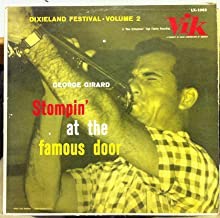
George Girard was born October 7, 1930 in Jefferson Parish, Louisiana and in high school he studied music under Johnny Wiggs and immediately after graduating in 1946 he became a professional musician. He played and toured with the bands of Johnny Archer and Phil Zito before co~founding the band The Basin Street Six, made up mostly of friends he had grown up with, including clarinetist Pete Fountain.
The band got a regular gig at L’Enfant’s Restaurant in New Orleans, as well as regular television broadcasts over WWL. The band started receiving favorable national attention, but being dissatisfied with it, broke up the band in 1954 and founded his own band, George Girard & the New Orleans Five. Landing a residency at the Famous Door in the French Quarter, he recorded for several labels, and got a weekly broadcast on CBS’s affiliated local radio station WWL.
His ambitions to make a national name for himself were thwarted when he became ill and had to give up playing in 1956. Trumpeter George Girard, known for his great technical ability, passed away from colon cancer in New Orleans, Louisiana on January 18, 1957. He was twenty-six.
More Posts: bandleader,history,instrumental,jazz,music,trumpet
Daily Dose Of Jazz…
Steve Elmer was born on October 6, 1941 in Brooklyn, New York. He began his musical training as a drummer in a Brooklyn junior high school when he was thirteen years old. He briefly attended Manhattan School of Music before he became the featured jazz drummer with the All American Big Brass Band’s 16-country three-month tour of Africa.
On his return, he spent the next two years playing drums with the Pepe Morreale Trio and cornetist Bobby Hackett. Elmer then earned his B.S in Music Education from Hofstra University and took a job teaching music in a Passaic, New Jersey elementary school followed by a year-and-a-half at Manhattan Vocational- Technical High School.
At age 25, Steve took the first of many formal piano lessons with the brilliant jazz pianist and teacher Lennie Tristano. After six years of intense training, Elmer decided to move away from the Tristano influence and follow his own musical instincts.
In 1969 Steve attended Queens College where he received a Master’s degree in Music Composition, and accepted an invitation to become an assistant professor. He developed a BA in Jazz Studies program where he and Count Basie alumnus Frank Foster served as the faculty.
Elmer stopped playing professionally from 1976-1991 until he met a young drummer named Myles Weinstein and discovered they were both on the same musical wavelength. He and Myles formed a group called The Jazz Mentality Chris Potter on saxophones and Ralph Hamperian on bass. The group recorded two CDs, Maxwell’s Torment and Show Business Is My Life featuring many of Steve’s original compositions.
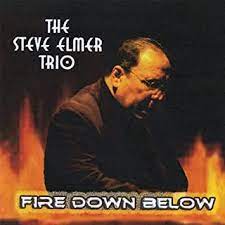
In 2006, Steve recorded I Used To Be Anonymous, featuring nine original compositions. The trio toured Japan, recorded Fire Down Below, their second CD, in 2008 featuring ten more of his original compositions and a lot of classic jazz playing. Pianist and drummer Steve Elmer is looking forward to a return to Japan and recording his first solo piano album.
More Posts: bandleader,composer,drums,history,instrumental,jazz,music