

Daily Dose Of Jazz…
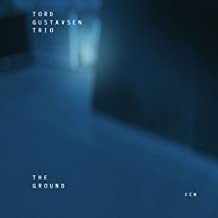
Tord Gustavsen was born on October 5, 1970 in Oslo, Norway and raised in rural Hurdal, Akershus where he grew up playing church music. He attended the University of Oslo with a degree in psychology before going to the Trondheim Musikkonsevatorium studying jazz for three years. Graduate school saw him with a degree in musicology at the University of Oslo, where he was a guest teacher of jazz piano and theory.
Signed to ECM Records, between 2003 and 2007 the Tord Gustavsen Trio released three albums and in 2005 won the Nattjazz prize. A later ensemble released the album Restored, Returned was recorded in 2009, which was awarded with Spellemannsprisen, the Norwegian Grammy. The quartet went on to release The Well, Extended Circle and play the Montreal Jazz Festival in several different configurations.
He has recorded as a session musician, and guested on friends’ albums, as well as collaborative projects. Pianist Tord Gustavsen continues to be highly interested in psychology and has written a lengthy thesis on the paradoxes of improvisation. He continues to express his music through performance and recordings.
More Posts: bandleader,educator,history,instrumental,jazz,music,piano
Daily Dose Of Jazz…
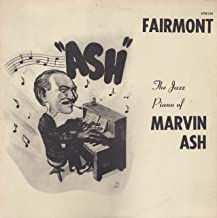
Marvin Ash was born Marvin E. Ashbaugh was born on October 4, 1914 in Lamar, Colorado. Growing up in Junction City and Emporia, Kansas he started playing with bands during high school. He worked with Count Basie, Wallie Stoeffer, Con Conrad, Herman Waldman and Jack Crawford. On a visit to Abilene, Texas in 1931 he found inspiration when he heard pianist Earl Hines perform. A fortunate encounter at Jenkins’ Music Store afforded him the opportunity to hear Joe Sullivan play his Little Rock Getaway for Fats Waller and Arthur Schutt, seated at two other pianos. He adapted his style similar to the three of them.
Moving to Tulsa, Oklahoma at 22 he worked in radio as a studio pianist, musical director, and announcer at KVOO-FM. This allowed him to learn about different piano styles, his favorite musicians being stride pianists James P. Johnson and Waller, Pete Johnson, Earl Hines, Art Tatum, Teddy Wilson, and long-time friend Bob Zurke.
1942 saw Marvin in the Army, assigned to Fort Sill in Oklahoma, where he remained for six months after the end of the war. After the end of his service he moved to Los Angeles, California where found work with trumpeter Wingy Manone’s band. This resulted in some of his earliest ensemble recordings, performances at Club 47 led to sessions with Clive Acker’s Jump Records as a soloist in late 1947, and with Rosy McHargue’s Memphis Five.
Ash’s playing caught the attention of Capitol Records producer and A&R man Lou Busch who hired him to record a few more sides in 1949 with a small ensemble. In the 1950s, he played in cocktail lounges in Los Angeles but had few recording dates as a soloist, instead working as a sideman with Jack Teagarden, Matty Matlock, Pud Brown and Pete Daily. Ash’s sessions resulted in a suite for Decca Records entitled New Orleans at Midnight.
He found employment at Walt Disney Studios music department as a performer on movie and television soundtracks, and acting as the resident arranger and pianist for the Mickey Mouse Club. Marvin frequently performed with George Bruns’ group or with his own small ensemble at Disneyland.
Retiring in the mid Sixties, Ash spent his last few years playing vintage jazz, stride, and ragtime in the cocktail lounge of a large bowling alley in Los Angeles. He continued to be hired for special appearances until his death. Pianist Marvin Ash passed away on August 21, 1974 in Los Angeles, California at the age of 59.

More Posts: arranger,bandleader,history,instrumental,jazz,music,piano
Daily Dose Of Jazz…
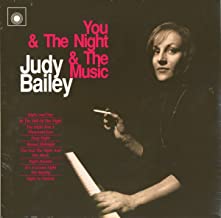
Judy Bailey was born on October 3, 1953 in Auckland, New Zealand and raised in Whangarei, a town in the north country. As a young child she learned ballet, followed by piano and theory when she was 10 years old. She graduated from Trinity College London in the United Kingdom when she was 16.
Moving to Australia in 1960, Judy has spent most of her time in Sydney. She performed live on television, live music venues like the legendary El Rocco and on many recordings.
As an eductor Bailey is a senior lecturer in jazz composition and jazz piano at the Sydney Conservatorium of Music since 1973 and is also musical director of the Sydney Youth Jazz Ensemble. In 1973, Bailey became the pianist on the Australian Broadcasting Corporation children’s radio show Kindergarten, which often featured presenters from Play School.
She has received the Order of Australia, was inducted into the Graeme Bell Jazz Hall of Fame by Jazz Australia, and was awarded an Honorary Doctorate from the University of Sydney. Pianist and composer Judy Bailey, who has lived in Australia since the 1960s, seldom performs.
More Posts: bandleader,educator,history,instrumental,jazz,music,piano
Daily Dose Of Jazz…
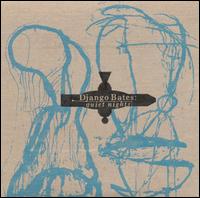
Django Bates was born Leon Bates on October 2, 1960 in Beckenham, Kent, England where he attended Sedgehill School. While at this school, for six years he also attended the Centre for Young Musicians in London, England, where he learned trumpet, piano, and violin. In 1977 he studied at Morley College. The following year he enrolled at the Royal College of Music to study composition but left after two weeks.
He founded Human Chain in 1979 and, in the 1980s, he rose to prominence in a jazz orchestra called Loose Tubes. In 1991, Django started the 19-piece jazz orchestra Delightful Precipice. He also assembled the Powder Room Collapse Orchestra and created Circus Umbilicus, a musical circus show. As a sideman he was a member of Dudu Pukwana’s Zila, Tim Whitehead’s Borderline, Ken Stubbs’s First House, Bill Bruford’s Earthworks, Sidsel Endresen, and in the bands of George Russell and George Gruntz.
As an educator, he has tutored at the Banff Centre jazz program, and was appointed Professor of Rhythmic Music at the Rhythmic Music Conservatory in Copenhagen. Bates was appointed visiting professor of jazz in 2010 at the Royal Academy of Music in London, and the next year was appointed Professor of Jazz at HKB Bern Switzerland.
He has performed with Michael Brecker, Tim Berne, Christian Jarvi, Vince Mendoza, David Sanborn, Kate Rusby, and Don Alias. Pianist, keyboardist, tenor hornist Django Bates continues to perform and record.
More Posts: bandleader,educator,history,instrumental,jazz,keyboards,music,piano,tenorhorn
Daily Dose Of Jazz…
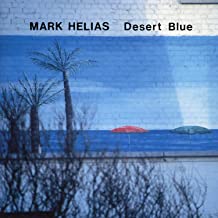
Mark Helias was born October 1, 1950 in New Brunswick, New Jersey. He started playing the double bass at the age of 20, graduating from Yale University’s School of Music with a Masters degree in 1976 and also studied at Rutgers University.
He has performed with a wide variety of musicians, first and foremost with trombonist Ray Anderson, with whom Helias led the ironic 1980s avant-funk band Slickaphonics. He also led a trio with drummer Gerry Hemingway, formed in the late 1970s, which was later renamed BassDrumBone.
Helias has performed with members of Ornette Coleman’s band, Don Cherry, Dewey Redman, and Ed Blackwell, and with musicians affiliated with the AACM, such as Anthony Braxton and Muhal Richard Abrams.
>Since 1984 Mark Helias has released six recordings under his own name and further six albums leading the archetypal improvising trio Open Loose since 1996. The group comprises Helias on bass, first Ellery Eskelin, then Tony Malaby on tenor saxophone and Tom Rainey on drums.
Double bassist and composer Mark Helias continues to perform and teaches at Sarah Lawrence College, The New School, and SIM (School for Improvised Music.
More Posts: bandleader,bass,educator,history,instrumental,jazz,music