

Daily Dose Of Jazz…
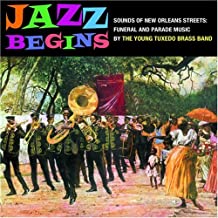
Herman Edward Sherman, Sr. was born in New Orleans, Louisiana on June 28, 1923. He played clarinet in high school and later picked up the alto and tenor saxophone. He began working with brass bands on the New Orleans jazz scene around 1940, playing in the Eureka Brass Band, the Onward Brass Band, and the Young Tuxedo Brass Band.
Taking over the leadership of the Young Tuxedo Brass Band in 1971, he remained for the rest of his life. During his tenure the group toured the United States repeatedly and performed in Berlin, Germany in 1980. He led the ensemble in the studio for their 1983 release Jazz Continues on 504 Records.
Occasionally he played in dance bands, but concentrated on his work in brass bands. Saxophonist and bandleader Herman Sherman passed away on September 10, 1984 in his hometown.
More Posts: bandleader,history,instrumental,music,saxophone

Daily Dose Of Jazz…
Clarence Profit was born on June 26, 1912 in New York City. Coming from a musical family, he began studying piano at the age of three and led a ten-piece band in New York City in his teens.
A visit to his grandparents in Antigua resulted in his staying in the Caribbean for five years. He also led a group in Bermuda. Returning to the States, Clarence led a trio. He co-composed Lullaby In Rhythm with Edgar Sampson. He was respected in his era, but after his early death he fell into obscurity. He was born, and died, in New York City.
Pianist and composer Clarence Profit, closely associated with the swing era, passed away in New York City on October 22, 1944.
More Posts: bandleader,composer,history,instrumental,jazz,music,piano
Daily Dose Of Jazz…
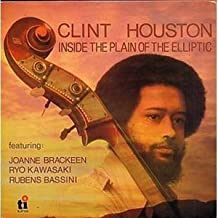
Clinton Joseph Houston was born on June 24, 1946 in New Orleans, Louisiana and spent his early childhood in Washington, D.C. before spending his adolescence in Queens, New York. At the age of 10, he began piano lessons and started playing jazz in his early teens after hearing Cannonball Adderley on the radio. After being turned down for a pianist role in his high school band, he switched to the double bass.
He began playing in bands outside of high school, with Lenny White, George Cables, Billy Cobham, Steve Grossman and Charles Sullivan, all of whom grew up in the same neighborhood. In his early years, he played in a band called the Jazz Samaritans, playing Latin-style music at local parties and drawing inspiration from Art Blakey. At the age of 19, Clint won a Jazz Interactions competition, leading to an encounter with Paul Chambers who encouraged him to pursue his music further.
After high school, he went to the Pratt Institute, then transferred to Queen’s College to study music before eventually obtaining a degree in Graphic Art from the Cooper Union. During his higher education, on weekends he played alongside Cables and White at Slugs’ matinées. This led to them playing extensively with better-known artists. A founding member of musical co-operative Free Life Communications, Clint performed alongside Dave Liebman, becoming more immersed in the loft jazz scene of 1970s New York.
By 1972, Houston was playing alongside Joanne Brackeen in Stan Getz’ band. Their collaborations continued playing in New York clubs recording on many of Brackeen’s early records. He went on to play with Roy Ayers, George Cables, Lenny White, Nina Simone, Roy Haynes, Sonny Greenwich, Don Thompson, Charles Tolliver, Woody Shaw, Pepper Adams, Slide Hampton, Frank Foster, and Roland Hanna. Bassist Clint Houston passed away on June 7, 2000.
More Posts: bandleader,bass,history,instrumental,jazz,music
Daily Dose Of Jazz…
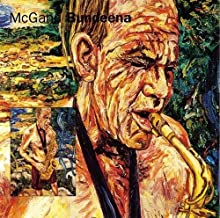
Bernard Francis McGann was born June 22, 1937 in Granville, Sydney, Australia. He first came to prominence as part of a loose alliance of modern jazz musicians who performed at the El Rocco Jazz Cellar in Kings Cross, Sydney in the late 1950s and early 1960s. He had an enduring collaboration with drummer John Pochee.
During the 1960s McGann performed with rock and pop groups and as a session musician. In the 1970s he was a member of the Sydney rock-soul band Southern Comfort, and in 1974, he was a founding member of jazz group, The Last Straw. Between 1980 and 1982, he played with visiting US jazz artists, including Freddie Hubbard, Lester Bowie, and Dave Liebman.
Studying in New York on a grant from The Australia Council in 1983, Bernie went on to tour in 1988 both Australia and the USA with the Australian Jazz Orchestra, and was a featured artist in award-winning documentary film Beyond El Rocco.
Alto saxophonist Bernie McGann, who won several awards including four ARIA Music Awards between 1993 and 2001, passed away on September 17, 2013, following complications from heart surgery. He was 76.
More Posts: bandleader,history,instrumental,jazz,music,saxophone
Daily Dose Of Jazz…
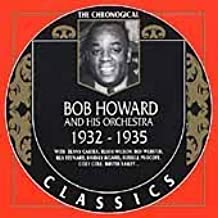
Bob Howard was born Howard Joyner on June 20, 1906 in Newton, Massachusetts, He began singing in New York City night clubs in the mid-1920s and began recording in 1931 under his real name for Columbia Records.
Under the name Bob Howard, he played New York’s Park Central Hotel, Famous Door, Hickory House and other clubs as well as theaters. Signed to Decca Records in 1934 he recorded a series of hot small group swing records between 1935 and 1938. His studio groups included Benny Carter, Buster Bailey, Rex Stewart, Ben Webster, Teddy Wilson, Russell Procope, Cecil Scott, Cozy Cole, Bunny Berigan, Artie Shaw, and Babe Russin among others. Unfortunately on these Decca recording sessions he did not play piano, only sang.
Embarking on several European tours as a solo performer in the middle and late 1930s, Bob also had his own radio series in New York. From 1936 to 1947 he performed in a handful of short films, and 1959 saw him acting in an episode of Perry Mason.
In 1948, Howard hosted The Bob Howard Show on CBS, making him the first Black man to host a regularly broadcast network TV show. The program was cancelled after 13 episodes. He also was a regular performer on Sing It Again on CBS-TV in 1950 – 1951.
Relocating to Las Vegas, Nevada and Los Angeles, California for a time, he returned East. Pianist and vocalist Bob Howard passed away on December 3, 1986 in the Bronx, New York.
More Posts: bandleader,history,instrumental,jazz,music,vocal