

Daily Dose Of Jazz…
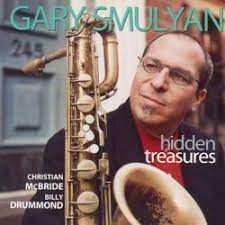
Gary Smulyan was born in Bethpage, New York on April 4, 1956. He studied at Hofstra University before working with Woody Herman. His biggest influence is Pepper Adams. When Adams died, Smulyan recorded an album titled which included eight pieces composed by Adams.
Smulyan has played with the Vanguard Jazz Orchestra, the Mel Lewis Big Band, the Dave Holland Big Band and Octet, the Dizzy Gillespie All Star Big Band. He has performed and recorded with Carla Bley’s Big Band.
He has recorded thirteen albums as a leader, as a sideman seventy-six with Harry Allen, David Byrne, Michel Camilo, Carnegie Hall Jazz Band, Freddy Cole, George Coleman, Dena DeRose, Bill Evans, Gil Evans, Jon Faddis, John Fedchock, Don Friedman, Benny Green, Tom Harrell, Gene Harris, Jimmy Heath, Joe Henderson, Conrad Herwig, Freddie Hubbard, Denise Jannah, B.B. King, Mike LeDonne, Joe Lovano, Joe Magnarelli, Kevin Mahogany, Mark Masters, Mingus Big Band, Grachan Moncur III, Eddie Palmieri, Charlie Parker, Charlie Persip, Diana Ross, Rob Schneiderman, John Scofield, Don Sickler, Mark Soskin, Dave Stryker, Roseanna Vitro, Walt Weiskopf, and Gerald Wilson.
Baritone saxophone Gary Smulyan leads a trio with bassist Ray Drummond and drummer Kenny Washington.
More Posts: bandleader,history,instrumental,jazz,music,saxophone
Daily Dose Of Jazz…
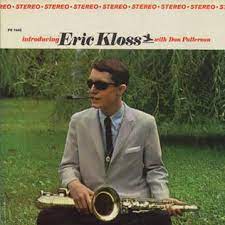
Eric Kloss was born April 3, 1949 in Greenville, Pennsylvania near Pittsburgh, and attended the Western Pennsylvania School for the Blind, which was run by his father. When he was 10, he started on saxophone, and two years later he was playing in night clubs with professional musicians such as Bobby Negri, Charles Bell, and Sonny Stitt. At 16, he recorded his debut album, Introducing Eric Kloss on the Prestige label in 1965, with Don Patterson and Pat Martino.
On his third album, Grits & Gravy, he recorded with musicians over twice his age: Jaki Byard, Richard Davis, and Alan Dawson. He continued recording and performing while a student at Duquesne University. A fan of Elvis Presley and The Ventures, he was attracted to the growth of jazz fusion in the 1960s and ’70s, and eventually played with fusion musicians Chick Corea, Dave Holland, and Jack DeJohnette. He also collaborated with Richie Cole and Gil Goldstein, and did sessions with Cedar Walton, Jimmy Owens, Kenny Barron, Jack DeJohnette, Booker Ervin, Barry Miles, and Terry Silverlight.
By the 1980s, Kloss was teaching at Rutgers University, then Duquesne and Carnegie Mellon. He and his wife, a vocalist, collaborated in a group called Quiet Fire. Saxophonist Eric Kloss has performed and recorded rarely since the Eighties due to health problems.
More Posts: bandleader,history,instrumental,jazz,music,saxophone
Daily Dose Of Jazz…
Salvatore Nistico was born on April 2, 1940 in Syracuse, New York. He started playing alto saxophone, switching to tenor in 1956, and briefly played baritone saxophone. From 1959 to 1961, he played with the Jazz Brothers band, with Chuck Mangione and Gap Mangione.
Nistico played in the 1962–65 Woody Herman group, considered one of his best bands, with Bill Chase, Jake Hanna, Nat Pierce, and Phil Wilson. In 1965, he joined Count Basie but returned on many occasions to play with Herman. Around that time he was also a member of Dusko Goykovich’s sextet with other musicians associated with the Herd, such as Carl Fontana, Nat Pierce, and Michael Moore.
He also played with Nat Adderley, Don Ellis, Buddy Rich, and Stan Tracey. Moving to Europe in his latter years he worked with mostly European musicians as Joe Haider, Isla Eckinger, Billy Brooks, Fritz Pauer. He went on to record with the Larry Porter/ Allan Praskin Band and Three Generations Of Tenor Saxophone with Johnny Griffin, Roman Schwaller, Paul Grabowsky, Roberto DiGioia, Thomas Stabenow, Joris Dudli and Mario Gonzi. The first live performance from 1985 was released under the band’s name on JHM Records Switzerland.
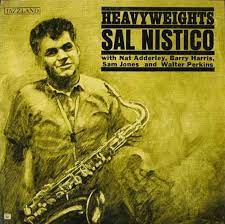
Nistico’s solo work is a contrast to his big band work, with his solo work more oriented towards bebop, as heard on the Heavyweights recording on Riverside Records. Tenor saxophonist Sal Nistico, who was associated for many years with Woody Herman’s Herd, passed away on March 3, 1991, in Berne, Switzerland.
More Posts: bandleader,history,instrumental,jazz,music,saxophone
Daily Dose Of Jazz…
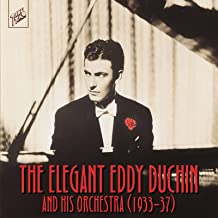
Edwin Frank Duchin was born in Cambridge, Massachusetts on April 1, 1909 to Bessarabian Jewish immigrants. After graduating from Beverly High School he attended the Massachusetts College of Pharmacy and originally took up the profession of pharmacist before turning full-time to music. He began his new career with Leo Reisman’s orchestra at the Central Park Casino in New York City, an elegant nightclub where he became popular in his own right. This would cause strife between him and Reisman.
By 1932, with Reisman’s contract with the Central Park Casino being terminated, it left violinist Leo Kahn as the interim leader of the orchestra. After 6 weeks, Duchin had assumed Kahn’s place as the orchestra’s leader. He became widely popular thanks to regular radio broadcasts that boosted his record sales, and he was one of the earliest pianists to lead a commercially successful large band.
Entering the Navy during World War II, he served as a combat officer in a destroyer squadron in the Mediterranean and Pacific. He attained the rank of lieutenant commander and was highly decorated with several military awards. After his discharge Eddy was unable to reclaim his former stardom in spite of a stab at a new radio show in 1949.
Pianist and bandleader Eddy Duchin, who rose to fame during the 1930s and 1940s, passed away at age 41 on February 9, 1951 of acute myelogenous leukemia.
More Posts: bandleader,history,instrumental,jazz,music,piano
Daily Dose Of Jazz…
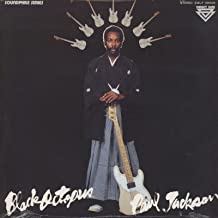
Paul Jackson was born in Oakland, California on March 28, 1947 and began playing bass at the age of nine. By age 14, he performed with the Oakland Symphony Orchestra and went on to study at the San Francisco Conservatory of Music.
He recorded five albums as a leader, eleven albums with Herbie Hancock, five with The Headhunters. He played on recording sessions with Sonny Rollins, Stanley Turrentine, Azteca, Eddie Henderson, Harvey Mason, The Pointer Sisters, Santana, Shawn Phillips, Stomu Yamashta between 1972 and 1977.
Electric bassist Paul Jackson passed away on March 18, 2021 at age 73 in a hospital near Tokyo, Japan, ten days before his 74th birthday.

More Posts: bandleader,bass,history,instrumental,music