

Daily Dose Of Jazz…
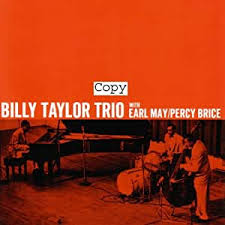
Austin Percy Brice Jr. was born on March 25, 1923 in New York City. He started his professional career began around the end of World War II, when he played with Benny Carter, Mercer Ellington, Luis Russell, and Eddie Cleanhead Vinson. Playing frequently in Harlem during the early 1950s he worked with Tiny Grimes, Oscar Pettiford, Tab Smith, Lucky Thompson, and Cootie Williams. In addition to leading sessions at Minton’s Playhouse, he also played with Billy Taylor from 1954 to 1956, George Shearing between 1956 to 1958, sharing screen time in the film The Big Beat, and Kenny Burrell 1958–59.
He played behind Sarah Vaughan on tour from 1959 to 1961, then became Harry Belafonte’s drummer for most of the 1960s, but he also worked with Ahmad Jamal, Carmen McRae and Mary Lou Williams in that decade. He led a group called the New Sounds in the early 1970s, and worked with Sy Oliver and Illinois Jacquet.
Though he led a group that was active in the ’70s, the somewhat anti-jazz vibe lent to the drummer’s decision to concentrate on Broadway orchestra work, settling in for long runs on two hot shows, Eubie and Bubbling Brown Sugar. He was also active accompanying the tap group the Copasetics. He was a first~ call musician for jazz festivals and recording sessions.
The repertoire of the Percy Brice Duo with Tom Smith features songcraft from the ’20s through the ’50s. Drummer and bandleader Percy Brice, also known by his nickname Big P, passed away in November 2020 at the age of 97.

More Posts: bandleader,drums,history,instrumental,jazz,music
Daily Dose Of Jazz…
Dave Douglas was born on March 24, 1963 in Montclair, New Jersey and grew up in the New York City area, attending Phillips Exeter Academy, a private high school in New Hampshire. He was introduced to jazz by his father and as a young teen was shown jazz theory and harmony by pianist Tommy Gallant. He began performing jazz as a trumpeter during his junior year in high school while on an abroad program in Barcelona, Spain. After graduating from high school in 1981, he studied at the Berklee College of Music and New England Conservatory, both located in Boston, Massachusetts.
A move to New York City in 1984 had him studying at New York University with Carmine Caruso, and finished a degree in music. Early gigs included the experimental rock band Dr. Nerve, Jack McDuff, Vincent Herring as well as street bands around New York City. He played with a variety of ensembles and came to the attention of the jazz pianist, composer, and bandleader, Horace Silver, with whom he toured the US and Europe in 1987.
During the late 1980s, Douglas began playing with bands led by Don Byron, Tim Berne, Marty Ehrlich, Walter Thompson, and others in New York. He also played in the composer collectives Mosaic Sextet and New and Used.
Trumpeter, composer, and educator Dave Douglas has more than fifty recordings as a leader and over 500 published compositions. Has led and co-led quintets and sextets as well as electronic ensembles, won a Doris Duke Performing Artist Award, a Guggenheim Fellowship, an Aaron Copland award, and received Grammy Award nominations. As a composer, has received several commissions from among others from the Birmingham Contemporary Music Group, Essen Philharmonie, The Library of Congress, Stanford University and Monash Art Ensemble, which premiered his chamber orchestra piece Fabliaux in 2014.
He has served as artistic director of the Workshop in Jazz and Creative Music at the Banff Centre in Canada, co-founded the Festival of New Trumpet Music in New York, serving as its director. He is on the faculty at the Mannes School of Music and is a guest coach for the Juilliard Jazz Composer’s Ensemble. In 2016, he accepted a four-year appointment as the artistic director of the Bergamo Jazz Festival.
In 2005 Douglas founded Greenleaf Music, a record label for his albums, sheet music, podcasts, as well as the music of other modern jazz musicians. Greenleaf has produced over 70 albums.
More Posts: bandleader,educator,history,instrumental,jazz,music,producer,trumpet
Daily Dose Of Jazz…
Bob Mover was born March 22, 1952 in Boston, Massachusetts into a musical family as his father played professionally with among others the Charlie Spivak Orchestra. Starting on the alto saxophone at age 13, he studied with Phil Woods at a summer music camp and took private lessons with Ira Sullivan.
In 1973, at the age of 21, Mover was a sideman for Charles Mingus for a five-month period at New York City’s 5 Spot Café. By 1975 he was working regularly in New York City jazz clubs with Chet Baker and he made his first European appearances with Baker at La Grande Parade du Jazz in Nice, France, Jazz Festival Laren in the Netherlands, and the Middelheim Jazz Festival in Antwerp, Belgium.
By late 1975, Bob started leading his own groups around the New York area and made his first two albums as a leader for Choice and Vanguard in 1976 and 1977 respectively: On the Move (Choice) and Bob Mover (Vanguard). Weekly gigs at the Sweet Basil in Greenwich Village included Tom Harrell, Jimmy Garrison, Kenny Barron, Albert Dailey, Ben Riley, Mike Nock, and Ron McLure.
Reuniting with Chet Baker in 1981 for a European tour and landing in Germany they recorded Chet Baker Live at Club Salt Peanuts Koln, Volumes 1 and 2 for the Circle label. Mover recorded two more albums as a leader in 1981 and 1982, In the True Tradition and Things Unseen, both issued by Xanadu.
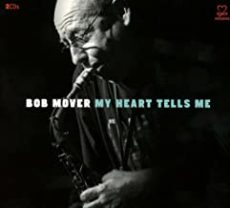
Moving to Montreal, Canada in 1983 he taught at Concordia University. Three years later he recorded his fifth album as leader, The Nightbathers, with pianist Paul Bley and guitarist John Abercrombie, which was an experiment in free improvisation. From 1987 to 1997, Mover lived in Toronto and toured Europe and with Don Thompson and Archie Alleyne, he helped found the Toronto Jazz Quartet. He accepted a teaching position at York University, giving saxophone master classes and teaching a course called Musicianship for Jazz Singers. Alto saxophonist, bandleader and educator Bob Mover has recorded ten albums as a leader, eight as a sideman and continues to perform, record and teach.
More Posts: bandleader,history,instrumental,jazz,music,saxophone
Daily Dose Of Jazz…
Hank D’Amico was born on March 21, 1915 in Rochester, NY and was raised in Buffalo, New York. He began playing professionally with Paul Specht’s band in 1936. That same year, he joined Red Norvo.
1938 saw Hank begin his radio broadcasts with his own octet before returning briefly to Norvo’s group in 1939. He played with Bob Crosby’s orchestra in 1940 and 1941, then had his own big band for about a year. He had short stints in the bands of Les Brown, Benny Goodman and Norvo again before working for CBS in New York.
D’Amico found time to play with Miff Mole and Tommy Dorsey, and spent ten years as a staff musician for ABC, before playing with Jack Teagarden in 1954. From that point he mostly worked with small groups, infrequently forming his own band. He played at the 1964 World’s Fair in New York with The Morey Feld trio.
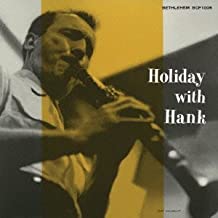
Clarinetist Hank D’Amico passed away on December 2, 1965.
More Posts: bandleader,clarinet,hitory,instrumental,jazz,music
Daily Dose Of Jazz…
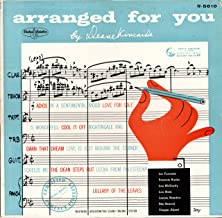
Robert Deane Kincaide was born on March 18, 1911 in Houston, Texas but raised in Decatur, Illinois. He began playing professionally and working as an arranger in the early 1930s, working with Wingy Manone in 1932, then took a job with Ben Pollack from 1933 to 1935.
He arranged for Benny Goodman on the side before joining Bob Crosby’s group in 1935. Deane went on to work with Woody Herman and Manone again and by the end of the decade he worked briefly with Tommy Dorsey. In the first half of the 1940s he worked with Joe Marsala, Glenn Miller, Ray Noble, and Muggsy Spanier.
Serving in the United States Navy during World War II, he played in a ship’s band on the USS Franklin. He joined Ray McKinley’s band in 1946, working with him until 1950. From the 1950s until the early 1980s Kincaide worked primarily as an arranger for television. Arranger and saxophonist Deane Kincaide passed away at the age of 91 in St. Cloud, Florida on August 14, 1992.
Share a dose of a Houston arranger to inspire inquisitive minds to learn about musicians whose legacy lends their genius to the jazz catalog…
More Posts: arranger,bandleader,history,instrumental,jazz,music,saxophone