

Daily Dose Of Jazz…
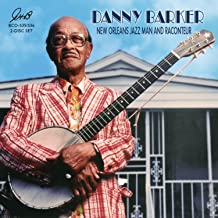
Daniel Moses Barker was born on January 13, 1909 in New Orleans, Louisiana to a family of musicians, the grandson of bandleader Isidore Barbarin and nephew of drummers Paul Barbarin and Louis Barbarin. He took up the clarinet and drums before switching to a ukulele that his aunt got him, and then to banjo. One of Barker’s earliest teachers in New Orleans was fellow banjoist Emanuel Sayles, with whom he would record.
Barker began his career as a musician in his youth with his streetband, the Boozan Kings, and toured Mississippi with Little Brother Montgomery. 1930 saw him moving to New York City where he switched to the guitar. Through the decade he played with Fess Williams, Billy Fowler and the White Brothers, Buddy Harris, Albert Nicholas, Lucky Millinder, and Benny Carter in 1938. During his time in New York, he frequently played with West Indian musicians, who often mistook him for one of them due to his Creole style of playing.
From 1939 to 1946 he frequently recorded with Cab Calloway, and started his own group featuring his wife Blue Lu Barker after leaving Calloway. In 1945 he recorded with pianist Sir Charles Thompson, and saxophonists Dexter Gordon and Charlie Parker. In 1947 he was back with Lucky Millinder and Bunk Johnson. He returned to working with Al Nicholas in 1948 and in 1949 rejoined efforts with his wife in a group.
During the 1950s Danny was primarily a freelance musician, but did work with his uncle Paul Barbarin from 1954 to 1955. In the mid-1950s he went to California to record again with Albert Nicholas; performed at the 1960 Newport Jazz Festival with Eubie Blake. In 1963 he was working with Cliff Jackson, and then in 1964 appeared at the World Fair leading his own group. Sometime in the early 1960s he formed a group he called Cinderella. The following year he returned to New Orleans and took up a position as assistant to the curator of the New Orleans Jazz Museum.
In 1970 he founded and led a church-sponsored brass band for young people ~ the Fairview Baptist Church Marching Band. The Fairview band launched the careers of a number of professional musicians who went on to perform in brass band and mainstream jazz contexts, including Leroy Jones, Wynton Marsalis, Branford Marsalis, Kirk Joseph, Nicholas Payton, Shannon Powell, Lucien Barbarin, Dr. Michael White and others. In later years the band became known as the Dirty Dozen Brass Band.
He played regularly at many New Orleans venues from the late 1960s through the early 1990s, in addition to touring. Beyond overcoming the obstacles of segregation, banjoist Danny Barker, who also sang and played guitar and ukulele, authored two books and was an amateur landscape artist; and who suffered from diabetes throughout most of his adult life, passed away from cancer in New Orleans on March 13, 1994 at age 85.
More Posts: bandleader,banjo,guitar,history,instrumental,jazz,music,ukulele,vocal

Daily Dose Of Jazz…
Harry Roy was born Harry Lipman on January 12, 1900 in Stamford Hill, London, England, and began to study clarinet and alto saxophone at the age of 16. He and his brother Sidney formed a band which they called the Darnswells, with Harry on saxophone and clarinet and Sidney on piano. During the 1920s they performed in several prestigious venues such as the Alhambra and the London Coliseum, under names such as the Original Lyrical Five and the Original Crichton Lyricals. They spent three years at the Café de Paris, and toured South Africa, Australia, and Germany.
By the early 1930s, Harry was fronting the band under his own name, and broadcasting from the Café Anglais and the Mayfair Hotel. In 1935 he married Elizabeth Brooke, daughter of the white Rajah of Sarawak, with whom he appeared in two musical films, Rhythm Racketeer and Everything Is Rhythm.
During World War II, he toured with his band, Harry Roy’s Tiger Ragamuffins. He was at the Embassy Club in 1942, and a little later, toured the Middle East, entertaining troops. In 1948, Roy traveled to the United States but was refused a work permit, so returning to Britain, he reformed his band and scored a hit with his recording of Leicester Square Rag.
By the early 1950s the big band era had come to an end and his band split up, sending him drifting in and out of the music scene. That decade he ran his own restaurant, the Diners’ Club until it was destroyed by fire. By 1969 Harry returned to music, led a quartet in London’s Lyric Theatre’s show Oh Clarence and his own Dixieland Jazz Band residency during the summer at Sherry’s Dixieland Showbar in Brighton, but by then he was in failing health. Clarinetist and dance band leader Harry Roy passed away in London on February 1, 1971.
More Posts: bandleader,clarinet,history,instrumental,jazz,music
Daily Dose Of Jazz…
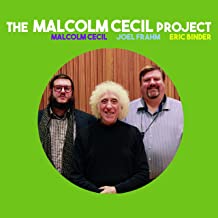
Malcolm Cecil was born on January 9, 1937 in London, England. By the time he came of age he was a founding member of the UK’s leading jazz quintet of the late 1950s, The Jazz Couriers, before going on to join a number of British jazz combos led by Dick Morrissey, Tony Crombie and Ronnie Scott into the early 1960s.
Malcolm later joined Cyril Davies and Alexis Korner to form the original line-up of Blues Incorporated. With Robert Margouleff he formed the duo TONTO’s Expanding Head Band, a project based on a unique combination of synthesizers. This led to them collaborating on and co-producing several of Stevie Wonder’s Grammy-winning albums Talking Book, Music of My Mind, Innervisions and Fulfillingness’ First Finale of the early 1970s. They are also credited as engineers for the Stevie Wonder produced 1974 album Perfect Angel by Minnie Riperton.
Their unique sound made them highly sought-after and they went on to venture in not only jazz, but rock and r&b to collaborate with, amongst others, Quincy Jones, Gil Scott-Heron, Weather Report, Bobby Womack, The Isley Brothers, Billy Preston, Stephen Stills, The Doobie Brothers, Dave Mason, Little Feat, Joan Baez and Steve Hillage. Bassist, engineer and record producer Malcolm Cecil continues to perform and produce.
More Posts: bandleader,bass,history,instrumental,jazz,music,record producer
Daily Dose Of Jazz…
Dick Charlesworth, born Richard Anthony Charlesworth on January 8, 1932 in Sheffield, England. Attending King Edward VII School, at 16, he became a clerk in the Ministry of Labour and was in due course transferred to London. He bought a clarinet and started playing jazz as a hobby in 1952. Entirely self-taught, he became good enough to play clarinet and saxophone in a dance band and performed with jazz bands in south London including Jim Weller’s Jazzmen.
He formed his first group in 1956 and his Dick Charlesworth’s Jazzmen won the South London Jazz Band Championship in 1957. His group was signed by the Melodisc label, and they recorded an EP in December 1957 and produced an album for Doug Dobell’s 77 Records.
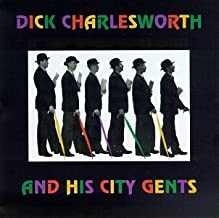
Leaving the Civil Service in 1959 he became a professional musician and signed a recording contract with EMI, remarketing the group as Dick Charlesworth’s City Gents. This was the time of light jazz, sporting distinctive attire of pin stripes and bowler hats, with their Latin motto, Dum vivimus vivamus, simply translated as “While we live, let us enjoy life”. They charted one single Billy Boy on the UK Singles Chart in 1961.
When jazz went out of vogue in the Sixties, Dick broke up his band, and from 1964 to 1969 fronted a band on the cruise liners. He then settled in Mojacar, Spain where he ran a music bar. Returning to Britain in 1977, he was active on the London jazz scene until the early 2000s working with, among others, Keith Smith, Rod Mason, Alan Littlejohn, Denny Wright, and appeared on the BBC Radio series, Jazz Score.
In his later years, Charlesworth lived in Thames Ditton, Surrey, and played a residency at various pubs with his band The Dick Charlesworth’s Fraternity Four, and released their final recording in 2004. Clarinetist, saxophonist and bandleader Dick Charlesworth passed away following a heart attack on April 15, 2008, at the age of 76.
More Posts: bandleader,clarinet,history,instrumental,jazz,music,saxophone
Daily Dose Of Jazz…
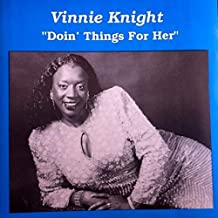
Vinnie Knight was born on January 5, 1958 in Harlem, New York and later moved to the borough of Brooklyn. At an early age, she sang in church choirs and performed in school plays and her father was a singer and guitarist who traveled the world. She studied dance with La Rocque Dance theater and music at the Juilliard School Of Music and Kings Borough Community College.
Knight recorded the songs of composer Duke Ellington, performed in Nairobi, Kenya, and starred with Oliver Jackson and the Harlem Big Band of New York, touring Germany, Switzerland, Holland, and Turkey. Returning to New York she performed with Clark Terry on the SS Norway cruise line, then played the Rapos Nightclub in Japan.
She has recorded, performed and collaborated with the best jazz musicians. In 1997 Vinnie moved to Virginia Beach, Virginia and began singing at such noted venues as Uncle Louie’s, The Jewish Mother, Bienville Grill, House of Jazz, as well as resorts, museums, concert halls and private events in Hampton Roads.
Her love for music theater had her writing and producing a musical revue called Black Pearls (The Speakeasy) songs from the 1920’s thru the 40’s; followed by the sequel Black Pearls and White Diamonds. In 2002, she performed a tribute to Ruth Brown and Pearl Bailey. Vocalist Vinnie Knight continues to perform, tour and record.
More Posts: bandleader,composer,history,instrumental,jazz,music,vocal