

Daily Dose Of Jazz…
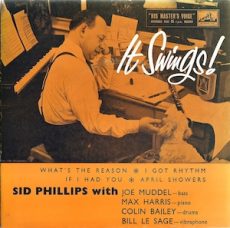
Joseph C Mudele was born on September 30, 1920 and grew up in Downham, South East London. He left school at the age of 14 and began singing and playing in local bands. He began playing double bass at the age of 17 after buying an upright bass in a junk shop. After having served in the war in the Royal Air Force, he studied for a while with principal double bassist James Merritt with the Philharmonia Orchestra.
His professional playing career took off in 1947 with clarinetist Carl Barriteau, accordionist Tito Burns and the Jimmy Macaffer Band. He toured with Hoagy Carmichael during the autumn of 1948, and played with Charlie Parker and drummer Max Roach at the 1949 International Jazz Festival in Paris.
In 1948 Mudele became a founder member of Club Eleven, a Soho nightclub open between 1948 and 1950 which played a significant role in the emergence of the bebop jazz movement in Britain. After the club was closed he became a founder member of the John Dankworth Seven, while also continuing to play with others during the Fifties. During this period Mudele also played for Sophie Tucker, Judy Garland and Billy Eckstine.
Joe supplemented his club performances with extensive radio, television and recording studio work outside of jazz from the 1960s onwards. In later life Mudele lived in Bromley, played weekly at the Bexley Jazz Club in Kent, and took over management duties after owner Les Simons died in 2004. In 2010 he recorded For All We Know with pianist Robin Aspland and drummer Geoff Gascoyne.
Double bassist Joe Mudele, who was sometimes known as Joe Muddel or Muddell and was one of the Club Eleven Collective, died at age 93 on March 7, 2014.

More Posts: bandleader,bass,history,instrumental,jazz,music
Daily Dose Of Jazz…
Norris Jones, better known as Sirone, was born September 28, 1940 in Atlanta, Georgia. He worked in Atlanta late in the 1950s and early in the 1960s with “The Group” alongside George Adams. He recorded with R&B musicians such as Sam Cooke and Smokey Robinson.
In 1966, in response to a call from Marion Brown, he moved to New York City, where he co-founded the Untraditional Jazz Improvisational Team with Dave Burrell. He also worked with Brown, Gato Barbieri, Pharoah Sanders, Noah Howard, Sonny Sharrock, Sunny Murray, Albert Ayler, Archie Shepp, and Sun Ra, as well as with John Coltrane when he was near the end of his career.
He co-founded the Revolutionary Ensemble with Leroy Jenkins and Frank Clayton in 1971. Jerome Cooper later replaced Clayton in the ensemble, which was active for much of the decade. The 1970s and early 1980s saw Sirone recording with Clifford Thornton, Roswell Rudd, Dewey Redman, Cecil Taylor, and Walt Dickerson.
In the 1980s, he was a member of Phalanx, a group with guitarist James “Blood” Ulmer, drummer Rashied Ali, and tenor saxophonist George Adams. From 1989, he lived in Berlin, Germany, where he was active with his group Concord with Ben Abarbanel-Wolff and Ulli Bartel.
Bassist, trombonist, and composer Sirone, who was involved in theater, film, and was a practicing Buddhist, died in Berlin, Germany on October 21, 2009, at the age of 69.
More Posts: bandleader,bass,composer,history,instrumental,jazz,music,trombone
RONNIE SCOTT’S ALL STARS
It has been named jazz’s greatest year. There was definitely something in the air in 1959, and it wasn’t just NASA: Castro took over Cuba, Buddy Holly died in a plane crash, Pan Am started regular flights around the world, and NASA sent 7 astronauts into space.
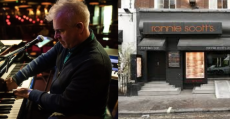
Ronnie Scott’s, of course, was founded in 1959. The idea of opening a jazz club along the lines of the intimate and bustling venues of New York’s 52nd Street was hatched by two ardent jazz fans who happened to be very much part of a burgeoning modern jazz movement of the late fifties: tenor saxophonist Ronnie Scott who had since the late forties, wowed the bebop brigade in a series of bands commencing with the nine-piece which featured his business partner to be and fellow saxophonist Pete King.
Three greats of jazz died – Lester Young, Billie Holiday and Sidney Bechet but born out of so much world turmoil were a spate of jazz masterpieces.
In March, Miles Davis created the definitive jazz album in A Kind of Blue. In May, Charles Mingus released an album called Mingus Ah Um – possibly his definitive album. Also in May, Ornette Coleman’s album The Shape of Jazz To Come became ‘the genesis of avant-garde jazz’, and John Coltrane recorded Giant Steps from May to December.
What Miles did for harmonic shifts, The Dave Brubeck Quartet did for rhythmic innovations with Time Out, challenging the acceptable 4/4 and 3/4 time signatures and even creating the hit Take Five with their 5/4 time signature.
Having spent eight months in the Miles Davis Quintet, Bill Evans released Portrait in Jazz in December with Paul Motian and Scott LaFaro, often regarded as one of the greatest jazz trios.
In the show, you can expect to hear a sample of music from all of these genre-defining jazz classics performed by the unmatched Ronnie Scott’s All Stars.
Line-up
Freddie Gavita ~ trumpet
Alex Garnett ~ saxophone
James Pearson ~ piano
Sam Burgess ~ bass
Sebastian de Krom ~ drums
Tickets: £35 ~ £55 | $40.96 ~ $64.36
More Posts: adventure,bandleader,bass,club,drums,genius,instrumental,jazz,music,piano,preserving,saxophone,travel,trumpet
Daily Dose Of Jazz…
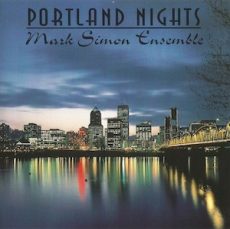
Mark Simon was born in Chicago, Illinois on September 26, 1959 and by age 13 he was listening to Lester Young, Charlie Parker, Roy Eldridge and other jazz legends, and playing along with old Jazz At The Philharmonic records from his father’s massive and eclectic record collection, which ran the gamut from early jazz master Louis Armstrong to avant-garde Cecil Taylor.
His high school jazz band director Don Owens was an important part of his jazz education. Mark soon graduated to jazz sessions, further honing his keyboard skills while beginning to play occasional jazz gigs. From sitting in with the JATP, he enrolled in a youth summer jazz camp at the University of Illinois, where he was exposed to the live side of jazz. Mark would sneak out of the dorm at night to sit in with the faculty on jam sessions,
Simon’s influences were grounded by jazz artists such as pianists Bill Evans, Keith Jarrett, McCoy Tyner, Charles Mingus, Gary Burton and Sonny Rollins. Growing up in jazz, He gained experience playing extensively with Leroy Vinnegar, Hadley Caliman, Bud Shank, Jeff Clayton, Joshua Breakstone, Julie Kelly, Teddy Edwards, Red Holloway and Herb Ellis.
Bassist Mark Simon continues to compose and perform solo piano gigs, accompanying vocalists, playing with jazz groups including his self-named trio, as well as teaching piano.
Daily Dose Of Jazz…
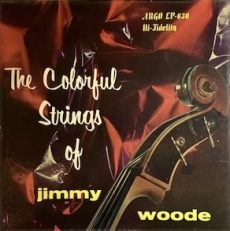
James Bryant Woode was born September 23, 1926 in Philadelphia, Pennsylvania. His father, for whom he was named, was a music teacher and pianist who had played with Hot Lips Page. He studied piano and bass in Boston, Massachusetss at Boston University and at the Conservatory of Music, as well as at the Philadelphia Academy.
He joined the Duke Ellington Orchestra in 1955 and appeared on many of Ellington’s recordings, including Such Sweet Thunder and Ella Fitzgerald Sings the Duke Ellington Songbook, recorded in 1957. Jimmy performed at the 1956 Newport Jazz Festival issued on Ellington at Newport. In 1960 he left the Orchestra to live in Europe.
An original member of The Kenny Clarke-Francy Boland Big Band, in 1995 he also toured with Lionel Hampton’s Golden Men of Jazz. 2003 saw Woode forming a trio with drummer Pete York and German jazz musician/comedian Helge Schneider, touring in Germany with his interpretation of jazz classics like Georgia and Summertime. As a consequence of his co-operation with Schneider, he also starred in the 2004 feature film Jazzclub in the role of a struggling jazz bassist.
Woode’s song Just Give Me Time was covered by Carola in 1966, first released on her album Carola & Heikki Sarmanto Trio, reaching the Finnish charts in 2004.
Bassist Jimmy Woode, who was born on the same day, the same month, the same year as saxophonist John Coltrane, died April 23, 2005, at age 78 at his home in Lindenwold, New Jersey, of complications following a surgery for a stomach aneurysm.