

Daily Dose Of Jazz…
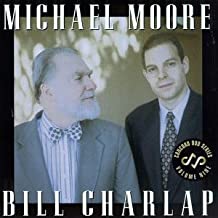
Michael Moore was born May 16, 1945 in Glen Este, Ohio and started on bass at age fifteen, at Withrow High School in Cincinnati, Ohio. He performed in ensembles and the Presentation Orchestra in George G. “Smittie” Smith’s Withrow Minstrels and played with his father in Cincinnati nightclubs.
Attending the Cincinnati College Conservatory, he played with Cal Collins and Woody Evans locally. He toured Africa and Europe with Woody Herman in 1966, and recorded with Dusko Goykovich while in Belgrade.
The 1970s saw Michael working with Marian McPartland, Freddie Hubbard, Jim Hall, Jimmy Raney, Bill Evans, Benny Goodman, Jake Hanna, Warren Vache, Herb Ellis, Zoot Sims, Ruby Braff, George Barnes, Chet Baker, and Lee Konitz. In 1978, he auditioned for and was hired by Bill Evans after longtime bassist Eddie Gómez had left the group and Evans was in transition with drummer Philly Joe Jones.
Leaving after five months due to dissatisfaction with the group, late in the decade he began working with Gene Bertoncini, with whom he would play into the 1990s. In the 1980s he worked with Sims again and with Kenny Barron and Michael Urbaniak. A member of the Dave Brubeck Quartet from 2001 until Brubeck’s death in 2012. Bassist Michael Moore continues to pursue his musical career.

More Posts: bandleader,bass,history,instrumental,jazz,music
Daily Dose Of Jazz…
Bonnie Wetzel was born Bonnie Jean Addleman on May 15, 1926 in Vancouver, Washington. She learned violin as a child, and was an autodidact on bass. She played with Ada Leonard in an all-female ensemble, and soon after worked in a trio with Marian Grange.
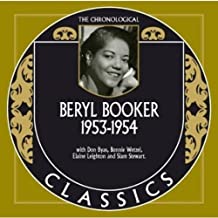
Marrying trumpeter Ray Wetzel in 1949, the pair worked in the Tommy Dorsey Orchestra in 1951. She went on to play in Beryl Booker’s trio with Elaine Leighton in 1953, touring Europe in 1953-54 and recorded for Discovery Records.
She also played with Herb Ellis, Charlie Shavers, Roy Eldridge, and Don Byas. Later in the 1950s she freelanced in New York City. Double bassist Bonnie Wetzel passed away on February 12, 1965 at the age of 38.
More Posts: bass,history,instrumental,jazz,music
Daily Dose Of Jazz…
Narada Michael Walden was born on April 23, 1952 in Kalamazoo, Michigan and after graduating from college he was a member of rock bands in Miami, Florida.
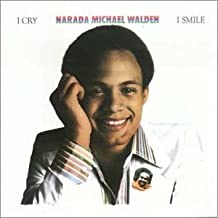
Atlantic Records released his first album, Garden of Love Light, in 1977, followed by I Cry I Smile and The Awakening. The latter album charted during the 1980s including a duet with Patti Austin and appeared on the Bright Lights, Big City movie soundtrack.
Fusing jazz with R&B he built his studio in 1985 and produced music for The Temptations, Stacy Lattisaw, Aretha Franklin, Angela Bofill, Lisa Fischer, Sister Sledge, Herbie Hancock, Patti Austin, Whitney Houston, Clarence Clemons, George Benson, Kenny G, Lionel Richie, Al Jarreau, and Mariah Carey.
Walden has been nominated for eight Grammy Awards and won three including Best R&B Song for Freeway of Love; Producer of the Year, Non-Classical; and Album of the Year for The Bodyguard: Original Soundtrack Album.
Drummer, keyboardist and bassist Narada Michael Walden, who got his nickname Narada from Sri Chinmoy, is currently the drummer for Journey.
More Posts: bass,drums,history,instrumental,jazz,keyboards,music
Daily Dose Of Jazz…
Morty Corb was born Mortimer Gerald Corb on April 10, 1917 in San Antonio, Texas. He played four years with Bob Crosby’s television program, Morty also worked extensifly as a studio session musician in studios, appearing on some 300 recordings. He worked in Disneyland bands after moving to California in 1947.
Particularly interested in scary, haunted house stuff, in 1973 Morty developed the “Hallowed Haunting Grounds”, a trick or treating evening with a special flair for theatrical effects that made his homemade shenanigan impressive even to the Tinsel Town crowd.
His name has been mentioned alongside Wrecking Crew studio bassist Carol Kaye, he curbed his session availability as the rock and roll era progressed or perhaps regressed. The bassist instead went to work at Disneyland, playing in the attraction’s bands but also mingling with special effects folk.
Corb’s long career began in 1946 and lasted until his death. He performed and recorded with Pete Fountain, Ella Fitzgerald, Nat King Cole, Pearl Bailey, Louis Armstrong, Claude Thornhill, Kid Ory, Jack Teagarden, Benny Goodman, Pete Kelly, Barney Kessel, Claire Austin, George Van Eps, Eartha Kitt, Mel Lewis, Earl Grant, Red Nichols, Wild Bill Davison, Muggsy Spanier, Plas Johnson, Gene Krupa, Louie Bellson, Jonah Jones, and Billy May among numerous others.
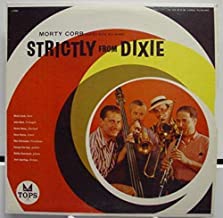
Double bassist Morty Corb, whose only album as a leader recorded in Los Angeles, California was his 1957 Strictly From Dixie featuring His Dixie All Stars, passed away on January 13, 1996 Las Vegas, Nevada..
More Posts: bandleader,bass,guitar,history,instrumental,jazz,music
Daily Dose Of Jazz…
Paul Jackson was born in Oakland, California on March 28, 1947 and began playing bass at the age of nine. By age 14, he performed with the Oakland Symphony Orchestra and went on to study at the San Francisco Conservatory of Music.
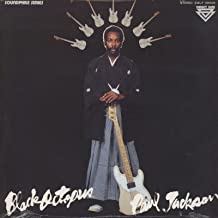
He recorded five albums as a leader, eleven albums with Herbie Hancock, five with The Headhunters. He played on recording sessions with Sonny Rollins, Stanley Turrentine, Azteca, Eddie Henderson, Harvey Mason, The Pointer Sisters, Santana, Shawn Phillips, Stomu Yamashta between 1972 and 1977.
Electric bassist Paul Jackson passed away on March 18, 2021 at age 73 in a hospital near Tokyo, Japan, ten days before his 74th birthday.

More Posts: bandleader,bass,history,instrumental,music