

Requisites
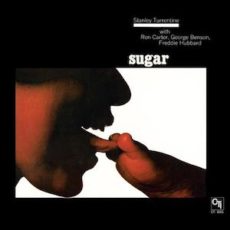
Sugar ~ Stanley Turrentine | By Eddie Carter
The landscape of jazz was changing as it entered the seventies. Miles Davis began pushing the envelope from Hard-Bop and Post-Bop to Jazz Fusion with In A Silent Way (1969), and Bitches Brew (1970) would take it further in that direction. Due to his commercial success with Bitches Brew, some musicians also moved from those styles into Avant-Garde and Free Jazz. Still, others began a journey toward what would eventually be labeled Smooth Jazz. Stanley Turrentine, a veteran Soul-Jazz tenor saxophonist since the fifties had just ended a decade-long association with Blue Note that began with his debut, Look Out (1960), and was looking to build his audience. He signed with CTI Records in 1970, the independent label owned by producer Creed Taylor which originally began as a subsidiary of A&M Records in 1967.
Though no one knew it at the time, Sugar (CTI Records CTI 6005) would become the biggest selling album of Stanley’s career and the title song, a phenomenal hit earning him the nickname, “The Sugar Man”. The record’s success was also instrumental in changing the direction for future CTI releases toward more Jazz-Funk and Funk-Soul albums. Stanley is joined by an impressive supporting cast, label mate Freddie Hubbard on trumpet, Lonnie Liston Smith (track: A1) on electric piano, Butch Cornell (tracks: A2, B1) on organ, George Benson on guitar, Ron Carter on bass, Billy Kaye on drums, and Richard “Pablo” Landrum (tracks: A2, B1) on congas. My copy used in this report is the 2009 Pure Pleasure Records UK Stereo Audiophile reissue (PPAN CTI 6005).
Side One starts with Stanley’s original, Sugar. The rhythm section begins at mid~tempo with an infectious introduction hooking you from the opening notes. The front line presents the melody with a lightly swinging beat. Stanley strides confidently into a danceable lead solo. Freddie settles into a funky groove on the second statement. George tells the next story with some bluesy guitar work and assistance from both horns providing a rhythmic supplement for one chorus. The ensemble reprises the melody and disappears into a slow fade.
Sunshine Alley by Butch Cornell opens with Cornell leading the rhythm section fueled by Kaye’s hypnotic drums and Landrum’s soulful conga. Both horns take it from there on the bluesy theme. Cornell, who I was unfamiliar with before his appearance here, easily holds his own with a convincing lead solo. Benson gives a splendid performance with the rhythm section slipping neatly alongside. Hubbard cooks up something good next, then Turrentine adds some soul food to the final solo that reaches a peak of inspiration preceding the ensemble taking the song out.
The group closes with a vigorous blowing rendition of John Coltrane’s Impressions occupying Side Two. Butch starts the song with a soulful introduction. The front line provides the spark on the main theme to “get this party started” as my wife likes to say. Stanley takes off first at a hard-swinging gallop. Butch comes in next for a vigorous interpretation with both horns humming behind him. Freddie brings an electrically charged dynamism to the third solo with compelling intensity. George adds a bit of excitement to the final reading with some high-voltage licks. Stanley punctuates the closing chorus with final phrases of white heat into an energetic fadeout.
The impeccable rhythm section of Ron Carter, Billy Kaye, and Richard “Pablo” Landrum is the power station behind each soloist, giving the album its depth. The remastering of Rudy Van Gelder’s original recording by Kevin Gray and Steve Hoffman is exemplary. The vinyl is quiet until the music starts, and the LP is a sonic treat for your ears with a spacious soundstage that’s stunning. There’s something for everyone on Sugar by Stanley Turrentine. It’s a Soul-Jazz buffet of his tenor sax, a swinging group, and an irresistible groove that’s sure to make it a favorite in any jazz library!
~ Bitches Brew (Columbia GP 26), In A Silent Way (Columbia CS 9875), Look Out (Blue Note BLP 4039/BST 84039) – Source: Discogs.com © 2021 by Edward Thomas Carter
More Posts: choice,classic,collectible,collector,history,instrumental,jazz,music,saxophone
Requisites
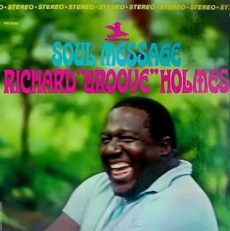
Soul Message ~ Richard “Groove” Holmes | By Eddie Carter
This morning’s choice from the library is an album I first heard on our then R&B station in Cleveland, Ohio, WJMO 1490 AM. I knew the song Misty from my uncle’s weekend jazz listening sessions but had never heard it played on the organ before. I called the station and that’s how I discovered organist Richard “Groove” Holmes. Soul Message (Prestige PR 7435/PRST 7435) serves up six delicious tunes of Soul-Jazz that are something special. Gene Daniels on guitar and Jimmie Smith complete the trio, and my copy used in this report is the 1965 US Stereo pressing. Daniels played with Holmes on two earlier albums in 1961 and 1962, Groovin’ With Jug and After Hours. This was Smith’s only time recording with Richard, but he would go on to enjoy a successful career playing with Toshiko Akiyoshi, Benny Carter, Eddie “Lockjaw” Davis, Erroll Garner, Gene Harris, Terry Gibbs, and Joe Pass.
Groove’s Groove, a soulful blues by Holmes starts with an infectious melody compelling one to snap their fingers and tap their toes right away. Richard hits a groove immediately with a marvelous interpretation. Gene follows with a statement as succulent as a huge Sunday meal from Mom’s or Grandma’s kitchen. Holmes returns for a brief anecdote ahead of the finale. Dahoud by Clifford Brown moves the tempo up to a tropical flavor in the opening chorus. Daniels emerges first with a perfectly constructed opening solo. Holmes delves down into the tune’s roots, stating his point with excellent enunciation into the trio’s reprise. Misty by Erroll Garner and Johnny Burke begins on an upbeat note with Richard soaring at length after the melody. Gene and Jimmie propel the song forward into a charming climax. Misty became Richard’s biggest hit and his signature song whenever he performed live.
Side Two starts with the trio easing into the melody of Song For My Father by Horace Silver. Daniels brings blues-rooted energy to the first solo, then Holmes builds on the momentum with a happy performance that he manages tastefully. The Things We Did Last Summer is a beautiful song by Jule Styne and Sammy Cahn. The trio cultivates an irresistible warmth on this 1946 evergreen with a remarkably respectful opening chorus. Richard approaches every note of the lead and closing solos softly and tenderly. Gene completes the gentle mood with a lovely interpretation of romantic reflection before the trio’s delightfully delicate ending. The title track, Soul Message wraps up this set with a cheerful sermon by Holmes who preaches a concise mellow statement with light and airy verses after the catchy melody.
Soul Message was recorded by Rudy Van Gelder and it’s a good recording, but not perfect. On Groove’s Groove during Richard’s second solo, and on Misty, the microphone picks up a bit of distortion in the upper register lasting about one verse on Groove’s Groove and during the second, third and fourth verses on Misty. This is particularly noticeable if you are wearing a good pair of headphones as I do when listening to jazz late at night. These two issues aside, the instruments have a good soundstage on the remainder of the album. Richard also recorded for Groove Merchant, Muse Records, and Pacific Jazz. He passed away from a heart attack on June 29, 1991, at the age of sixty after battling prostate cancer. If you are a fan of the jazz organ or are just discovering the music of Richard “Groove” Holmes, I invite you to audition Soul Message for a spot in your jazz library. It’s a vibrant, inspired album by the organist, and after you’ve heard it, I’m almost certain you’ll get the message!
~ After Hours (Pacific Jazz PJ-59/ST-59), Groovin’ With Jug (Pacific Jazz PJ-32/ST-32) – Source: Discogs.com ~ Misty – Source: JazzStandards.com ~ Richard “Groove” Holmes, Jimmie Smith, The Things We Did Last Summer – Source: Wikipedia.org © 2021 by Edward Thomas Carter

More Posts: choice,classic,collectible,collector,history,instrumental,jazz,music,organ
Requisites
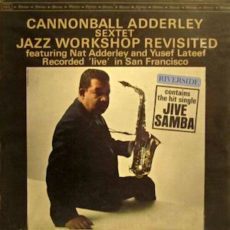
Jazz Workshop Revisited ~ Cannonball Adderley Sextet | By Eddie Carter
The Cannonball Adderley Sextet steps into the spotlight with a favorite album from my childhood that takes us to The Jazz Workshop. Three years earlier, the group made their first trip to the renowned club, and The Cannonball Adderley Quintet In San Francisco was released to rave reviews. This morning’s choice from the library, Jazz Workshop Revisited (Riverside RLP 444/RS 9444) was released in 1963 documenting their return to the venue, this time as a sextet. Nat Adderley on cornet, Cannonball Adderley (tracks: A1 to A3, B1, B3) on alto sax, Yusef Lateef (tracks: A1, B1, B2) on flute, (track: A1) on oboe, (tracks: A2, A3) on tenor sax, Joe Zawinul on piano, Sam Jones on bass, and Louis Hayes on drums. My copy used in this report is the 1965 US Stereo reissue.
Side One starts with an opening comment by Cannonball introducing the first tune, an original titled Primitivo. Yusef and the trio set the mood perfectly in the introduction. Cannonball states the haunting melody, segueing into a tenderly expressed first solo. Yusef follows on oboe with a tantalizingly seductive statement. Nat gives a passionate performance next, and Joe puts an elegant touch on the finale before the ensemble’s gentle closing chorus. The group invites us to celebrate Jessica’s Birthday by Quincy Jones with a festive melody to begin the party. Cannonball leads the solos with zestful energy on the opening statement. Nat bristles with joyful creativity on an exciting reading next, then Lateef blazes into the third interpretation with incandescent energy. Joe swings to an enthusiastic groove on the closer.
Marney by Donald Byrd builds to a brisk melody in unison. Cannonball steps up first to give a vivaciously spirited opening solo. Nat breathes fire on the next interpretation, then Yusef dispenses ferocious energy into the third reading. Joe keeps things cooking on the closer and Sam and Louis don’t pull any punches in their support. The altoist starts Side Two with another few words before the sextet dives into Nat Adderley’s bossa nova hit, The Jive Samba. The trio starts with a danceable introduction ahead of the ensemble’s captivating melody. Cannonball is especially funky on the opening statement, then Nat rocks the second reading with some spicy soul food. Lateef answers with a light and airy sound that swings. Zawinul shines brilliantly on an effervescent performance and Jones increases the finger-popping during the theme’s reprise with a concise comment.
Lillie by Sam Jones is a beautiful ballad that’s a showcase for Nat as the primary soloist. Yusef backs him on the flute during the opening and ending theme. Nat begins with a gracefully beautiful first reading and Joe has an alluring moment before the close. Yusef Lateef’s Mellow Bruno begins with a brisk theme stated by Cannonball who takes charge on the first solo with some spirited blowing. Nat applies some energetic exuberance to the second statement. Lateef provides plenty of infectious enthusiasm next. Zawinul wraps up this stellar session with a short performance before Cannonball takes the song out. Afterward, he lets the crowd know that it’s time to go – really! Wally Heider is the man behind the dials on Jazz Workshop Revisited. The soundstage is stunning and places you in the club among the crowd to enjoy the group at their best.
One of the things I always loved about Cannonball’s live performances is his rapport with an audience. In my opinion, Jazz Workshop Revisited is a great live album that perfectly complements his other two West Coast releases. If you’re a fan of his earlier Riverside records, I offer for your consideration on your next vinyl hunt, Jazz Workshop Revisited by The Cannonball Adderley Sextet. It doesn’t disappoint on any level and is essential listening for any jazz lover!
~ The Cannonball Adderley Quintet at The Lighthouse (Riverside RLP 344/RS 9344), The Cannonball Adderley Quintet In San Francisco (Riverside RLP 12-311/RLP 1157) – Source: Discogs.com
~ © 2021 by Edward Thomas Carter
More Posts: choice,classic,collectible,collector,history,instrumental,jazz,music,saxophone
Requisites
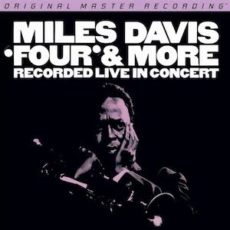
‘Four’ & More ~ Miles Davis | By Eddie Carter
I begin this morning’s column with a fantastic live album by Miles Davis. ‘Four’ & More (Columbia CL 2453/CS 9253) hit the stores in 1966, following My Funny Valentine, a year earlier. Both records document a benefit performance at Philharmonic Hall for black voter registration in Louisiana and Mississippi. The sold-out concert was sponsored by the NAACP Defense Fund, Congress for Racial Equality, and Student Nonviolent Coordinating Committee. It emphasized Davis’s solidarity with these organizations and the people fighting racism in the south. Miles decided the quintet wouldn’t accept payment for their appearance. This angered his bandmates, but they responded with ferocious, kick-ass solos! George Coleman on tenor sax, Herbie Hancock on piano, Ron Carter on bass, and Tony Williams on drums complete the quintet. My copy used in this report is the 2013 Stereo Audiophile reissue (Mobile Fidelity Sound Lab MFSL 1-376)!
Side One begins with a speedy rendition of Miles’s signature song, So What. Ron and the rhythm section start quickly on the opening chorus segueing into the ensemble’s brisk theme. Miles launches a fierce attack on the first solo, then George moves with equal swiftness on the next statement. Herbie produces plenty of heat on the third reading while Ron and Tony provide the support structure into the finale. There’s only a second to breathe because the group jumps right into Walkin’ by Richard Carpenter. A brisk introduction by Miles leads to a blistering collective melody. Davis takes the reins first for a wild ride at a dangerously high speed. Williams gives a fine example of his brushwork next, then Coleman romps through the third solo with exuberant vitality, and Hancock swings vigorously on the final performance.
Joshua by Victor Feldman begins with the quintet’s heated theme. Miles takes off first on a furious flight. George fuels the next interpretation with a high-octane performance, then Herbie infuses the closer with youthful energy and enthusiasm anchored by Ron and Tony’s searing supplement into the song’s climax. Go-Go, the quintet’s theme follows as Master of Ceremonies, Mort Fega addresses the crowd and reintroduces the band accompanied by the audience’s ovation.
Four, a Miles Davis original begins Side Two with an uptempo melody. The leader kicks off the solos with rapid acceleration. Coleman matches the adrenaline rush on the second solo with brisk momentum. Hancock charges into the third reading swinging up a storm and Williams makes a brief comment preceding the ensemble’s exit.
Seven Steps To Heaven by Miles Davis and Victor Feldman starts with a brief introduction by the trio ahead of the quintet’s zesty theme. Miles blazes into the opening statement with unbridled energy. Tony offers a considerable comment next, then George turns up the temperature on a torrid performance that slows down as he concludes. Herbie crafts an upbeat closing statement leading to the group’s out-chorus. The finale is There Is No Greater Love by Isham Jones and Marty Symes. The quintet starts at a medium beat with Miles stating the melody using a mute. He continues with a casual first chorus with only Carter anchoring a few verses. Coleman gives a marvelous interpretation also featuring the bassist prominently. Hancock takes the final spot to give a charmingly cheerful statement before Miles and the trio ends the song gently.
Miles states the melody of Go-Go on the mute, then goes to the open horn as the quintet ends the night behind Mr. Fega’s closing remarks acknowledging the members a final time. ‘Four’ & More was originally produced by Teo Macero, and Kreig Wunderlich of Mobile Fidelity Sound Lab utilized the Gain 2 System for the reissue’s half-speed remastering from the original Stereo tapes. The record was pressed on 180-gram virgin vinyl. The sound quality is stellar, the vinyl is flat and absolutely silent until the music starts. The stereo separation is also mesmerizing, Miles is on both channels, Herbie’s on the left, George, Ron, and Tony are on the right. If you’re in the mood for some live jazz, I submit for your consideration, ‘Four’ & More by Miles Davis. It’s nearly an hour of swinging music that rewards its owner every time it’s on the turntable!
~ My Funny Valentine (Columbia CL 2306/CS 9106) – Source: Discogs.com ~ There Is No Greater Love – Source: JazzStandards.com ~ So What, Four, Seven Steps To Heaven – Source: Wikipedia.org © 2021 by Edward Thomas Carter
More Posts: choice,classic,collectible,collector,history,instrumental,jazz,music
Requisites
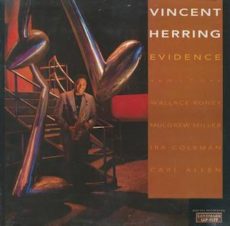
Evidence ~ Vincent Herring | By Eddie CarterThis next choice from the library is by alto saxophonist Vincent Herring who I first heard at the 1992 Atlanta Jazz Festival as a member of The Nat Adderley Quintet. Their performance was a highlight of the AJF, and Herring’s solos were breathtaking throughout the set, mesmerizing the crowd. Evidence (Landmark Records LLP-1527) is his second album as a leader, and accompanying him are Wallace Roney on trumpet, Mulgrew Miller on piano, Ira Coleman on bass, and Carl Allen on drums. My copy used in this report is the 1991 Swiss Digital Stereo pressing.
Side One opens with Mr. Wizard by Vincent and Larry Willis, swinging from the outset with an invigorating theme statement. Wallace takes off first driven by jet propulsion, followed by an energetic workout by Vincent. Mulgrew speaks last with a fierce intensity preceding an exuberant closing chorus and abrupt ending. The mood moves to a slower tempo for a beautiful rendition of I Sing a Song by Tex Allen. This tune opens showing grace and politeness with a Bossa-Nova beat on the melody. Roney begins with a seductively appealing performance, the altoist delivers a sublimely beautiful reading next. Miller’s closing presentation is an equal mix of elegance, poignancy, and warmth. Stars Fell on Alabama, the 1934 jazz standard by Frank Perkins and Mitchell Parish is a touching tribute to Cannonball Adderley who recorded it on Cannonball Adderley Quintet in Chicago (1959). Vincent opens the soloing with a sweet lyricism like a rare vintage wine that’s mellowed with age. Mulgrew adds a richly evocative romanticism to the finale matched by Ira and Carl’s tender interplay.
Voyage by Kenny Barron is the Side One finale with a lively, uptempo beat by the quintet on the opening chorus. Herring solos first with a captivating interpretation. Roney bursts into the next reading with a blazingly hot attack of electrically charged energy. Miller takes the final spot for an effervescent statement into the reprise and ending. Never Forget is Herring’s second contribution to the album and a very pretty ballad by Vincent expressing a voluptuous richness on the opening chorus and affectionate intimacy on the lead solo. Mulgrew gives a vivid example of his ability to communicate something special by caressing each phrase of the closing reading, making it truly distinctive and memorable for a deeply satisfying performance.
Evidence was written by Thelonious Monk in 1948, this jazz standard was first recorded as a single, and later on Milt Jackson and The Thelonious Monk Quintet (1955). The quintet starts with a happy groove exhibited in the opening statement by Herring showing a remarkable maturity beyond his age. Roney takes over in fine spirits and exceptional form on the second solo. Miller comes in next for an equally inspired reading. Carl shares the finale with all three soloists before the ensemble’s exit. Soul-Leo by Mulgrew Miller begins with a joyous medium theme. Wallace delivers tremendous excitement on the first solo. Vincent continues with an infectious groove next, then Mulgrew provides the summation ahead of a few closing comments by Vincent into the close.
The engineer on Evidence is Paul Goodman who has a large discography of notable jazz albums for Atlantic, Cobblestone, Elektra Musician, MPS Records, Muse Records, Onyx Records, Prestige, RCA Victor, and Xanadu. The digital mastering is by George Horn who also has a lengthy resume of albums at Fantasy Studios, and his own company, George Horn Mastering. The quality of this digital recording is splendid with a natural soundstage surrounding your listening chair with sweet sounds. In his closing remarks of the liner notes, producer Orrin Keepnews described Vincent Herring as “a force to be reckoned with in the world of jazz”. I agree with his statement and will only add that Vincent’s playing is indeed a satisfying experience supporting the Evidence found in the seven selections on this album!
~ Cannonball Adderley Quintet in Chicago (Mercury Records MG 20449/SR 60134), Evidence (Blue Note 549), Milt Jackson and The Thelonious Monk Quintet (Blue Note BLP 1509/BST 81509) – Source: Discogs.com ~ Stars Fell on Alabama – Source: JazzStandards.com © 2021 by Edward Thomas Carter
More Posts: choice,classic,collectible,collector,history,instrumental,jazz,music,saxophone