

Daily Dose Of Jazz…
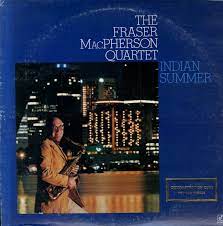
John Fraser MacPherson was born on April 10, 1928 in Saint Boniface, Manitoba, Canada. He moved with his parents to Victoria, British Columbia, Canada as a child where he learned piano, clarinet, and alto and tenor saxophones. After relocating to Vancouver, British Columbia to continue a commerce degree, he played in bands led by Ray Norris, Dave Robbins, Paul Ruhland, and Doug Parke.
He led his own groups and eventually took over the leadership of the Cave supper club band.In 1958 Fraser took a year’s leave to study in New York City, adding flute to his list of instruments.
Throughout the 1960s and 1970s MacPherson was a first-call studio player in Vancouver, as well as leading the house band at the Cave supper club. He also taught briefly in the Jazz and Commercial Music department at Vancouver Community College, where his students included future Powder Blues Band baritone saxophonist Gordie Bertram and New Orleans based saxophonist and jazz educator John Doheny.
Fraser’s debut album as leader of a small jazz group, Live at the Planetarium, was recorded for broadcast on the French-language CBC radio network. He leased the master tapes and released them on his own independent label, West End Records. The album was re-released by Concord Records, and he recorded several other releases for them. He also recorded for Sackville and Justin Time record labels.
In the summer of 1993, Pacific Music Industry Association (PMIA) created the Fraser MacPherson Scholarship Fund which annually awards grants of $2000 to four to eight aspiring music students.
Fraser MacPherson, who won a Juno Award for Best Jazz Album and was awarded the Order of Canada, transitioned in Vancouver at the age of 65 on September 27, 1993.
More Posts: bandleader,clarinet,history,instrumental,jazz,music,piano,saxophone
Daily Dose Of jazz…
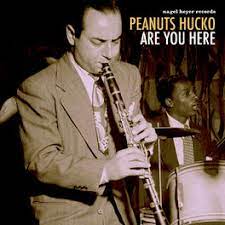
Peanuts Hucko was born Michael Andrew Hucko in Syracuse, New York on April 7, 1918. He moved to New York City in 1939 where he played tenor saxophone with Will Bradley, Tommy Reynolds, and Joe Marsala until 1940.
After a brief time with Charlie Spivak, he joined the Glenn Miller Army Air Force Band while serving in Europe during World War II. During this time, Peanuts began to concentrate on the clarinet. He was featured in Miller’s hard-driving versions of Stealin’ Apples and Mission to Moscow. Post-war, he played in the bands of Benny Goodman, Ray McKinley, Eddie Condon and Jack Teagarden. From 1950 to 1955, he was busy in New York as a studio musician for CBS and ABC.
He continued working with Goodman and Teagarden, When he visited Tokyo, Japan in 1951 as the lead alto saxophonist in Benny Goodman’s Orchestra, he listened to clarinetist Shoji Suzuki and his Rhythm Aces. With Suzuki and his band, they recorded the song Suzukake No Michi, which broke sales records in Japan. He then joined the Louis Armstrong All-Stars for two years from 1958 to 1960.
Hucko led his own group at Eddie Condon’s Club from 1964 to 1966. He became known for his work with Frank Sinatra as the clarinet soloist on Cole Porter’s What Is This Thing Called Love?, which was featured on Sinatra’s album In the Wee Small Hours. In 1964, he opened his own nightclub Peanuts Hucko’s Navarre, in Denver, Colorado which featured his singer wife Louise Tobin and Ralph Sutton. From 1966, he was featured regularly at Dick Gibson’s Colorado jazz parties where he appeared with the Ten Greats of Jazz, later called the World’s Greatest Jazz Band.
The Seventies saw Peanuts leading the Glenn Miller Orchestra and toured across the U.S. and abroad. He also toured with the Million Airs Orchestra, and appeared with the Lawrence Welk Orchestra. The next decade he toured with his Pied Piper Quintet before going into semi-retirement with his wife in Denton, Texas. He recorded his last session Swing That Music in 1992 featuring Tobin, trumpeter Randy Sandke, and pianist Johnny Varro.
As a composer he wrote or co-wrote See You Again, A Bientot, Peanut Butter, Blintzes Bagel Boogie, Falling Tears, First Friday, Tremont Place, and Sweet Home Suite. Big band clarinetist Peanuts Hucko, who sometimes played saxophone, transitioned in Fort Worth, Texas on June 19, 2003 at the age of 85.
More Posts: bandleader,clarinet,club owner,history,instrumental,jazz,music,saxophone

Three Wishes
Pannonica asked Benny Winestone what his three wishes would be and he said:
- “There’s only one wish in the world I would want: a visa to enter the United States legally.”
- “There’s only two other wishes, and that’s money and youth. What else could I wish for? That’s it!.”
*Excerpt from Three Wishes: An Intimate Look at Jazz Greats ~ Compiled and Photographed by Pannonica de Koenigswarter

More Posts: baroness,clarinet,history,instrumental,jazz,music,pannonica,saxophone,three,wishes

DAVE BENNETT
Dave Bennett doesn’t fit the mold. For starters, you don’t find many jazz clarinet players who name Alice Cooper, Stevie Ray Vaughan, and Chris Isaak among their influences. You won’t find many musicians who are equally conversant with the music of Benny Goodman (the “King of Swing”) and Roy Orbison (“The Soul of Rock and Roll”). In fact, you may not find even one other clarinet virtuoso who breaks from his Swing Era repertoire to sing rockabilly hits while accompanying himself at the piano or electric guitar.
SEATING TIMES:
Wednesday – Thursday
2 Seatings
1st Seating: 6:00pm-8:00pm
Band Performs: 6:30pm-7:30pm
2nd Seating: 8:30pm-10:30pm
Band Performs: 9:00pm-10:00pm
Friday – Saturday
2 Seatings
1st Seating: 6:00pm-8:00pm
Band Performs: 6:30pm-7:30pm
2nd Seating: 8:30pm-10:30pm
Band Performs: 9:00pm-10:00pm
More Posts: adventure,album,clarinet,club,festival,genius,jazz,museum,music,preserving,restaurant,travel
Daily Dose Of Jazz…
Alcide Patrick Nunez was born on March 17, 1884 in St. Bernard Parish, Louisiana of Isleño and French Creole descent. The family moved to New Orleans, Louisiana when he was a child. Growing up amid the Marigny and Bywater districts of New Orleans, he joined several bands in which he played guitar, although switched to clarinet about 1902. He soon became one of the top clarinetists in the city. By 1905 he was a regular in Papa Jack Laine’s band, in addition to playing with Tom Brown and sometimes led bands of his own.
Though he could play several instruments, he mainly played the clarinet and was able to improvise variations on the songs he heard. Before he was able to make music a full-time profession, Nunez worked for a while driving a mule-drawn wagon with fellow musician Chink Abraham.
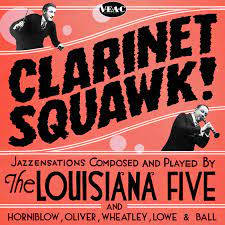
In early 1916, he went north to Chicago, Illinois with Stein’s Dixie Jass Band, but he left the band shortly before they made their first recordings. After spending some time playing with Tom Brown’s band in Chicago, he went to New York City with Bert Kelly’s band and became his bandleader. He went on to help form the Louisiana Five, led by drummer Anton Lada, becoming one of the most popular bands in New York that recorded for several record labels.
In 1922, after Bert Kelly replaced him with Johnny Dodds, he returned to Chicago to lead the house band at Kelly’s Stables and played with the band of Willard Robison. Soon thereafter Nuñez began to lose his teeth, impairing his ability to play clarinet. He returned to his family in New Orleans, but after getting dentures he regained his ability to play the clarinet. He joined the police department to join the Police Band and at the same time was a member of The Moonlight Serenaders band and several other dance bands that played in New Orleans.
For a time in 1921, he settled in Baltimore, Maryland where he bought a large house but eventually returned home to New Orleans. Clarinetist Alcide Nunez, who was also known as Yellow Nunez and was one of the first musicians of New Orleans to make audio recordings, transitioned from a heart attack on September 2, 1934.

More Posts: clarinet,history,instrumental,jazz,music