

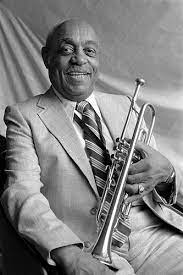
Three Wishes
While hanging out with the Baroness, she asked Benny Carter what his three wishes would be if by some chance he was granted them. His reply is as follows:
-
-
“Three million dollars, tax free.”
-
“Two millions dollars, tax free.”
-
“One million dollars, tax free.”
“But seriously, call me at my hotel when I have had time to think about it, and I will give you the real ones.”
-
-
*Excerpt from Three Wishes: An Intimate Look at Jazz Greats ~ Compiled and Photographed by Pannonica de Koenigswarter

More Posts: baroness,clarinet,history,instrumental,jazz,music,pannonica,saxophone,three,trumpet,wishes
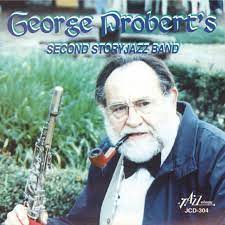
Daily Dose Of Jazz…
George Arthur Probert, Jr. was born on March 5, 1927 in Los Angeles, California and was an autodidact on his instruments. He first played with Bob Scobey from 1950 to 1953 and then went on to play with Kid Ory’s Creole Jazz Band.
Between 1954 and 1969, George played in the Firehouse Five Plus Two Dixieland Revival Band, an ensemble formed by Walt Disney Studios animators. They recorded with Disney composer George Bruns in 1957 and again in 1968.
Probert led his own bands from 1973, touring America and Europe. In 1997 he toured England, Germany & the Netherlands with Big Bill Bissonnette’s International Jazz Band. The all-star group featured Anthony “Tuba Fats” Lacen of New Orleans & British pianist Pat Hawes.
Clarinetist, soprano saxophonist and bandleader George Probert, who also worked as a television and movie music editor, transitioned on January 10, 2015 in Monrovia, California.

More Posts: bandleader,clarinet,history,instrumental,jazz,music
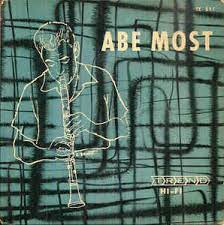
Daily Dose Of Jazz…
Abe Most was born on February 27, 1920 in New York City, New York. He began his career in 1939 as a member of Les Brown’s Big Band. After serving three years in the Army during World War II beginning in 1942, he became a member of Tommy Dorsey’s Big Band.
Most made a few albums with smaller labels between 1946 and 1984, including Superior, Trend, Annunciata and Camard. His last two albums were Abe Most Live! and I Love You Much Too Much.
He was a studio musician for seven decades, recording on albums by Ted Gärdestad, Dick Haymes, Randy Newman, Dory Previn, Laurindo Almeida, Dominic Frontiere, Henry Mancini, Peggy Lee, Carmen McRae, Ray Conniff, and George Shearing, as well as Joni Mitchell, Cher, Earth, Wind & Fire, and B. B. King among others. He can also be heard playing on the soundtrack of the film How to Marry a Millionaire.
Clarinetist Abe Most, the older brother of flautist Sam Most, recorded three albums as a leader and thirty-one as a sideman, transitioned on October 10, 2002.
More Posts: bandleader,clarinet,history,instrumental,jazz,music

Daily Dose Of Jazz…
Lajos Dudas was born February 18, 1941 in Budapest, Hungary and studied at the Béla Bartók Conservatory and the Franz Liszt Academy of Music in his home city. He then appeared on concert tours throughout in Europe, not only as a jazz and rock musician but also as a soloist in works such as Carl Maria von Weber’s Clarinet Quintet, Igor Stravinsky’s Solo Pieces for Clarinet and Alexander Glazunov’s Concerto for Alto Saxophone. He won international recognition with his successful composition Urban Blues at the 11th International Jazz Competition in Monaco in 1982.
In the 1980s he was ranked high year after year in the Top People Poll of the International Jazz Forum. After his period as a freelance musician from 1963 to 1973, Dudas has been a lecturer at the School of Music in Neuss/GER and also taught from 1975 to 1985 at the Rheinland College of Education. In addition, since 1976, after a spell concentrating on classical music, he was recorded, worked radio productions and tours with Karl Berger, Gerd Dudek, Albert Mangelsdorff, Tom van der Geld, Charles Tolliver, Howard Johnson, Attila Zoller, Philipp van Endert, Leonard Jones, Theo Jörgensmann, Tommy Vig…
Over the course of his career Lajos has composed works commissioned by among several others, Frankfurt Radio Jazz Group, West German Radio & Television/Cologne, and Bavarian Radio Munich, and has performed at major European festivals.
Between 1996 and 2006 he was Artistic Director for the Concert Series in Neuss/GER. He also composed works for clarinet, woodwind chamber music and a Clarinet Method in 2 volumes. Clarinetist Lajos Dudas continues to explore jazz and other genres of music.
More Posts: bandleader,clarinet,composer,history,instrumental,jazz,music
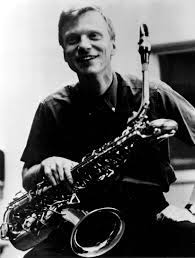
Three Wishes
Gerry Mulligan was approached by Pannonica and asked if he could be granted three wishes what his be and his response was:
- “To play high trumpet accurately, drums, sing. And if there was a fourth, money.”
*Excerpt from Three Wishes: An Intimate Look at Jazz Greats ~ Compiled and Photographed by Pannonica de Koenigswarter
More Posts: baroness,clarinet,history,instrumental,jazz,music,pannonica,saxophone,three,wishes