

On The Bookshelf
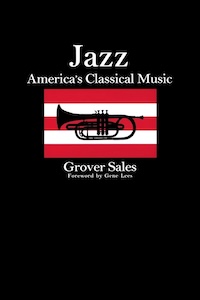
Jazz: America’s Classical Music | Grover Sales
Jazz critic Grover Sales takes the reader on a journey of introduction to the history, complexity and criticism of the music in Jazz: America’s Classical Music. This book illustrated with photographs, is considered a classic text and an ideal guide for both beginners and those familiar with the genre.
In an engaging and conversational style, the renowned jazz teacher tells of the lives and music of the greats like Ellington, Tatum, Hawkins, Coltrane, Parker, Hines, Goodman, Armstrong, and many others. He does this with a mix of important facts, fascinating anecdotes, and brilliant interpretations.
The author was a prominent figure in the jazz world, he taught at Stanford University and worked as the publicity director for the Monterey Jazz Festival.
Jazz: 1984 | Grover Sales
Prentiss-Hall Press

Requisites
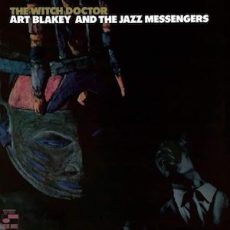
The Witch Doctor ~ Art Blakey and The Jazz Messengers | By Eddie Carter
In this morning’s discussion, I’m excited to share a remarkable release from the library with you by Art Blakey and The Jazz Messengers. Although it was recorded back in 1961, The Witch Doctor (Blue Note BST 84258) didn’t become available to the public until 1967. The Jazz Messengers were renowned for their evolving roster of exceptional musicians, and this particular album features one of the drummer’s most memorable ensembles. The group consists of Lee Morgan on trumpet, Wayne Shorter on tenor saxophone, Bobby Timmons on piano, and Jymie Merritt on bass. The copy of this album I own is the 2021 Worldwide Blue Note Tone Poet Series stereo audiophile reissue, using the original catalog number.
The title tune by Lee Morgan opens the album, and the ensemble’s visit to The Witch Doctor sets a friendly tone with its mid-tempo introduction and inviting melody. Bobby starts us off with a relaxing solo, then Wayne takes a few easy-flowing choruses. Lee then takes over to give the following interpretation before Bobby returns to add a few comments, continuing to swing joyfully with the front line into the ending theme and climax. Lee’s Afrique begins with the trio’s animal sounds before Shorter’s piercing horn leads into the quintet’s medium-paced melody. Shorter kicks off the first solo with confidence, then Morgan adds an intense, steadily burning energy. Timmons approaches the third statement effortlessly, and Blakey finishes with a strong punch before the melody’s reprise and fadeout.
Wayne Shorter’s Those Who Sit and Wait grabs your attention right away with Art’s lively introduction to the quintet’s spirited theme. Wayne launches into a rapid-fire opening statement, followed by Lee’s energetic reading. Bobby jumps in next, meeting the challenge with an excellent solo that paves the way for a heated exchange between Lee, Wayne, and Art, propelling the ensemble to an electrifying climax. Side Two commences with the rhythm section’s infectious introduction, smoothly segueing into the group’s melody of Bobby Timmons’ A Little Busy. Timmons gets right to work first. Shorter keeps the lively mood going next, followed by another solo from the pianist. Lee paves a road back to the closing chorus, which softly fades away.
Joelle by Wayne Shorter comes at you with the rhythm section’s introduction gradually increasing into the ensemble’s upbeat theme. Lee makes the initial entrance with a nimble opening solo. Wayne delivers a captivating stream of ideas in the following reading. Bobby anchors the tune with a driving swing, culminating in a return to the melody that slowly dissolves into nothingness. Lost and Found by Clifford Jordan opens at a fast gallop for the quintet’s theme. Timmons leads the charge with a high-spirited statement, then steps aside for Shorter, who romps through the following solo. Morgan pours intense emotion into the third performance next, then Art engages the front line in a quick, dynamic exchange before the ensemble races to the conclusion with a sudden, abrupt stop.
The original recording session of “The Witch Doctor” was produced by Alfred Lion, with Rudy Van Gelder serving as the recording engineer. For the reissue, Joe Harley oversaw production, and Kevin Gray handled mastering, working directly from the original master tapes at Cohearant Audio. The result is exceptional audio quality, delivering a rich soundstage that truly immerses the listener. For those who are already collectors of the Blue Note Tone Poet Series, you know firsthand the exceptional quality and attention to detail these reissues offer, everything from high-resolution gatefold images and outstanding cover design to the premium 180-gram Virgin Vinyl, with the music itself being the ultimate highlight. But if you haven’t experienced them yet and you love jazz, you’re in for an absolute treat!
In addition to its outstanding musical performances, “The Witch Doctor” by Art Blakey and The Jazz Messengers is a fantastic album from beginning to end, perfectly embodying the essence of hard bop through vibrant compositions and dynamic group interplay. I highly recommend this Blue Note Tone Poet audiophile reissue as a great addition to your jazz library. I’m sure that whether you’re already a fan of Art Blakey or just starting to explore his extensive discography, this album is sure to become a favorite on your turntable!
© 2025 by Edward Thomas Carter
More Posts: choice,classic,collectible,collector,drums,history,instrumental,jazz,music

On The Bookshelf…
The Story Of Jazz | Marshall W. Stearns
Beginning with the African musical heritage and its fusion with European forms in America, Marshall Stearns’s history of jazz guides the reader through work songs, spirituls, ragtime, and the blues, to the birth of jazz in New Orleans, Louisiana and its adoption through the Great Migration by St Louis, Chicago, Kansas City, and New York.
The effect of jazz upon American culture and the American character has been all pervasive. This superlative history is the first and the most renowned systematic outline of the evolution of this Black American musical phenomenon. The book follows its course through the era of swing and bop to the beginnings of rock in the 50s, vividly depicting the great innovators, and covering such technical elements as the music’s form and structure.
The Story Of Jazz: 1956 | Marshall W. Stearns Oxford University Press
Requisites
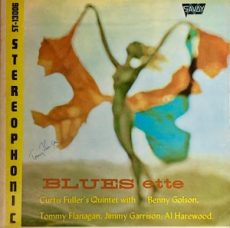
Blues-ette ~ Curtis Fuller Quintet | By Eddie Carter
Curtis Fuller is widely regarded as one of the top jazz trombonists. A few nights ago, I enjoyed listening to this morning’s album from the library, and that’s what inspired this discussion of his 1959 release, Blues-ette (Savoy MG-12141/SST-13006). Throughout his more than 65 years in music, Fuller built an impressive catalog of recordings, both as a band leader and as a sideman, including work with Joe Henderson, Lee Morgan, Bud Powell, Wayne Shorter, Jimmy Smith, the Jazz Messengers, and the Jazztet. On this album, he’s joined by fellow Jazztet member Benny Golson on tenor saxophone, Tommy Flanagan on piano, Jimmy Garrison on bass, and Al Harewood on drums. The copy of this album I own is the 1973 U.S. stereo reissue, which shares the original catalog number.
Five Spot After Dark by Benny Golson opens the album. It’s a delightful medium-tempo tune that the front line brings to life with the melody. Curtis begins with a relaxing, welcoming solo. Benny blends each note of the following reading with a joyful energy. Tommy keeps the beat alive in the third interpretation. Jimmy joins the front line for the closing statement, leading to the ending theme and climax. Undecided by Sydney Robin and Charlie Shavers is a catchy tune that opens with the quintet laying down a gorgeous mid-tempo beat on the theme. Fuller takes center stage next with an impressive interpretation. Golson comes right behind him with an irresistible improvisation. Harewood provides a concise, impactful solo alongside both horns, building up to a lively reprise and a satisfying ending.
The title tune, Blues-ette by Curtis Fuller, wraps up the first side with Tommy’s sprightly introduction to the melody’s theme. Curtis sets the mood in the opening statement, delivering an understated and moving narrative. Benny effortlessly rises to the occasion in the following performance. Tommy follows with a dazzling display, then Jimmy caps the solos with a short walk to the ensemble’s close. Benny Golson’s Minor Vamp is anything but, as the second side unfolds, beginning with Garrison and Harewood’s introduction to the lively melody. Golson kicks off the solos, pouring his heart into each note. Fuller gives a captivating performance of lively verses next. Flanagan gets the last word with an energetic solo, ahead of the ensemble’s closing chorus and fadeout.
Love Your Spell Is Everywhere by Edmund Goulding and Elsie Janis begins with the quintet’s medium-tempo theme. Benny takes the lead with an exquisitely crafted performance. Next, Curtis gets into the groove with an exceptional reading that’s cool, smooth, and polished. Tommy executes the closing statement with meticulous execution ahead of the ensemble’s end theme and close. Garrison and Harewood open the door to the quintet’s easygoing unison melody to Curtis Fuller’s Twelve-Inch. Golson takes the stage first with a sweet and tasty reading. Fuller makes his case next with a captivating contribution. Flanagan moves sprightly along in the third solo, and Garrison puts the exclamation point on the song before the quintet comes back together to wrap things up.
“Blues-ette” was supervised by Oscar “Ozzie” Cadena, and Rudy Van Gelder managed the recording controls. The sound quality of this reissue is exemplary. The instruments deliver a vibrant soundstage that places the listener’s sweet spot in the studio with the musicians. If you’re a longtime fan of Curtis Fuller or are just discovering his discography, I invite you to check out “Blues-ette” on your next trip to your favorite record store. It’s a terrific album and is highly recommended for anyone’s library who enjoys hard-bop or lively “blowing sessions.”
~ Love Your Spell Is Everywhere – Source: Wikipedia.org © 2025 by Edward Thomas Carter
More Posts: choice,classic,collectible,collector,history,instrumental,jazz,music,trombone
On The Bookshelf
Talking Jazz | Max Jones
Max Jones, known affectionately as “the Boswell of bebop” by Time Out, was famed in England for nearly four decades of insightful, ardent writing on jazz. With this luminous collection of interviews, his work will at last be widely accessible to American readers. Here are the voices of jazz — Coleman Hawkins, Johnny Hodges, Billie Holiday, and Mary Lou Williams, to name but a few — in conversation with Jones, who could turn a casual chat into an indelible portrait and who gives American readers a view of these musicians they have never had before.
In this book, the author Max Jones tells the story of jazz from its roots in the African-American community to its development as an international art form. Jones covers a variety of topics, including the development of improvisation, the influence of Louis Armstrong and Duke Ellington, and the rise of bebop. He also provides historical context and examines the different styles of jazz, from ragtime to free jazz. This book is an excellent resource for students interested in learning more about jazz and its history.; B & W Photographs; 8vo; 293 pages
Talking Jazz: 1987 | Max Jones
Anchor Brendon Limited