

Requisites
Blue Seven ~ Shirley Scott With Joe Newman and Oliver Nelson | By Eddie Carter
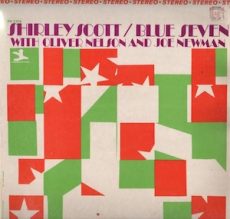
I was still in a jazz organ mindset after listening to Jimmy Smith when I decided to explore a lesser-known, underappreciated gem by Shirley Scott. Blue Seven (Prestige PR 7376/PRST 7376) was recorded in 1961, yet remained on the shelf until its 1965 release. For her fourteenth album, Shirley’s working with an outstanding ensemble: Joe Newman on trumpet, Oliver Nelson on tenor sax, George Tucker on bass, and Roy Brooks on drums. Together, they create a jazz session that’s laid-back and refined, filled with understated groove and energy. Unlike some organists who favor a bold, party-heavy approach, Shirley brings a softer, blues-influenced touch, letting her organ blend with the ensemble rather than dominating it. My copy of this album is the 1965 U.S. stereo release.
Side One opens with the title tune, Blue Seven by Sonny Rollins. George and Roy’s soulful, bluesy introduction eases into the quintet’s mellow theme. Joe opens gently and evolves into a warm, inviting interpretation. Oliver explores intriguing avenues in the following reading. Shirley showcases her expressive touch and impressive technique until the group returns for the finale. Don’t Worry ‘Bout It Baby, Here I Am by Shirley Scott starts on a bright note with the horns merging into the rhythm section’s cheerful melody. Scott opens the first solo with some good, honest soul. Nelson follows with a relaxing performance, then Newman delivers a soothing interpretation that gradually builds to a few final thoughts by Scott before the song ends.
Nancy (With The Laughing Face) by Phil Silvers and Jimmy Van Heusen gently shifts the album’s pace to a tender ballad. Shirley’s delicately gentle melody creates a soft, inviting backdrop for both horns. She then caresses each note of the song’s only solo with elegance and deep emotion, leading to the ensemble’s touching ending. Wagon Wheels by Billy Hill and Peter DeRose was the title tune of the 1934 Western film. Newman steps forward with his muted trumpet, guiding the ensemble through the easygoing melody. Nelson makes a brief, tasteful entrance before Newman continues the mellow mood. Nelson follows with smooth, unhurried lines, then Scott delivers a reading as comforting as a hearty, satisfying meal, before the quintet returns for the closing chorus and gentle fadeout.
The album closer is Give Me The Simple Life, by Rube Bloom and Harry Ruby, kicking off with the quintet’s bright, upbeat melody. Oliver steps forward first to deliver a spirited and swinging interpretation. Joe maintains the momentum in an energetic statement, and then Shirley’s robust performance leaves a lasting impression. All three soloists trade upbeat ideas, leading to the ensemble’s closing chorus. Esmond Edwards supervised the album, and Rudy Van Gelder was behind the dials. The album’s excellent sound quality transports the listener into the heart of the quintet’s lively interaction, with warm, crystal clear acoustics that create the sensation of a live performance happening right in your listening room.
If you love jazz groups that feature the Hammond organ up front and blend the lively drive of hard bop with the soulful rhythms of soul jazz, I offer for your consideration, Shirley Scott’s Blue Seven, the next time you’re out record shopping. This album is a delightful listen, filled with inventive solos and tight group interplay. You’ll experience everything from the upbeat energy of Don’t Worry ‘Bout It Baby, Here I Am and Give Me The Simple Life, to the relaxed swing of Blue Seven and Wagon Wheels, as well as the tender emotion of Nancy (With The Laughing Face). After you spin it on the turntable, it’s likely to earn a permanent spot among the favorites in your library, encouraging you to return to it again and again!
~ Give Me The Simple Life, Nancy (With The Laughing Face), Wagon Wheels – Source: Wikipedia.org
p>© 2025 by Edward Thomas Carter

More Posts: choice,classic,collectible,collector,history,instrumental,jazz,music,organ,saxophone,trumpet
On The Bookshelf
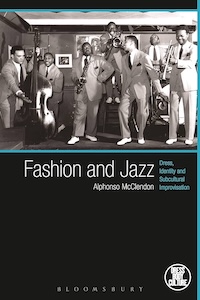
Fashion and Jazz: Dress, Identity and Subcultural Improvisation
Born in the late 19th century, jazz gained mainstream popularity during a volatile period of racial segregation and gender inequality. It was in these adverse conditions that jazz performers discovered the power of dress as a visual tool used to defy mainstream societal constructs, shaping a new fashion and style aesthetic. Fashion and Jazz is the first study to identify the behaviours, signs and meanings that defined this newly evolving subculture.
Drawing on fashion studies and cultural theory, the book provides an in-depth analysis of the social and political entanglements of jazz and dress, with individual chapters exploring key themes such as race, class and gender. Including a wide variety of case studies, ranging from Billie Holiday and Ella Fitzgerald to Louis Armstrong and Chet Baker, it presents a critical and cultural analysis of jazz performers as modern icons of fashion and popular style.
Addressing a number of previously underexplored areas of jazz culture, such as modern dandyism and the link between drug use and glamorous dress, Fashion and Jazz, published by Bloomsbury, provides a fascinating history of fashion’s dialogue with African-American art and style. It is essential reading for students of fashion, cultural studies, African-American studies and history.

Requisites
A Day in Copenhagen ~ The Dexter Gordon-Slide Hampton Sextet | By Eddie Carter
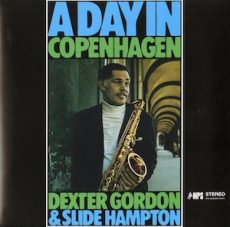
My appreciation for Dexter Gordon began when I first heard his album Go at one of my uncle Ben’s jazz gatherings during my childhood. The moment I heard Gordon’s rich, full-bodied, and resonant tone, I became an ardent fan of his playing. This morning, I’m exploring the tenor saxophonist in a different setting, paired with trombonist Slide Hampton in a stellar sextet. A Day in Copenhagen (MPS Records MPS 15 230 ST) was originally released in Germany in 1969. Rounding out the ensemble are Dizzy Reece on trumpet, Kenny Drew on piano, Niels-Henning Ørsted Pedersen on bass, and Art Taylor on drums. My copy of this album is the 2023 Worldwide Record Store Day limited edition stereo audiophile reissue (MPS Records 0218937MSW).
The first side kicks off with Kenny’s energetic introduction to My Blues by Slide Hampton. The front line launches into the spirited melody. Dexter takes flight first in an invigorating solo, then Kenny follows with a reading as refreshing as a cool drink on a warm evening. Dizzy adds a brassy bite next, then Niels-Henning gets a moment to shine. Slide makes his point passionately in the following interpretation, and Art steers the group toward the theme’s return and close. You Don’t Know What Love Is by Gene de Paul and Don Raye unfolds with the ensemble’s relaxed medium-paced theme. Slide comes out swinging first. Dexter fuels the following reading with electric energy, then Dizzy comes in for an enthusiastic solo. Dexter offers one final comment before the theme’s reprise and exit.
Slide Hampton’s A New Thing ends the first side with a relaxed, easygoing beat. Art’s introduction sets up the ensemble’s melody. Dexter’s opening solo ventures into fresh musical territory, then Kenny picks up the baton with his own imaginative improvisation. The group then reunites for the theme’s reprise and conclusion. What’s New by Bob Haggart and Johnny Burke is reimagined in a medium-tempo groove to start the second side, offering a fresh platform for the ensemble’s melody and solos. Dexter opens with a silky-smooth performance, then Dizzy builds the second statement exquisitely. Slide takes his turn in the spotlight next. Kenny adds his own inventive touch in the following reading. Niels-Henning closes things with a brief walk before the song ends.
The Shadow of Your Smile by Johnny Mandel and Paul Francis Webster is a quartet performance that unfolds gracefully with subtle elegance. Dexter delivers the melody and opening statement with a delicate touch and gentle finesse. Kenny then speaks softly with quiet sensitivity. Dexter reprises the theme into a soft, gentle ending. A Day In Vienna is a tribute to the Austrian Radio’s Jazz Workshop by Slide Hampton. After the front line kicks things off with an energetic melody, Dexter delivers a commanding opening solo. Dizzy keeps the excitement high with a captivating performance. Slide demonstrates remarkable technical skill and agility next. Niels-Henning’s bass work glides smoothly and gracefully. Finally, Art wraps up with a joyful flourish, guiding the sextet to an enthusiastic closing chorus.
Joachim-Ernst Berendt produced A Day in Copenhagen. Willi Fruth handled the recording supervision, and Birger Swan was the engineer. The album boasts exceptional sound quality, featuring an impressively clear and balanced soundstage in both the treble and midrange, complemented by a deep and well-defined bass. This release showcases the remarkable results that can be achieved through collaborative jazz, with an outstanding lineup of musicians. The album skillfully merges energetic, blues-inspired pieces with tender, evocative ballads, each rendered with exceptional skill and genuine feeling. The extraordinary chemistry among the players is apparent throughout, as each musician’s unique approach enriches the ensemble, all while maintaining a cohesive and unified artistic direction.
If you’re a fan of Dexter Gordon, Slide Hampton, or any of the exceptional musicians in this ensemble, or if you’re searching for a superb record that blends hard-bop and post-bop for your library, I enthusiastically recommend and invite you to check out A Day in Copenhagen by The Dexter Gordon-Slide Hampton Sextet on your next record shop visit. This album beautifully captures the magic of American, Danish, and Jamaican artists coming together in Copenhagen for a memorable jazz session that is likely to become one of your favorites!
~ Go (Blue Note BLP 4112/BST 84112) – Source: Discogs.com ~ The Shadow of Your Smile, What’s New, You Don’t Know What Love Is – Source: JazzStandards.com © 2025 by Edward Thomas Carter
More Posts: choice,classic,collectible,collector,history,instrumental,jazz,music,saxophone,trombone
On The Bookshelf
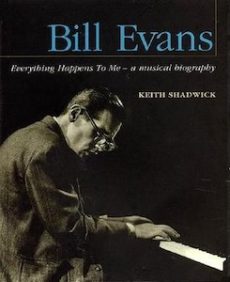
A Grammy winner and pioneer of multi-track jazz recording, Bill Evans was the pianist on Miles Davis’ classic Kind of Blue album and a key figure in the development of modern jazz piano.
This biography details his wide-ranging and absorbing career, from freelance work in the 1950s, through his groundbreaking trios and solo releases, to his relationships with various record labels, to the intense final phase before his death in 1980.
Bill Evans: Everything Happens To Me contains full-page photos along with a selected discography that highlights key recordings throughout his career as a leader, co-leader and sideman.
Author Keith Shadwick has written for several magazines as well as Jazz: Legends of Style and The Illustrated Story of Jazz. He contributed Masters of Jazz Saxophone.
Requisites
Organ Grinder Swing ~ Jimmy Smith With Kenny Burrell and Grady Tate | By Eddie Carter
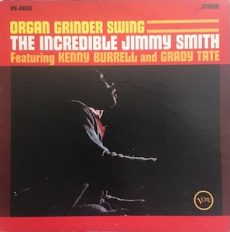
This morning’s selection from the library holds a special significance to me. It was one of my mom’s favorite albums to play while enjoying her morning coffee and preparing our Sunday dinners when we were younger. Organ Grinder Swing (Verve Records V-8628/V6-8628) is a terrific trio album by Jimmy Smith, with Kenny Burrell on guitar and Grady Tate on drums. It was his second most successful album, surpassed only by Back at the Chicken Shack. The soulful character of his organ playing had a profound impact on me from the moment I first heard Houseparty and The Sermon. I quickly became a devoted fan, growing to appreciate even more the rich musicality and infectious grooves he brought to every performance. My copy of this album is the original 1965 U.S. deep groove stereo release.
The title track, The Organ Grinder’s Swing by Will Hudson, Irving Mills, and Mitchell Parish, kicks off the first side with Jimmy’s infectious enthusiasm on a swinging theme. Kenny builds the opening solo with some home-cooking. The organist steps up next with a spirited statement, and Jimmy’s vocal comments as it unfolds. Grady provides a steady beat that propels the group into the climax. Oh, No, Babe by Jimmy Smith gets this soulful blues underway with Smith’s organ and vocals, which are inserted during the introduction and melody. Burrell’s gentle touch shines in a refined, inviting opening solo. Smith brings a Southern flair to the proceedings with a down-home, tasteful delight ahead of the song’s conclusion.
Blues For J by Jimmy Smith is a bluesy mid-tempo original that opens with the trio’s joyously carefree theme in unison. Kenny takes center stage, showcasing his guitar artistry in the opening solo. Jimmy extends the happy mood with a vibrant performance, leading the group back to the ensemble’s reprise and a satisfying finish. The trio delivers a unique take on Greensleeves, the beloved English folk tune. Smith begins the melody with gospel-tinged musical ideas that give the melody a fresh sense of soulfulness. Burrell launches the opening statement with a laid-back, smooth groove. Smith then takes command, delivering an energetic and spirited interpretation that continues until the group’s theme reprise gradually dissolves, like autumn leaves drifting to the ground.
I’ll Close My Eyes by Buddy Kaye and Billy Reid is gently introduced by the trio, segueing into a graceful melody. Kenny’s opening statement radiates a comforting elegance and is one of his most beautiful moments on the album. Jimmy then guides the group toward the song’s reprise, incorporating sensitive ideas and a warm, refined tone, until the ensemble brings back the theme. Satin Doll by Duke Ellington, Johnny Mercer, and Billy Strayhorn is one of the most frequently recorded jazz standards, and picks up the beat one final time for the trio’s light-hearted theme. Burrell looks back nostalgically and sparkles with a soulful touch in the opening solo. Smith responds by gliding efficiently over the keys in a closing statement of happiness while Tate keeps the tempo lively and upbeat ahead of the finish.
Creed Taylor produced Organ Grinder Swing, and Rudy Van Gelder handled the recording. While the album’s sound quality is a strong effort, it falls short of the very best due to a harshness in the microphone placement at the organ, which is especially notable on The Organ Grinder’s Swing, Blues For J, and Greensleeves. This technical flaw, however, does not diminish from the album’s overall excellence. So, don’t let that deter you from adding this record to your library. The album’s greatest strength to me is how impeccably the trio works together. Kenny Burrell and Grady Tate perfectly complement Jimmy Smith throughout every track with a flawless sense of rhythm. If you aren’t looking at the cover, you could easily mistake this for one of the organist’s classic Blue Note recordings.
For fans of the jazz organ or those just discovering the music of Jimmy Smith, I invite you to check out Organ Grinder Swing the next time you’re visiting your favorite record shop. It perfectly captures the dynamic spirit and sophisticated musicianship that emerges when three exceptional performers unite, resulting in a memorable showcase of rhythm, style, and collaboration!
~ Back at the Chicken Shack (Blue Note BLP 4117/BST 84117), Houseparty (Blue Note BLP 4002/BST 84002), The Sermon (Blue Note BLP 4011/BST 84011) – Source: Discogs.com ~ Satin Doll – Source: JazzStandards.com ~ Greensleeves, I’ll Close My Eyes, The Organ Grinder’s Swing – Source: Wikipedia.org © 2025 by Edward Thomas Carter
More Posts: choice,classic,collectible,collector,history,instrumental,jazz,music,organ